

Extending the frontier of spatially resolved supermassive black hole mass measurements to at 1 ≲ z ≲ 2: simulations with ELT/MICADO high-resolution mass models and HARMONI integral-field stellar kinematics
Monthly Notices of the Royal Astronomical Society Oxford University Press 546:4 (2026) stag238
Abstract:
Current spatially resolved kinematic measurements of supermassive black hole (SMBH) masses are largely confined to the local Universe (distances Mpc). We investigate the potential of the Extremely Large Telescope’s (ELT) first-light instruments, MICADO and HARMONI, to extend these dynamical measurements to galaxies at redshift . We select a sample of five bright, massive, quiescent galaxies at these redshifts, adopting their Sérsic profiles, from HST photometry, as their intrinsic surface brightness distributions. Based on these intrinsic models, we generate mock MICADO images using SimCADO and mock HARMONI integral-field spectroscopic data cubes using hsim. The HARMONI simulations utilize input stellar kinematics derived from Jeans Anisotropic Models (JAM). We then process these mock observations: the simulated MICADO images are fitted with Multi-Gaussian Expansion (MGE) to derive stellar mass models, and stellar kinematics are extracted from mock HARMONI cubes with pPXF. Finally, these derived stellar mass models and kinematics are used to constrain JAM dynamical models within a Bayesian framework. Our analysis demonstrates that SMBH masses can be recovered with an accuracy of 10 per cent. We find that MICADO can provide detailed stellar mass models with 1 hour of on-source exposure. HARMONI requires longer minimum integrations for reliable stellar kinematic measurements of SMBHs. The required on-source time scales with apparent brightness, ranging from 5–7.5 hours for galaxies at (F814W, 20–20.5 mag) to 5 hours for galaxies at (F160W, 20.8 mag). These findings highlight the ELT’s capability to push the frontier of SMBH mass measurements to , enabling crucial tests of SMBH-galaxy co-evolution at the top end of the galaxies mass function.Abundant hydrocarbons in a buried galactic nucleus with signs of carbonaceous grain and polycyclic aromatic hydrocarbon processing
(2026)
Atmospheric characterization of HIP 67522 b with VLT/CRIRES+. VLT/CRIRES+ suggests a heavier planet and hints at deuterium fractionation
(2026)
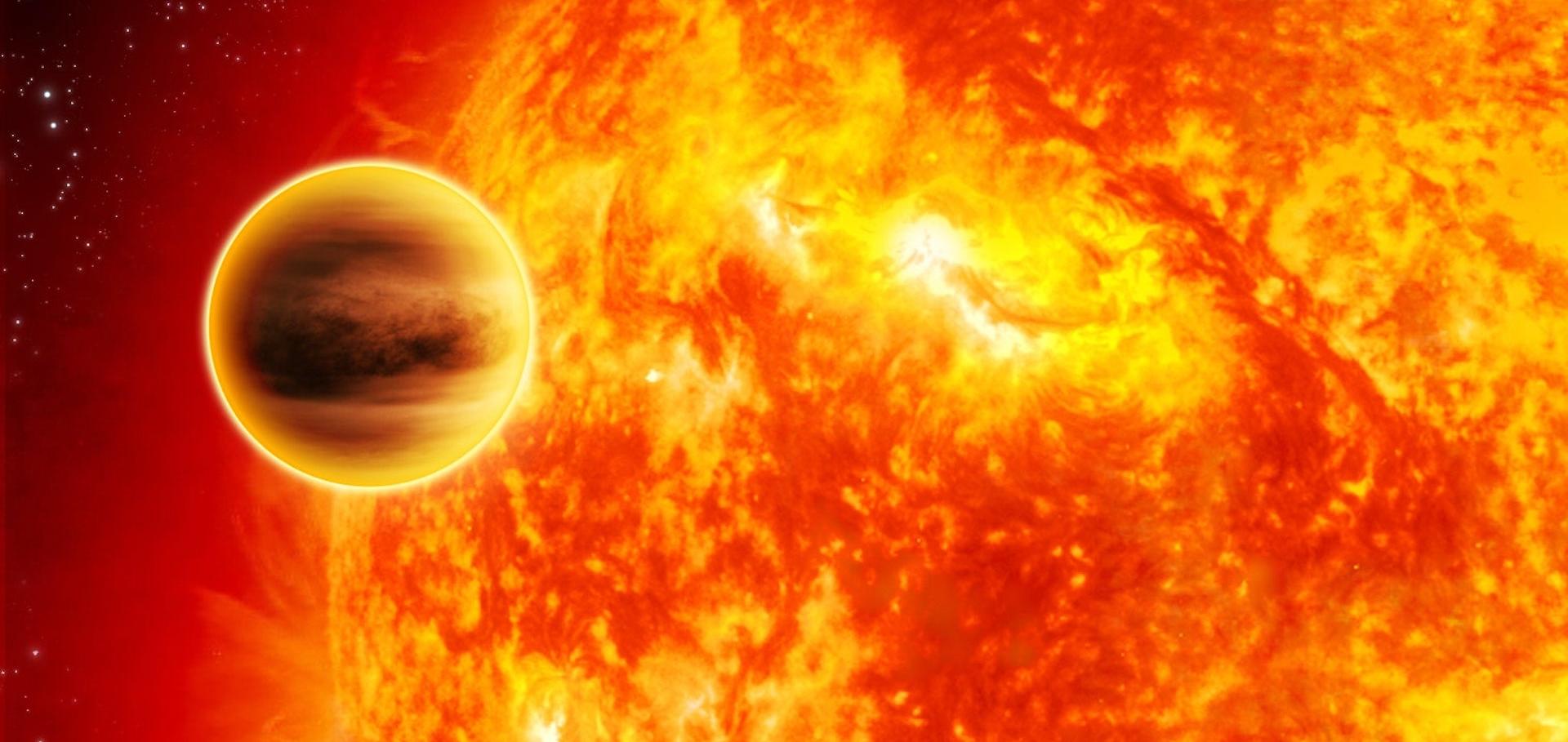
A Stellar magnesium to silicon ratio in the atmosphere of an exoplanet.
Nature communications 17:1 (2026) 2902
Abstract:
The elemental compositions of exoplanets encode information about their formation environments and internal structures. While volatile ratios such as carbon-to-oxygen (C/O) are used to trace formation location, the rock-forming elements-magnesium (Mg), silicon (Si), and iron (Fe)-govern interior mineralogy and are commonly assumed to reflect the host star's abundances. Yet this assumption remains largely untested. Ultra-hot Jupiters, gas-giant exoplanets with dayside temperatures above 3000 K, provide rare access to refractory elements that remain gaseous. Here we present high-resolution thermal emission spectroscopy of the exoplanet WASP-189b ( Teq=3354-34+27 K) obtained with the Immersion Grating Infrared Spectrometer (IGRINS) on Gemini South. We detect neutral iron (Fe I), magnesium (Mg I), silicon (Si I), water (H2O), carbon monoxide (CO), and hydroxyl (OH) at signal-to-noise ratios exceeding 4, and retrieve their elemental abundances. We show that the Mg/Si, Fe/Mg, and Si/Fe ratios are consistent with stellar values, while the refractory-to-volatile ratio is enhanced by roughly a factor of 2. These findings demonstrate that giant-planet atmospheres can preserve stellar-like rock-forming ratios, providing an empirical validation of the stellar-proxy assumption that underpins planetary composition and formation models across exoplanet systems.A Comparison of One-dimensional and Three-dimensional Exoplanet Atmosphere Model Grids: ScCHIMERA and the SPARC/MiTgcm
The Astrophysical Journal American Astronomical Society 997:2 (2026) 365