

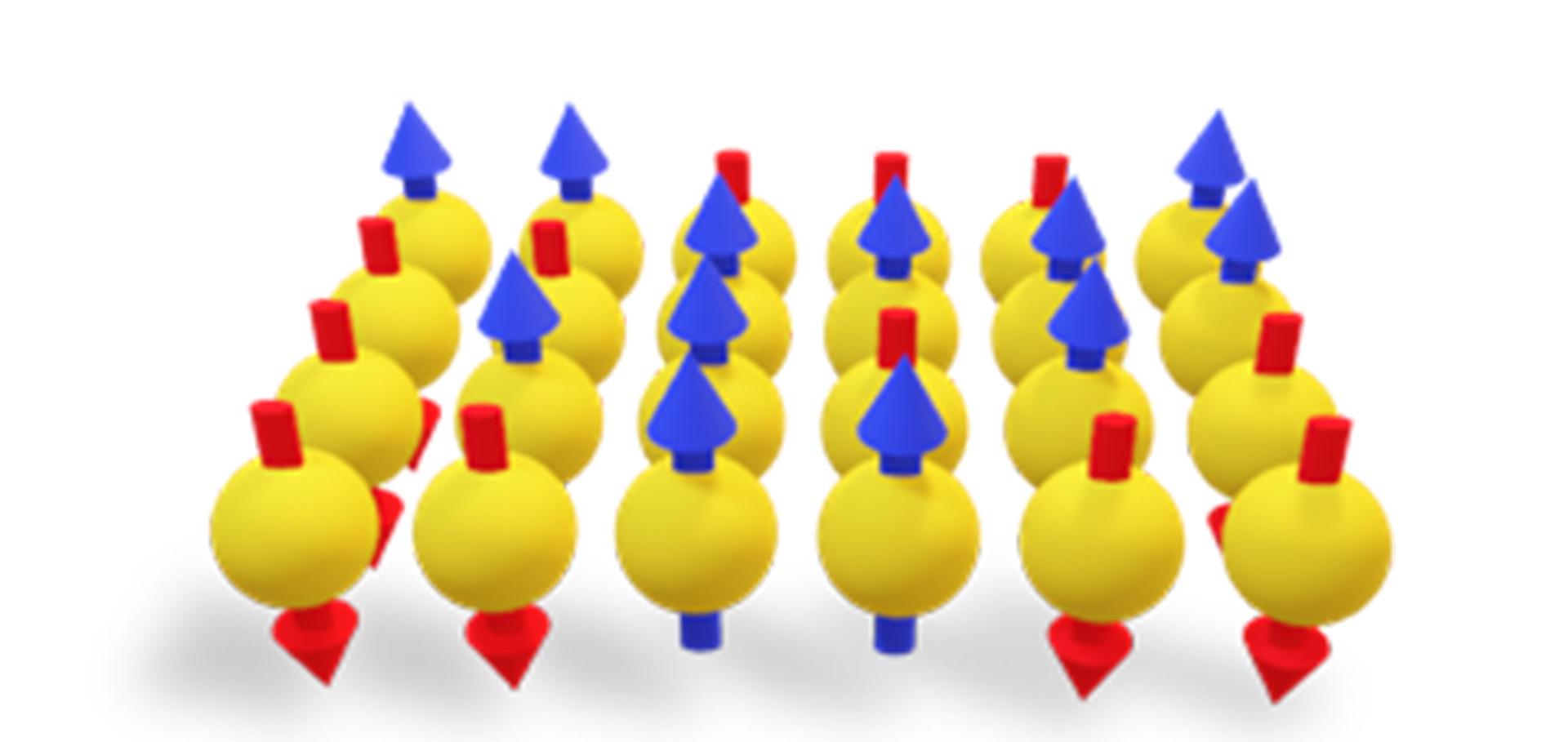
Ab initio derivation of Hubbard models for cold atoms in optical lattices
ArXiv 1303.2213 (2013)
Abstract:
We derive ab initio local Hubbard models for several optical lattice potentials of current interest, including the honeycomb and Kagomé lattices, verifying their accuracy on each occasion by comparing the interpolated band structures against the originals. To achieve this, we calculate the maximally-localized generalized Wannier basis by implementing the steepest-descent algorithm of Marzari and Vanderbilt [N. Marzari and D. Vanderbilt, Phys. Rev. B 56, 12847 (1997)] directly in one and two dimensions. To avoid local minima we develop an initialization procedure that is both robust and requires no prior knowledge of the optimal Wannier basis. The MATLAB code that implements our full procedure is freely available online at http://ccpforge.cse.rl.ac.uk/gf/project/mlgws/.Dephasing enhanced transport in nonequilibrium strongly correlated quantum systems
ArXiv 1302.5629 (2013)
Abstract:
A key insight from recent studies is that noise, such as dephasing, can improve the efficiency of quantum transport by suppressing coherent single-particle interference effects. However, it is not yet clear whether dephasing can enhance transport in an interacting many-body system. Here, we address this question by analyzing the transport properties of a boundary driven spinless fermion chain with nearest-neighbor interactions subject to bulk dephasing. The many-body nonequilibrium stationary state is determined using large-scale matrix product simulations of the corresponding quantum master equation. We find dephasing enhanced transport only in the strongly interacting regime, where it is shown to induce incoherent transitions bridging the gap between bound dark states and bands of mobile eigenstates. The generic nature of the transport enhancement is illustrated by a simple toy model, which contains the basic elements required for its emergence. Surprisingly, the effect is significant even in the linear response regime of the full system, and it is predicted to exist for any large and finite chain. The response of the system to dephasing also establishes a signature of an underlying nonequilibrium phase transition between regimes of transport degradation and enhancement. The existence of this transition is shown not to depend on the integrability of the model considered. As a result, dephasing enhanced transport is expected to persist in more realistic nonequilibrium strongly correlated systems.Entang-bling: Observing quantum correlations in room-temperature solids
Journal of Physics: Conference Series 442:1 (2013)
Abstract:
Quantum entanglement in the motion of macroscopic solid bodies has implications both for quantum technologies and foundational studies of the boundary between the quantum and classical worlds. Entanglement is usually fragile in room-temperature solids, owing to strong interactions both internally and with the noisy environment. We generated motional entanglement between vibrational states of two spatially separated, millimeter-sized diamonds at room temperature. By measuring strong nonclassical correlations between Raman-scattered photons, we showed that the quantum state of the diamonds has positive concurrence with 98% probability. Our results show that entanglement can persist in the classical context of moving macroscopic solids in ambient conditions. © Published under licence by IOP Publishing Ltd.Entangling the motion of diamonds at room temperature
2012 Conference on Lasers and Electro-Optics (CLEO) Optica Publishing Group (2012) 1-2
Non-equilibrium many-body effects in driven nonlinear resonator arrays
New Journal of Physics 14 (2012)