Home
Department Of Physics text logo
  • Research
    • Our research
    • Our research groups
    • Our research in action
    • Research funding support
    • Summer internships for undergraduates
  • Study
    • Undergraduates
    • Postgraduates
  • Engage
    • For alumni
    • For business
    • For schools
    • For the public
Menu
CMP
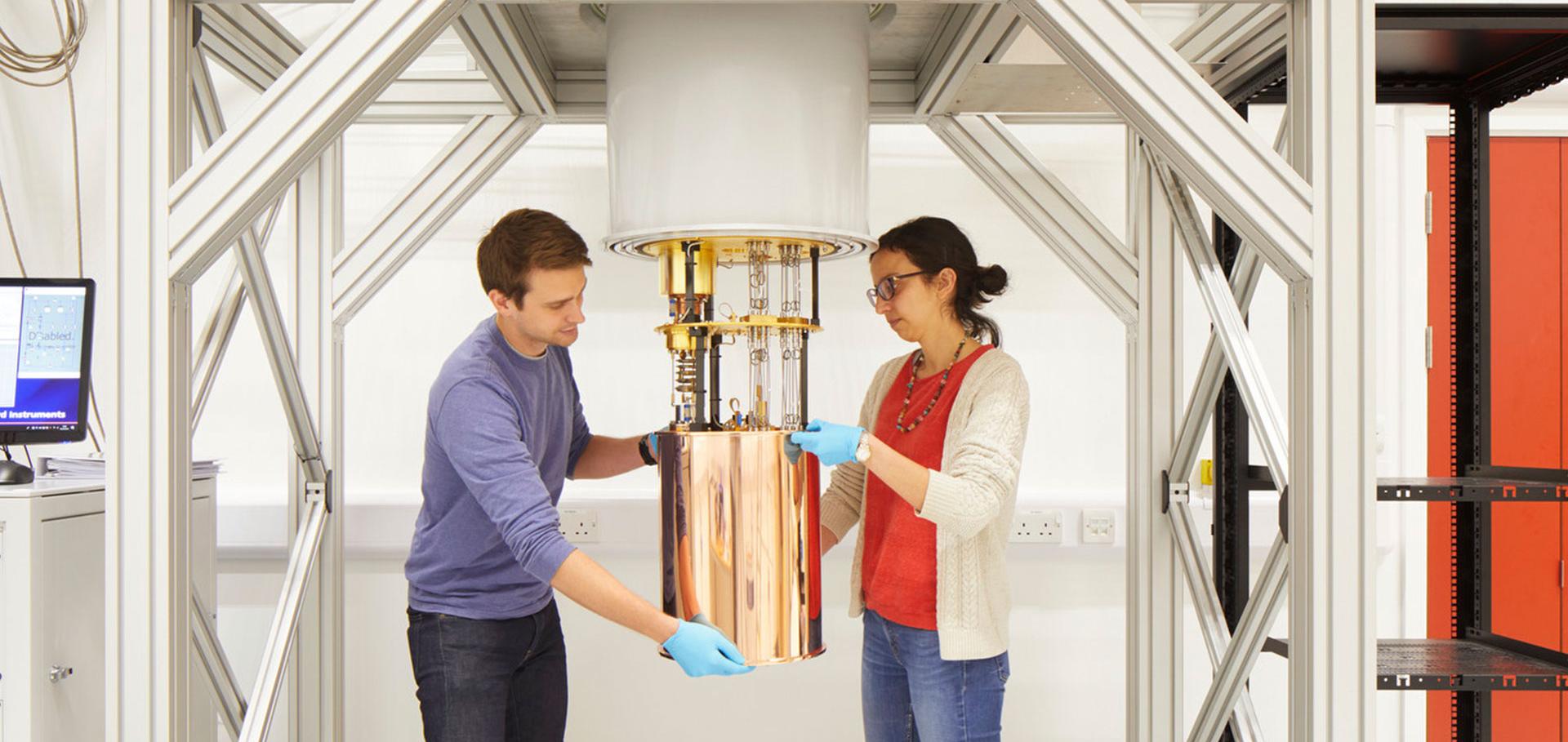
Credit: Jack Hobhouse

Dr Dharmalingam Prabhakaran

Researcher

Research theme

  • Quantum materials

Sub department

  • Condensed Matter Physics

Research groups

  • Synthesis and crystal growth
dharmalingam.prabhakaran@physics.ox.ac.uk
Telephone: 01865 (2)72270,01865 (2)72351,01865 (2)72341
Clarendon Laboratory, room 177,377,373
  • About
  • Publications

Ultrafast surface melting of orbital order in La0.5Sr1.5MnO4

Nature Materials Springer Nature (2025)

Authors:

Maurizio Monti, Khalid M Siddiqui, Daniel Perez-Salinas, Naman Agarwal, Martin Bremholm, Xiang Li, Dharmalingam Prabhakaran, Xin Liu, Danylo Babich, Mathias Sander, Yunpei Deng, Henrik T Lemke, Roman Mankowsky, Xuerong Liu, Simon E Wall

Abstract:

Understanding how light modifies long-range order in quantum materials is key to improving our ability to control functionality. However, this is challenging if the response is heterogeneous. Here we address the most common form of light-induced heterogeneity—surface melting—and measure the dynamics of orbital order in the layered manganite La0.5Sr1.5MnO4. We isolate the surface dynamics from the bulk by measuring the orbital truncation rod and orbital Bragg peak. After photoexcitation, the orbital Bragg peak shows an unusual narrowing, which suggests an increase in correlation length of the probed volume. By contrast, the correlation length at the surface decreases. These differences can be reconciled if the material is heterogeneous, and light melts a less ordered surface. By isolating the surface response, we determine that the loss of long-range order is an incoherent process, which is probably accompanied by the formation of local polarons.

More details from the publisher
Details from ORA
More details
More details

Photo-induced nonvolatile rewritable ferroaxial switching

Science American Association for the Advancement of Science (AAAS) 390:6769 (2025) 195-198

Authors:

Z Zeng, M Först, M Fechner, D Prabhakaran, Pg Radaelli, A Cavalleri

Abstract:

Ultrafast switching of ferroic phases is an active research area with technological potential. Yet, some key challenges remain, ranging from limited speeds in ferromagnets to intrinsic volatility of switched domains owing to depolarizing fields in ferroelectrics. Unlike these ferroic systems, ferroaxial materials host bistable states that preserve spatial-inversion and time-reversal symmetry and are therefore immune to depolarizing fields but also difficult to manipulate with conventional methods. We demonstrate photo-induced switching of ferroaxial order by engineering an effective axial field composed of circularly driven terahertz phonon modes. A switched ferroaxial domain remains stable for many hours and can be reversed back with a second terahertz pulse of opposite helicity. The effects demonstrated in this work may lead to the development of a robust platform for ultrafast information storage.
More details from the publisher
More details
More details

Fermi surface and effective masses of IrO2 probed by de Haas-van Alphen quantum oscillations

Physical Review Materials American Physical Society (APS) 9:10 (2025) 104201

Authors:

K Götze, Mj Pearce, S Negi, J-R Soh, D Prabhakaran, Pa Goddard

Abstract:

<jats:p>Iridium-containing conducting materials are widely investigated for their strong spin-orbit coupling and potential topological properties. Recently the commonly used electrode material iridium dioxide was found to host a large spin-Hall conductivity and was shown to support Dirac nodal lines. Here we present quantum-oscillation experiments on high-quality <a:math xmlns:a="http://www.w3.org/1998/Math/MathML"><a:msub><a:mi>IrO</a:mi><a:mn>2</a:mn></a:msub></a:math> single crystals using the de Haas-van Alphen effect measured using torque magnetometry with a piezoresistive microcantilever as well as density functional theory-based band-structure calculations. The angle, temperature, and field dependencies of the oscillations and the calculated band dispersion provide valuable information on the properties of the charge carriers, including the Fermi-surface geometry and electronic correlations. Comparison of experimental results to calculations allows us to assigns the observed de Haas-van Alphen frequencies to the calculated Fermi surface topology. We find that the effective masses of <b:math xmlns:b="http://www.w3.org/1998/Math/MathML"><b:msub><b:mi>IrO</b:mi><b:mn>2</b:mn></b:msub></b:math> are enhanced compared to the rest electron mass <c:math xmlns:c="http://www.w3.org/1998/Math/MathML"><c:msub><c:mi>m</c:mi><c:mi>e</c:mi></c:msub></c:math>, ranging from 1.9 to 3.0 <d:math xmlns:d="http://www.w3.org/1998/Math/MathML"><d:msub><d:mi>m</d:mi><d:mi>e</d:mi></d:msub></d:math>, whereas the scattering times indicate excellent sample quality. We discuss our results in context with recent ARPES and band-structure calculation results that found Dirac nodal lines in <e:math xmlns:e="http://www.w3.org/1998/Math/MathML"><e:msub><e:mi>IrO</e:mi><e:mn>2</e:mn></e:msub></e:math> and compare the effective masses and other electronic properties to those of similar materials like the nodal chain metal <f:math xmlns:f="http://www.w3.org/1998/Math/MathML"><f:msub><f:mi>ReO</f:mi><f:mn>2</f:mn></f:msub></f:math> in which Dirac electrons with very light effective masses have been observed.</jats:p>
More details from the publisher

Hydrazine‐Mediated Thermally Assisted Photocatalytic Ammonia Decomposition Over Layered Protonated Perovskites

Advanced Science Wiley (2025) e11212

Authors:

Haozhe Zhang, Mengqi Duan, Shuai Guo, Renzo Leeflang, Dorottya Szalay, Jiasi Li, Jo‐chi Tseng, Simson Wu, Songhua Cai, Dharmalingam Prabhakaran, Robert A Taylor, Yiyang Li, Shik Chi Edman Tsang

Abstract:

Photocatalytic ammonia decomposition offers a sustainable route for hydrogen production, but its development is limited by low catalytic efficiency and poorly understood mechanisms. Here, a protonated layered perovskite, HPrNb2O7 (HPNO), is reported as an efficient catalyst for ammonia decomposition under mild photo‐thermal conditions. Upon exposure to NH3 at elevated temperatures, HPNO promotes the in situ formation and intercalation of hydrazine intermediates within its interlayer galleries, enabled by thermally generated oxygen vacancies and hydrogen bonding. Advanced characterization techniques have been applied to confirm the formation and stabilization of hydrazine. It is also shown that thermal energy prolongs charge carrier lifetimes and enhances oxygen vacancy formation, contributing to a strong photo‐thermal synergy. The stabilization of hydrazine intermediate promotes the associative mechanism, lowering the activation barrier, thus leading to an enhanced hydrogen evolution rate of 1311.2 µmol·g−1·h−1 at 200 °C under simulated solar irradiation without any noble metal co‐catalyst. This work reveals a distinct, hydrazine‐mediated reaction pathway and positions layered protonated perovskites as promising materials for efficient, solar‐driven ammonia decomposition and sustainable hydrogen generation.
More details from the publisher
Details from ORA
More details
More details

Spin Dynamics in the Dirac U(1) Spin Liquid YbZn2GaO5

Physical Review Letters American Physical Society (APS) 135:4 (2025) 046704

Authors:

Hank CH Wu, Francis L Pratt, Benjamin M Huddart, Dipranjan Chatterjee, Paul A Goddard, John Singleton, D Prabhakaran, Stephen J Blundell

Abstract:

YbZn 2 GaO 5 is a promising candidate for realizing a quantum spin liquid (QSL) state, particularly owing to its lack of significant site disorder. Pulsed-field magnetometry at 0.5 K shows magnetization saturating near 15 T, with a corrected saturation moment of 2.1 ( 1 ) μ B after subtracting the van Vleck contribution. Our zero-field μ SR measurements down to milliKelvin temperatures provide evidence for a dynamic ground state and the absence of magnetic order. To probe fluctuations in the local magnetic field at the muon site, we performed longitudinal field μ SR experiments. These results provide evidence for spin dynamics with a field dependence that is consistent with a U1A01 Dirac quantum spin liquid as a plausible description of the ground state.
More details from the publisher
More details
More details

Pagination

  • Current page 1
  • Page 2
  • Page 3
  • Page 4
  • Page 5
  • Page 6
  • Page 7
  • Page 8
  • Page 9
  • …
  • Next page Next
  • Last page Last

Footer Menu

  • Contact us
  • Giving to the Dept of Physics
  • Work with us
  • Media

User account menu

  • Log in

Follow us

FIND US

Clarendon Laboratory,

Parks Road,

Oxford,

OX1 3PU

CONTACT US

Tel: +44(0)1865272200

University of Oxfrod logo Department Of Physics text logo
IOP Juno Champion logo Athena Swan Silver Award logo

© University of Oxford - Department of Physics

Cookies | Privacy policy | Accessibility statement

Built by: Versantus

  • Home
  • Research
  • Study
  • Engage
  • Our people
  • News & Comment
  • Events
  • Our facilities & services
  • About us
  • Giving to Physics
  • Current students
  • Staff intranet