Home
Department Of Physics text logo
  • Research
    • Our research
    • Our research groups
    • Our research in action
    • Research funding support
    • Summer internships for undergraduates
  • Study
    • Undergraduates
    • Postgraduates
  • Engage
    • For alumni
    • For business
    • For schools
    • For the public
  • Support
Menu
CMP
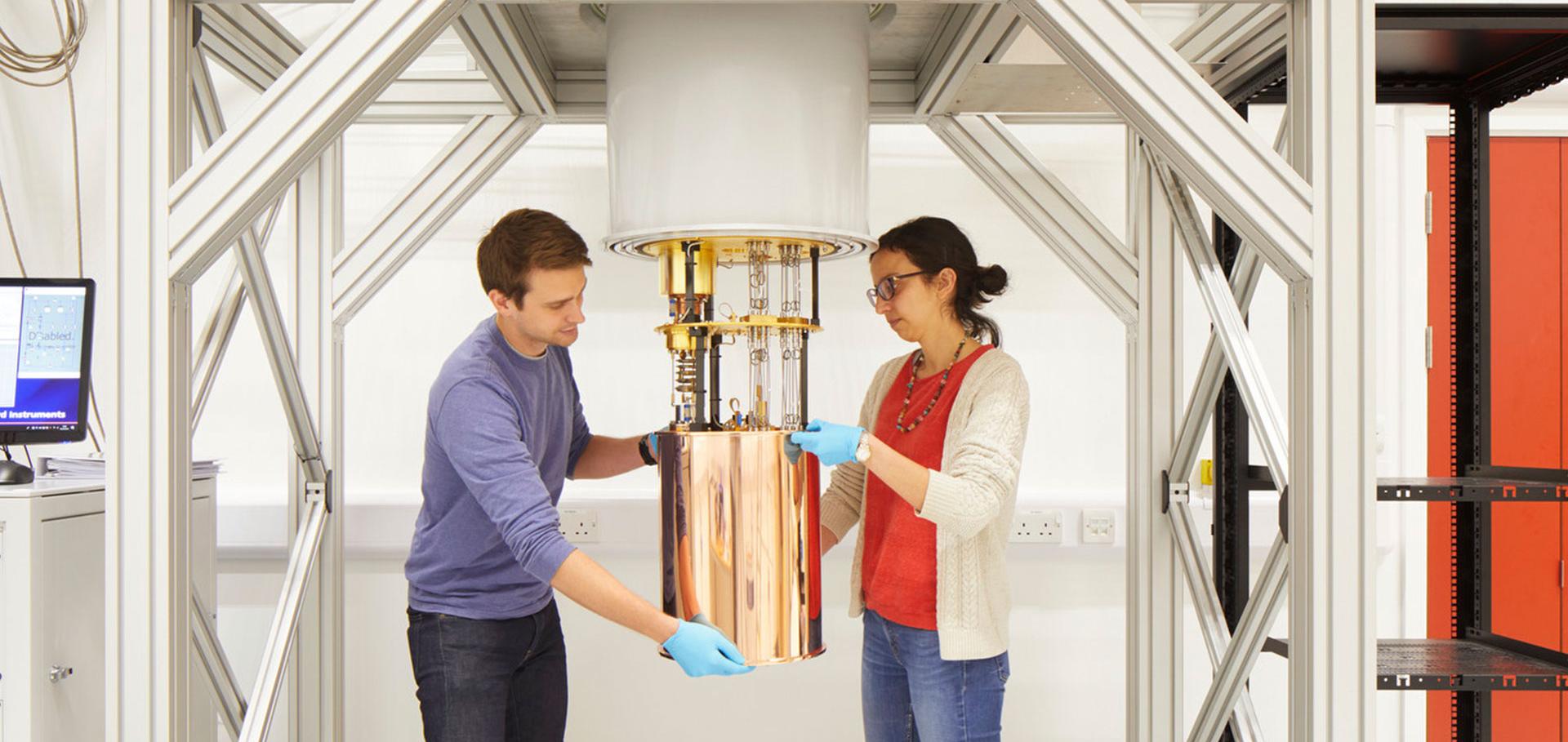
Credit: Jack Hobhouse

Dr Dharmalingam Prabhakaran

Researcher

Research theme

  • Quantum materials

Sub department

  • Condensed Matter Physics

Research groups

  • Synthesis and crystal growth
dharmalingam.prabhakaran@physics.ox.ac.uk
Telephone: 01865 (2)72270,01865 (2)72351,01865 (2)72341
Clarendon Laboratory, room 177,377,373
  • About
  • Publications

AFM-based functional tomography - to mill or not to mill, that is the question!

Advanced Materials Interfaces Wiley 12:9 (2025) 2400813

Abstract:

The electrical response of ferroelectric domain walls is often influenced by their geometry underneath the sample surface. Tomographic imaging in these material systems has therefore become increasingly important for its ability to correlate the surface-level functional response with subsurface domain microstructure. In this context, AFM-based tomography emerges as a compelling choice because of its simplicity, high resolution, and robust contrast mechanism. However, to date, the technique has been implemented in a limited number of ferroelectric materials, typically to depths of a few hundred nanometers or on relatively soft materials, resulting in an unclear understanding of its capabilities and limitations. In this work, AFM tomography is carried out in YbMnO3, mapping its complex domain microstructure up to a depth of ≈1.8 µm along with its current pathways. A model is presented, describing the impact of interconnected domain walls within the network, which act as current dividers and codetermine how currents distribute. Finally, challenges such as tip-blunting and subsurface damage are identified through TEM studies, and strategies to address them are also put forward. This study highlights the potential of AFM tomography and can spur interest within the ferroics community for its use in the investigation of similar material systems.

More details from the publisher
Details from ORA

AFM‐Based Functional Tomography – To Mill or Not to Mill, that is the Question!

Advanced Materials Interfaces Wiley (2025)

Authors:

Niyorjyoti Sharma, Kristina M Holsgrove, James Dalzell, Conor J McCluskey, Jilai He, Dennis Meier, Dharmalingam Prabhakaran, Brian J Rodriguez, Raymond GP McQuaid, J Marty Gregg, Amit Kumar
More details from the publisher

Elastic softness of low-symmetry frustrated ATi2O5 (A=Co,Fe)

Physical Review B American Physical Society (APS) 111:2 (2025) 024426

Authors:

Tadataka Watanabe, Kazuya Takayanagi, Ray Nishimura, Yoshiaki Hara, Dharmalingam Prabhakaran, Roger D Johnson, Stephen J Blundell
More details from the publisher
More details

An in-depth analysis of the structure, optics, morphology and photocatalytic characteristics of cerium doped tin oxide nanoparticles

Solar Energy Elsevier 286 (2025) 113153

Authors:

T Sathya, L Selvarajan, D Prabhakaran, K Saravanakumar
More details from the publisher

Discovery of an antiferromagnetic topological nodal-line Kondo semimetal

arXiv (2024)

Authors:

Defa F Liu, YF Xu, HY Hu, JY Liu, Yh Yang, D Pei, Dharmalingam Prabhakaran, Thorsten Hesjedal, Yulin Chen

Abstract:

The symbiosis of strong interactions, flat bands, topology and symmetry has led to the discovery of exotic phases of matter, including fractional Chern insulators, correlated moiré topological superconductors, and Dirac and Weyl semimetals. Correlated metals, such as those present in Kondo lattices, rely on the screening of local moments by a sea of non-magnetic conduction electrons. Here, we report on a unique topological Kondo lattice compound, CeCo2P2, where the Kondo effect - whose existence under the magnetic Co phase is protected by PT symmetry - coexists with antiferromagnetic order emerging from the flat bands associated with the Co atoms. Remarkably, this is the only known Kondo lattice compound where magnetic order occurs in non-heavy electrons, and puzzlingly, at a temperature significantly higher than that of the Kondo effect. Furthermore, at low temperatures, the emergence of the Kondo effect, in conjunction with a glide-mirror-z symmetry, results in a nodal line protected by bulk topology near the Fermi energy. These unusual properties, arising from the interplay between itinerant and correlated electrons from different constituent elements, lead to novel quantum phases beyond the celebrated topological Kondo insulators and Weyl Kondo semimetals. CeCo2P2 thus provides an ideal platform for investigating narrow bands, topology, magnetism, and the Kondo effect in strongly correlated electron systems.
More details from the publisher
Details from ORA

Pagination

  • First page First
  • Previous page Prev
  • Page 1
  • Page 2
  • Page 3
  • Current page 4
  • Page 5
  • Page 6
  • Page 7
  • Page 8
  • Page 9
  • …
  • Next page Next
  • Last page Last

Footer Menu

  • Contact us
  • Giving to the Dept of Physics
  • Work with us
  • Media

User account menu

  • Log in

Follow us

FIND US

Clarendon Laboratory,

Parks Road,

Oxford,

OX1 3PU

CONTACT US

Tel: +44(0)1865272200

University of Oxfrod logo Department Of Physics text logo
IOP Juno Champion logo Athena Swan Silver Award logo

© University of Oxford - Department of Physics

Cookies | Privacy policy | Accessibility statement

Built by: Versantus

  • Home
  • Research
  • Study
  • Engage
  • Our people
  • News & Comment
  • Events
  • Our facilities & services
  • About us
  • Giving to Physics
  • Current students
  • Staff intranet