Home
Department Of Physics text logo
  • Research
    • Our research
    • Our research groups
    • Our research in action
    • Research funding support
    • Summer internships for undergraduates
  • Study
    • Undergraduates
    • Postgraduates
  • Engage
    • For alumni
    • For business
    • For schools
    • For the public
  • Support
Menu
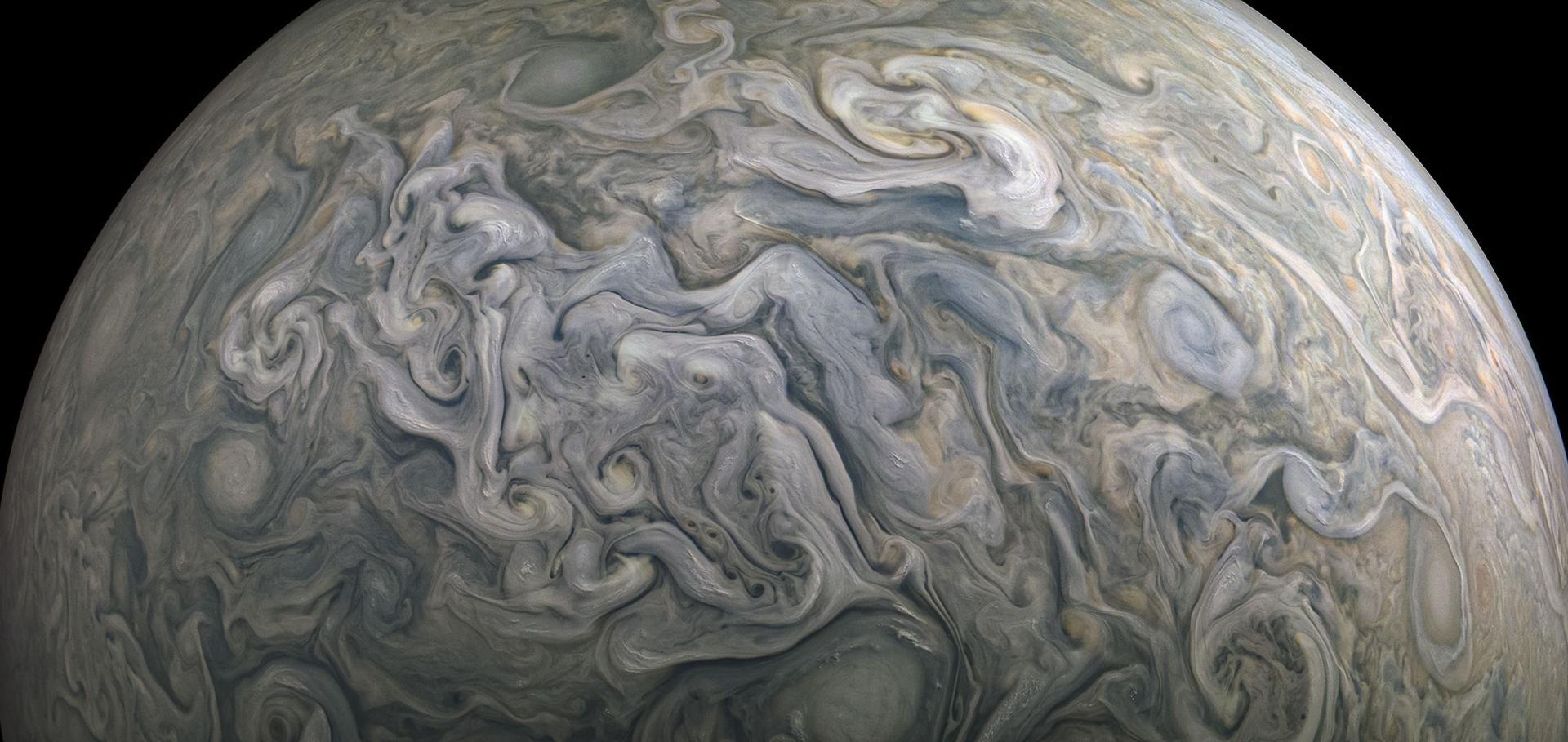
Juno Jupiter image

Prof. Patrick Irwin

Professor of Planetary Physics

Research theme

  • Exoplanets and planetary physics

Sub department

  • Atmospheric, Oceanic and Planetary Physics

Research groups

  • Exoplanet atmospheres
  • Planetary atmosphere observation analysis
  • Solar system
patrick.irwin@physics.ox.ac.uk
Telephone: 01865 (2)72083
Atmospheric Physics Clarendon Laboratory, room 306
Personal research page
NEMESIS
Github data sharing website
  • About
  • Publications

Dynamics and clouds in planetary atmospheres from telescopic observations

Astronomy and Astrophysics Review Springer 31:1 (2023) 5

Authors:

Agustin Sanchez-Lavega, Patrick Irwin, Antonio Garcia Munoz

Abstract:

This review presents an insight into our current knowledge of the atmospheres of the planets Venus, Mars, Jupiter, Saturn, Uranus and Neptune, the satellite Titan, and those of exoplanets. It deals with the thermal structure, aerosol properties (hazes and clouds, dust in the case of Mars), chemical composition, global winds, and selected dynamical phenomena in these objects. Our understanding of atmospheres is greatly benefitting from the discovery in the last 3 decades of thousands of exoplanets. The exoplanet properties span a broad range of conditions, and it is fair to expect as much variety for their atmospheres. This complexity is driving unprecedented investigations of the atmospheres, where those of the solar systems bodies are the obvious reference. We are witnessing a significant transfer of knowledge in both directions between the investigations dedicated to Solar System and exoplanet atmospheres, and there are reasons to think that this exchange will intensity in the future. We identify and select a list of research subjects that can be conducted at optical and infrared wavelengths with future and currently available ground-based and space-based telescopes, but excluding those from the space missions to solar system bodies.
More details from the publisher
Details from ORA
More details

Latitudinal variations in methane abundance, aerosol opacity and aerosol scattering efficiency in Neptune's atmosphere determined from VLT/MUSE

Journal of Geophysical Research: Planets American Geophysical Union 128:11 (2023) e2023JE007980

Authors:

Patrick Irwin, Jack Dobinson, Arjuna James, Wong Michael, Fletcher Leigh, Roman Michael, Teanby Nicholas, Orton Glenn, Perez-Hoyos Santiago, Sanchez-Lavega Agustin, Simon Amy, Morales-Juberias Raul, de Pater Imke

Abstract:

Spectral observations of Neptune made in 2019 with the MUSE instrument at the Very Large Telescope in Chile have been analysed to determine the spatial variation of aerosol scattering properties and methane abundance in Neptune’s atmosphere. The darkening of the South Polar Wave (SPW) at ∼ 60◦S, and dark spots such as the Voyager 2 Great Dark Spot is concluded to be due to a spectrally-dependent darkening (λ < 650nm) of particles in a deep aerosol layer at ∼ 5 bar and presumed to be composed of a mixture of ~ 650 nm, with bright zones latitudinally separated by ∼ 25◦ . This feature, similar to the spectral characteristics of a discrete deep bright spot DBS-2019 found in our data, is found to be consistent with a brightening of the particles in the same ∼5-bar aerosol layer at λ > 650 nm. We find the properties of an overlying methane/haze aerosol layer at ∼ 2 bar are, to first-order, invariant with latitude, while variations in the opacity of an upper tropospheric haze layer reproduce the observed reflectivity at methane-absorbing wavelengths, with higher abundances found at the equator and also in a narrow ‘zone’ at 80◦S. Finally, we find the mean abundance of methane below its condensation level to be 6-7% at the equator reducing to ∼3% south of ∼25◦S, although the absolute abundances are model dependent.
More details from the publisher
Details from ORA
More details

Latitudinal variations in methane abundance, aerosol opacity and aerosol scattering efficiency in Neptune's atmosphere determined from VLT/MUSE

(2023)

Authors:

Patrick GJ Irwin, Jack Dobinson, Arjuna James, Michael H Wong, Leigh N Fletcher, Michael T Roman, Nicholas A Teanby, Daniel Toledo, Glenn S Orton, Santiago Perez-Hoyos, Agustin Sanchez-Lavega, Amy Simon, Raul Morales-Juberias, Imke de Pater
More details from the publisher
Details from ArXiV

The temporal brightening of Uranus’ northern polar hood from HST/WFC3 and HST/STIs observations

Journal of Geophysical Research: Planets Wiley 128:10 (2023) e2023JE007904

Authors:

Arjuna James, Patrick GJ Irwin, Jack Dobinson, Michael H Wong, Troy K Tsubota, Amy A Simon, Leigh N Fletcher, Michael T Roman, Nick A Teanby, Daniel Toledo, Glenn S Orton

Abstract:

Hubble Space Telescope Wide-Field Camera 3 (HST/WFC3) observations spanning 2015 to 2021 confirm a brightening of Uranus' north polar hood feature with time. The vertical aerosol model of Irwin et al. (2023, https://doi.org/10.1038/s41550-023-02047-0) (IRW23), consisting of a deep haze layer based at ∼5 bar, a 1–2 bar haze layer, and an extended haze rising up from the 1–2 bar layer, was applied to retrievals on HST Space Telescope Imaging Spectrograph (STIS) (HST/STIS) observations (Sromovsky et al., 2014, 2019, https://doi.org/10.1016/j.icarus.2014.05.016, https://doi.org/10.1016/j.icarus.2018.06.026) revealing a reduction in cloud-top CH4 volume mixing ratio (VMR) (i.e., above the deep ∼5 bar haze) by an average of 0.0019 ± 0.0003 between 40–80◦N (∼10% average reduction) from 2012 to 2015. A combination of latitudinal retrievals on the HST/WFC3 and HST/STIS data sets, again employing the IRW23 model, reveal a temporal thickening of the 1–2 bar haze layer to be the main cause of the polar hood brightening, finding an average increase in integrated opacity of 1.09 ± 0.08 (∼33% increase) at 0.8 µm north of ∼45°N, concurrent with a decrease in the imaginary refractive index spectrum of the 1–2 bar haze layer north of ∼40°N and longwards of ∼0.7 µm. Small contributions to the brightening were found from a thickening of the deep aerosol layer, with an average increase in integrated opacity of 0.6 ± 0.1 (58% increase) north of 45°N between 2012 and 2015, and from the aforementioned decrease in CH4 VMR. Our results are consistent with the slowing of a stratospheric meridional circulation, exhibiting subsidence at the poles.
More details from the publisher
Details from ORA
More details

Jupiter science enabled by ESA’s Jupiter Icy Moons Explorer

Space Science Reviews Springer 219 (2023) 53

Authors:

Leigh N Fletcher, Thibault Cavalié, Davide Grassi, Ricardo Hueso, Luisa M Lara, Yohai Kaspi, Eli Galanti, Thomas K Greathouse, Philippa M Molyneux, Marina Galand, Claire Vallat, Olivier Witasse, Rosario Lorente, Paul Hartogh, François Poulet, Yves Langevin, Pasquale Palumbo, G Randall Gladstone, Kurt D Retherford, Michele K Dougherty, Jan-Erik Wahlund, Stas Barabash, Luciano Iess, Lorenzo Bruzzone, Hauke Hussmann, Leonid I Gurvits, Ondřej Santolik, Ivana Kolmasova, Georg Fischer, Ingo Müller-Wodarg, Giuseppe Piccioni, Thierry Fouchet, Jean-Claude Gérard, Agustin Sánchez-Lavega, Patrick GJ Irwin, Denis Grodent, Francesca Altieri, Alessandro Mura, Pierre Drossart, Josh Kammer, Rohini Giles, Stéphanie Cazaux, Geraint Jones, Maria Smirnova, Emmanuel Lellouch, Alexander S Medvedev, Raphael Moreno, Ladislav Rezac, Athena Coustenis, Marc Costa

Abstract:

ESA's Jupiter Icy Moons Explorer (JUICE) will provide a detailed investigation of the Jovian system in the 2030s, combining a suite of state-of-the-art instruments with an orbital tour tailored to maximise observing opportunities. We review the Jupiter science enabled by the JUICE mission, building on the legacy of discoveries from the Galileo, Cassini, and Juno missions, alongside ground- and space-based observatories. We focus on remote sensing of the climate, meteorology, and chemistry of the atmosphere and auroras from the cloud-forming weather layer, through the upper troposphere, into the stratosphere and ionosphere. The Jupiter orbital tour provides a wealth of opportunities for atmospheric and auroral science: global perspectives with its near-equatorial and inclined phases, sampling all phase angles from dayside to nightside, and investigating phenomena evolving on timescales from minutes to months. The remote sensing payload spans far-UV spectroscopy (50-210 nm), visible imaging (340-1080 nm), visible/near-infrared spectroscopy (0.49-5.56 μm), and sub-millimetre sounding (near 530-625 GHz and 1067-1275 GHz). This is coupled to radio, stellar, and solar occultation opportunities to explore the atmosphere at high vertical resolution; and radio and plasma wave measurements of electric discharges in the Jovian atmosphere and auroras. Cross-disciplinary scientific investigations enable JUICE to explore coupling processes in giant planet atmospheres, to show how the atmosphere is connected to (i) the deep circulation and composition of the hydrogen-dominated interior; and (ii) to the currents and charged particle environments of the external magnetosphere. JUICE will provide a comprehensive characterisation of the atmosphere and auroras of this archetypal giant planet.
More details from the publisher
Details from ORA
More details
More details

Pagination

  • First page First
  • Previous page Prev
  • …
  • Page 13
  • Page 14
  • Page 15
  • Page 16
  • Current page 17
  • Page 18
  • Page 19
  • Page 20
  • Page 21
  • …
  • Next page Next
  • Last page Last

Footer Menu

  • Contact us
  • Giving to the Dept of Physics
  • Work with us
  • Media

User account menu

  • Log in

Follow us

FIND US

Clarendon Laboratory,

Parks Road,

Oxford,

OX1 3PU

CONTACT US

Tel: +44(0)1865272200

University of Oxfrod logo Department Of Physics text logo
IOP Juno Champion logo Athena Swan Silver Award logo

© University of Oxford - Department of Physics

Cookies | Privacy policy | Accessibility statement

Built by: Versantus

  • Home
  • Research
  • Study
  • Engage
  • Our people
  • News & Comment
  • Events
  • Our facilities & services
  • About us
  • Giving to Physics
  • Current students
  • Staff intranet