Home
Department Of Physics text logo
  • Research
    • Our research
    • Our research groups
    • Our research in action
    • Research funding support
    • Summer internships for undergraduates
  • Study
    • Undergraduates
    • Postgraduates
  • Engage
    • For alumni
    • For business
    • For schools
    • For the public
  • Support
Menu
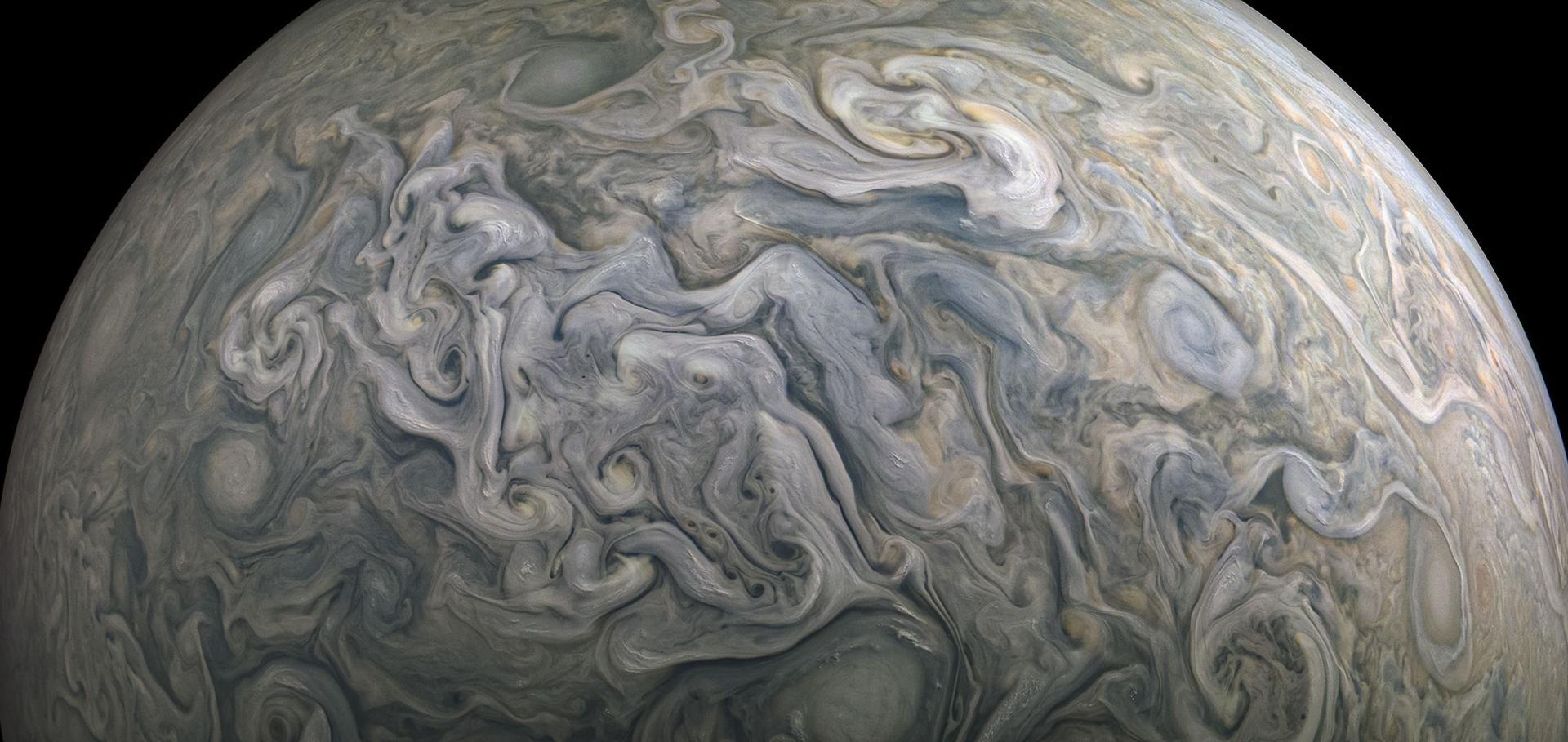
Juno Jupiter image

Prof. Patrick Irwin

Professor of Planetary Physics

Research theme

  • Exoplanets and planetary physics

Sub department

  • Atmospheric, Oceanic and Planetary Physics

Research groups

  • Exoplanet atmospheres
  • Planetary atmosphere observation analysis
  • Solar system
patrick.irwin@physics.ox.ac.uk
Telephone: 01865 (2)72083
Atmospheric Physics Clarendon Laboratory, room 306
Personal research page
NEMESIS
Github data sharing website
  • About
  • Publications

A single-scattering approximation for infrared radiative transfer in limb geometry in the Martian atmosphere

Journal of Quantitative Spectroscopy and Radiative Transfer 112:10 (2011) 1568-1580

Authors:

A Kleinböhl, JT Schofield, WA Abdou, PGJ Irwin, RJ de Kok

Abstract:

We present a single-scattering approximation for infrared radiative transfer in limb geometry in the Martian atmosphere. It is based on the assumption that the upwelling internal radiation field is dominated by a surface with a uniform brightness temperature. It allows the calculation of the scattering source function for individual aerosol types, mixtures of aerosol types, and mixtures of gas and aerosol. The approximation can be applied in a Curtis-Godson radiative transfer code and is used for operational retrievals from Mars Climate Sounder measurements. Radiance comparisons with a multiple scattering model show good agreement in the mid- and far-infrared although the approximate model tends to underestimate the radiances in realistic conditions of the Martian atmosphere. Relative radiance differences are found to be about 2% in the lowermost atmosphere, increasing to ~10% in the middle atmosphere of Mars. The increasing differences with altitude are mostly due to the increasing contribution to limb radiance of scattering relative to emission at the colder, higher atmospheric levels. This effect becomes smaller toward longer wavelengths at typical Martian temperatures. The relative radiance differences are expected to produce systematic errors of similar magnitude in retrieved opacity profiles. © 2011 Elsevier Ltd.
More details from the publisher
More details

Thermal structure and dynamics of Saturn's northern springtime disturbance.

Science 332:6036 (2011) 1413-1417

Authors:

Leigh N Fletcher, Brigette E Hesman, Patrick GJ Irwin, Kevin H Baines, Thomas W Momary, Agustin Sanchez-Lavega, F Michael Flasar, Peter L Read, Glenn S Orton, Amy Simon-Miller, Ricardo Hueso, Gordon L Bjoraker, Andrei Mamoutkine, Teresa del Rio-Gaztelurrutia, Jose M Gomez, Bonnie Buratti, Roger N Clark, Philip D Nicholson, Christophe Sotin

Abstract:

Saturn's slow seasonal evolution was disrupted in 2010-2011 by the eruption of a bright storm in its northern spring hemisphere. Thermal infrared spectroscopy showed that within a month, the resulting planetary-scale disturbance had generated intense perturbations of atmospheric temperatures, winds, and composition between 20° and 50°N over an entire hemisphere (140,000 kilometers). The tropospheric storm cell produced effects that penetrated hundreds of kilometers into Saturn's stratosphere (to the 1-millibar region). Stratospheric subsidence at the edges of the disturbance produced "beacons" of infrared emission and longitudinal temperature contrasts of 16 kelvin. The disturbance substantially altered atmospheric circulation, transporting material vertically over great distances, modifying stratospheric zonal jets, exciting wave activity and turbulence, and generating a new cold anticyclonic oval in the center of the disturbance at 41°N.
More details from the publisher
More details

Jovian temperature and cloud variability during the 2009-2010 fade of the South Equatorial Belt

Icarus 213:2 (2011) 564-580

Authors:

LN Fletcher, GS Orton, JH Rogers, AA Simon-Miller, I de Pater, MH Wong, O Mousis, PGJ Irwin, M Jacquesson, PA Yanamandra-Fisher

Abstract:

Mid-infrared 7-20 μm imaging of Jupiter from ESO's Very Large Telescope (VLT/VISIR) demonstrate that the increased albedo of Jupiter's South Equatorial Belt (SEB) during the 'fade' (whitening) event of 2009-2010 was correlated with changes to atmospheric temperature and aerosol opacity. The opacity of the tropospheric condensation cloud deck at pressures less than 800. mbar increased by 80% between May 2008 and July 2010, making the SEB (7-17°S) as opaque in the thermal infrared as the adjacent equatorial zone. After the cessation of discrete convective activity within the SEB in May 2009, a cool band of high aerosol opacity (the SEB zone at 11-15°S) was observed separating the cloud-free northern and southern SEB components. The cooling of the SEBZ (with peak-to-peak contrasts of 1.0 ± 0.5. K), as well as the increased aerosol opacity at 4.8 and 8.6 μm, preceded the visible whitening of the belt by several months. A chain of five warm, cloud-free 'brown barges' (subsiding airmasses) were observed regularly in the SEB between June 2009 and June 2010, by which time they too had been obscured by the enhanced aerosol opacity of the SEB, although the underlying warm circulation was still present in July 2010. Upper tropospheric temperatures (150-300. mbar) remained largely unchanged during the fade, but the cool SEBZ formation was detected at deeper levels (p>. 300. mbar) within the convectively-unstable region of the troposphere. The SEBZ formation caused the meridional temperature gradient of the SEB to decrease between 2008 and 2010, reducing the vertical thermal windshear on the zonal jets bounding the SEB. The southern SEB had fully faded by July 2010 and was characterised by short-wave undulations at 19-20°S. The northern SEB persisted as a narrow grey lane of cloud-free conditions throughout the fade process. The cool temperatures and enhanced aerosol opacity of the SEBZ after July 2009 are consistent with an upward flux of volatiles (e.g., ammonia-laden air) and enhanced condensation, obscuring the blue-absorbing chromophore and whitening the SEB by April 2010. These changes occurred within cloud decks in the convective troposphere, and not in the radiatively-controlled upper troposphere. NH3 ice coatings on aerosols at p<800mbar are plausible sources of the suppressed 4.8 and 8.6-μm emission, although differences in the spatial distribution of opacity at these two wavelengths suggest that enhanced attenuation by a deeper cloud(p>800mbar) also occurred during the fade. Revival of the dark SEB coloration in the coming months will ultimately require sublimation of these ices by subsidence and warming of volatile-depleted air. © 2011 Elsevier Inc.
More details from the publisher
More details

Upper limits for undetected trace species in the stratosphere of Titan

(2011)

Authors:

Conor A Nixon, Richard K Achterberg, Nicholas A Teanby, Patrick GJ Irwin, Jean-Marie Flaud, Isabelle Kleiner, Alix Dehayem-Kamadjeu, Linda R Brown, Robert L Sams, Bruno Bézard, Athena Coustenis, Todd M Ansty, Andrei Mamoutkine, Sandrine Vinatier, Gordon L Bjoraker, Donald E Jennings, Paul N Romani, F Michael Flasar
More details from the publisher

Uranus' cloud structure and seasonal variability from Gemini-North and UKIRT observations

Icarus 212:1 (2011) 339-350

Authors:

PGJ Irwin, NA Teanby, GR Davis, LN Fletcher, GS Orton, D Tice, A Kyffin

Abstract:

Observations of Uranus were made in September 2009 with the Gemini-North telescope in Hawaii, using both the NIFS and NIRI instruments. Observations were acquired in Adaptive Optics mode and have a spatial resolution of approximately 0.1″ NIRI images were recorded with three spectral filters to constrain the overall appearance of the planet: J, H-continuum and CH4(long), and long slit spectroscopy measurements were also made (1.49-1.79μm) with the entrance slit aligned on Uranus' central meridian. To acquire spectra from other points on the planet, the NIFS instrument was used and its 3″×3″ field of view stepped across Uranus' disc. These observations were combined to yield complete images of Uranus at 2040 wavelengths between 1.476 and 1.803μm. The observed spectra along Uranus central meridian were analysed with the NEMESIS retrieval tool and used to infer the vertical/latitudinal variation in cloud optical depth. We find that the 2009 Gemini data perfectly complement our observations/conclusions from UKIRT/UIST observations made in 2006-2008 and show that the north polar zone at 45°N has continued to steadily brighten while that at 45°S has continued to fade. The improved spatial resolution of the Gemini observations compared with the non-AO UKIRT/UIST data removes some of the earlier ambiguities with our previous analyses and shows that the opacity of clouds deeper than the 2-bar level does indeed diminish towards the poles and also reveals a darkening of the deeper cloud deck near the equator, perhaps coinciding with a region of subduction. We find that the clouds at 45°N,S lie at slightly lower pressures than the clouds at more equatorial latitudes, which suggests that they might possibly be composed of a different condensate, presumably CH4 ice, rather than H2S or NH3 ice, which is assumed for the deeper cloud. In addition, analysis of the centre-to-limb curves of both the Gemini/NIFS and earlier UKIRT/UIST IFU observations shows that the main cloud deck has a well-defined top, and also allows us to better constrain the particle scattering properties. Overall, Uranus appeared to be less convectively active in 2009 than in the previous 3years, which suggests that now the northern spring equinox (which occurred in 2007) is passed the atmosphere is settling back into the quiescent state seen by Voyager 2 in 1986. However, a number of discrete clouds were still observed, with one at 15°N found to lie near the 500 mb level, while another at 30°N, was seen to be much higher at near the 200 mb level. Such high clouds are assumed to be composed of CH4 ice. © 2011 Elsevier Inc.
More details from the publisher
More details

Pagination

  • First page First
  • Previous page Prev
  • …
  • Page 66
  • Page 67
  • Page 68
  • Page 69
  • Current page 70
  • Page 71
  • Page 72
  • Page 73
  • Page 74
  • …
  • Next page Next
  • Last page Last

Footer Menu

  • Contact us
  • Giving to the Dept of Physics
  • Work with us
  • Media

User account menu

  • Log in

Follow us

FIND US

Clarendon Laboratory,

Parks Road,

Oxford,

OX1 3PU

CONTACT US

Tel: +44(0)1865272200

University of Oxfrod logo Department Of Physics text logo
IOP Juno Champion logo Athena Swan Silver Award logo

© University of Oxford - Department of Physics

Cookies | Privacy policy | Accessibility statement

Built by: Versantus

  • Home
  • Research
  • Study
  • Engage
  • Our people
  • News & Comment
  • Events
  • Our facilities & services
  • About us
  • Giving to Physics
  • Current students
  • Staff intranet