Home
Department Of Physics text logo
  • Research
    • Our research
    • Our research groups
    • Our research in action
    • Research funding support
    • Summer internships for undergraduates
  • Study
    • Undergraduates
    • Postgraduates
  • Engage
    • For alumni
    • For business
    • For schools
    • For the public
  • Support
Menu
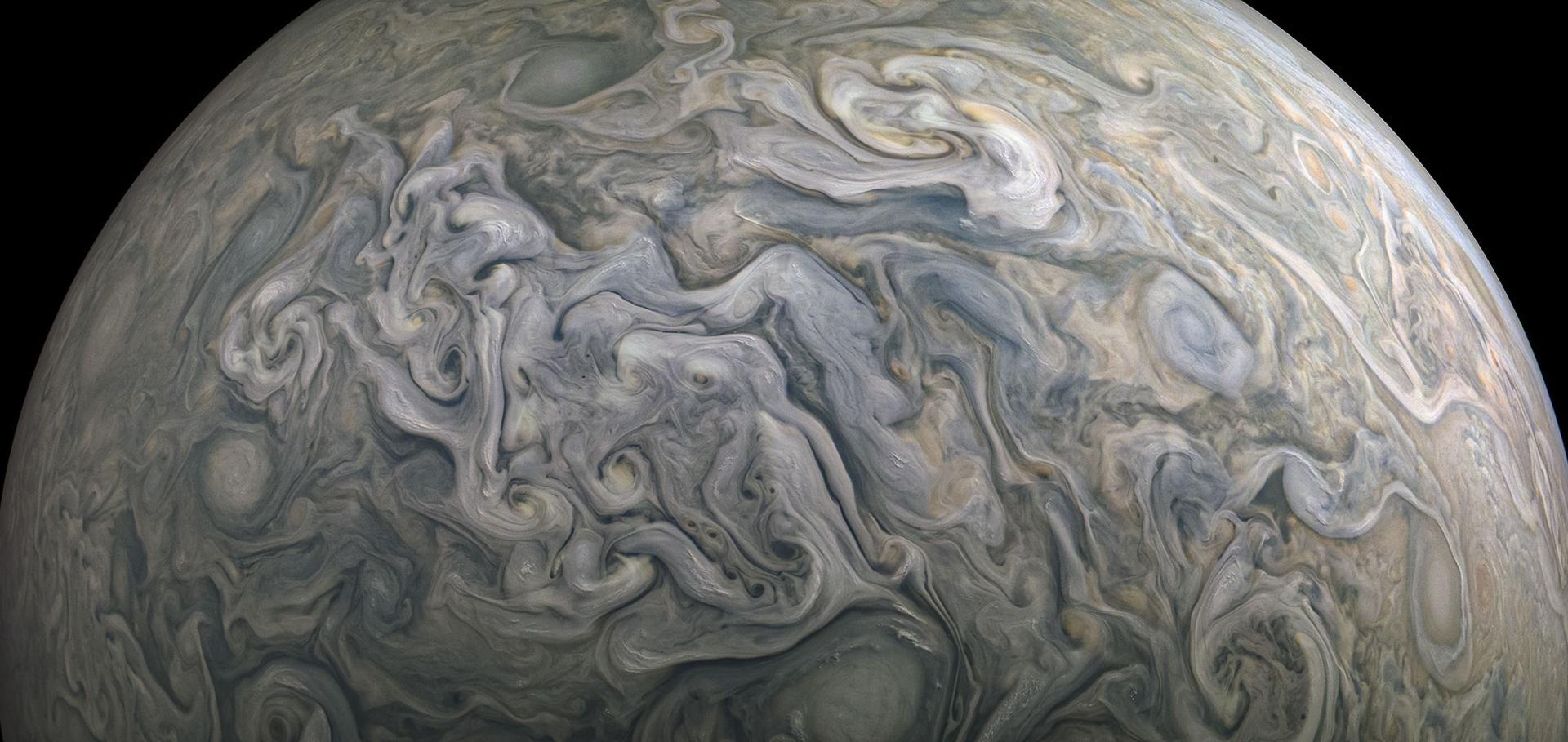
Juno Jupiter image

Prof. Patrick Irwin

Professor of Planetary Physics

Research theme

  • Exoplanets and planetary physics

Sub department

  • Atmospheric, Oceanic and Planetary Physics

Research groups

  • Exoplanet atmospheres
  • Planetary atmosphere observation analysis
  • Solar system
patrick.irwin@physics.ox.ac.uk
Telephone: 01865 (2)72083
Atmospheric Physics Clarendon Laboratory, room 306
Personal research page
NEMESIS
Github data sharing website
  • About
  • Publications

Vertical cloud structure of Uranus from UKIRT/UIST observations and changes seen during Uranus' northern spring equinox from 2006 to 2008

Icarus 203:1 (2009) 287-302

Authors:

PGJ Irwin, NA Teanby, GR Davis

Abstract:

Long-slit spectroscopy observations of Uranus by the United Kingdom Infrared Telescope UIST instrument in 2006, 2007 and 2008 have been used to monitor the change in Uranus' vertical and latitudinal cloud structure through the planet's northern spring equinox in December 2007. The observed reflectance spectra in the Long J (1.17-1.31 μm) and H (1.45-1.65 μm) bands, obtained with the slit aligned along Uranus' central meridian, have been fitted with an optimal estimation retrieval model to determine the vertical cloud profile from 0.1 to 6-8 bar over a wide range of latitudes. Context images in a number of spectral bands were used to discriminate general zonal cloud structural changes from passing discrete clouds. From 2006 to 2007 reflection from deep clouds at pressures between 2 and 6-8 bar increased at all latitudes, although there is some systematic uncertainty in the absolute pressure levels resulting from extrapolating the methane coefficients of Irwin et al. (Irwin, P.G.J., Sromovsky, L.A., Strong, E.K., Sihra, K., Teanby, N.A., Bowles, N., Calcutt, S.B., Remedios, J.J. [2006] Icarus, 181, 309-319) at pressures greater than 1 bar, as noted by Tomasko et al. and Karkoschka and Tomasko (Tomasko, M.G., Bezard, B., Doose, L., Engel, S., Karkoschka, E. [2008] Planet. Space Sci., 56, 624-647; Karkoschka, E., Tomasko, M. [2009] Icarus). However, from 2007 to 2008 reflection from these clouds throughout the southern hemisphere and from both northern and southern mid-latitudes (30° N,S) diminished. As a result, the southern polar collar at 45°S has diminished in brightness relative to mid-latitudes, a similar collar at 45°N has become more prominent (e.g. Rages, K.A., Hammel, H.B., Sromovsky, L. [2007] Bull. Am. Astron. Soc., 39, 425; Sromovsky, L.A., Fry, P.M., Ahue, W.M., Hammel, H.B., de Pater, I., Rages, K.A., Showalter, M.R., van Dam, M.A. [2008] vol. 40 of AAS/Division for Planetary Sciences Meeting Abstracts, pp. 488-489; Sromovsky, L.A., Ahue, W.K.M., Fry, P.M., Hammel, H.B., de Pater, I., Rages, K.A., Showalter, M.R. [2009] Icarus), and the lowering reflectivity from mid-latitudes has left a noticeable brighter cloud zone at the equator (e.g. Sromovsky, L.A., Fry, P.M. [2007] Icarus, 192, 527-557;Karkoschka, E., Tomasko, M. [2009] Icarus). For such substantial cloud changes to have occurred in just two years suggests that the circulation of Uranus' atmosphere is much more vigorous and/or efficient than is commonly thought. The composition of the main observed cloud decks between 2 and 6-8 bar is unclear, but the absence of the expected methane cloud at 1.2-1.3 bar (Lindal, G.F., Lyons, J.R., Sweetnam, D.N., Eshleman, V.R., Hinson, D.P. [1987] J. Geophys. Res., 92, 14987-15001) is striking (as previously noted by, among others, Sromovsky, L.A., Irwin, P.G.J., Fry, P.M. [2006] Icarus, 182, 577-593; Sromovsky, L.A., Fry, P.M. [2007] Icarus, 192, 527-557; Sromovsky, L.A., Fry, P.M. [2008] Icarus, 193, 252-266; Karkoschka, E., Tomasko, M. [2009] Icarus) and suggests that cloud particles may be considerably different from pure condensates and may be linked with stratospheric haze particles drizzling down from above, or that tropospheric hazes are generated near the methane condensation level and then drizzle down to deep pressures as suggested by Karkoschka and Tomasko (Karkoschka, E., Tomasko, M. [2009] Icarus). The retrieved cloud structures were also tested for different assumptions of the deep methane mole fraction, which Karkoschka and Tomasko (Karkoschka, E., Tomasko, M. [2009] Icarus) find may vary from ∼1-2% in polar regions to perhaps as much as 4% equatorwards of 45°N,S. We found that such variations did not significantly affect our conclusions. © 2009 Elsevier Inc. All rights reserved.
More details from the publisher
More details

Determining vertical cloud structure on Venus using near-infrared spectroscopy

European Planetary Science Congress 2009 (2009) 249-249

Authors:

JK Barstow, FW Taylor, CCC Tsang, CF Wilson, PGJ Irwin, P Drossart, G Piccioni

Minor Species in the Deep Atmosphere of Venus: Dynamical Tracers seen by Venus Express

AAS/Division for Planetary Sciences Meeting Abstracts #41 41 (2009) #60.07-#60.07

Authors:

C Tsang, CF Wilson, JK Barstow, B Bezard, PGJ Irwin, FW Taylor, G Piccioni, P Drossart, K McGouldrick, SB Calcutt

Phosphine on Jupiter and Saturn from Cassini/CIRS

Icarus 202:2 (2009) 543-564

Authors:

LN Fletcher, GS Orton, NA Teanby, PGJ Irwin

Abstract:

The global distribution of phosphine (PH3) on Jupiter and Saturn is derived using 2.5 cm-1 spectral resolution Cassini/CIRS observations. We extend the preliminary PH3 analyses on the gas giants [Irwin, P.G.J., and 6 colleagues, 2004. Icarus 172, 37-49; Fletcher, L.N., and 9 colleagues, 2007a. Icarus 188, 72-88] by (a) incorporating a wider range of Cassini/CIRS datasets and by considering a broader spectral range; (b) direct incorporation of thermal infrared opacities due to tropospheric aerosols and (c) using a common retrieval algorithm and spectroscopic line database to allow direct comparison between these two gas giants. The results suggest striking similarities between the tropospheric dynamics in the 100-1000 mbar regions of the giant planets: both demonstrate enhanced PH3 at the equator, depletion over neighbouring equatorial belts and mid-latitude belt/zone structures. Saturn's polar PH3 shows depletion within the hot cyclonic polar vortices. Jovian aerosol distributions are consistent with previous independent studies, and on Saturn we demonstrate that CIRS spectra are most consistent with a haze in the 100-400 mbar range with a mean optical depth of 0.1 at 10 μm. Unlike Jupiter, Saturn's tropospheric haze shows a hemispherical asymmetry, being more opaque in the southern summer hemisphere than in the north. Thermal-IR haze opacity is not enhanced at Saturn's equator as it is on Jupiter. Small-scale perturbations to the mean PH3 abundance are discussed both in terms of a model of meridional overturning and parameterisation as eddy mixing. The large-scale structure of the PH3 distributions is likely to be related to changes in the photochemical lifetimes and the shielding due to aerosol opacities. On Saturn, the enhanced summer opacity results in shielding and extended photochemical lifetimes for PH3, permitting elevated PH3 levels over Saturn's summer hemisphere. © 2009 Elsevier Inc.
More details from the publisher
More details

Titan's stratospheric C2N2, C3H4, and C4H2 abundances from Cassini/CIRS far-infrared spectra

Icarus 202:2 (2009) 620-631

Authors:

NA Teanby, PGJ Irwin, R de Kok, A Jolly, B Bézard, CA Nixon, SB Calcutt

Abstract:

Far-IR (25-50 μm, 200-400 cm-1) nadir and limb spectra measured during Cassini's four year prime mission by the Composite InfraRed Spectrometer (CIRS) instrument have been used to determine the abundances of cyanogen (C2N2), methylacetylene (C3H4), and diacetylene (C4H2) in Titan's stratosphere as a function of latitude. All three gases are enriched at northern latitudes, consistent with north polar subsidence. C4H2 abundances agree with those derived previously from mid-IR data, but C3H4 abundances are about 2 times lower, suggesting a vertical gradient or incorrect band intensities in the C3H4 spectroscopic data. For the first time C2N2 was detected at southern and equatorial latitudes with an average volume mixing ratio of 5.5 ± 1.4 × 10- 11 derived from limb data (> 3 - σ significance). This limb result is also corroborated by nadir data, which give a C2N2 volume mixing ratio of 6 ± 3 × 10- 11 (2-σ significance) or alternatively a 3-σ upper limit of 17 × 10- 11. Comparing these figures with photochemical models suggests that galactic cosmic rays may be an important source of N2 dissociation in Titan's stratosphere. Like other nitriles (HCN, HC3N), C2N2 displays greater north polar relative enrichment than hydrocarbons with similar photochemical lifetimes, suggesting an additional loss mechanism for all three of Titan's main nitrile species. Previous studies have suggested that HCN requires an additional sink process such as incorporation into hazes. This study suggests that such a sink may also be required for Titan's other nitrile species. © 2009 Elsevier Inc. All rights reserved.
More details from the publisher
More details

Pagination

  • First page First
  • Previous page Prev
  • …
  • Page 73
  • Page 74
  • Page 75
  • Page 76
  • Current page 77
  • Page 78
  • Page 79
  • Page 80
  • Page 81
  • …
  • Next page Next
  • Last page Last

Footer Menu

  • Contact us
  • Giving to the Dept of Physics
  • Work with us
  • Media

User account menu

  • Log in

Follow us

FIND US

Clarendon Laboratory,

Parks Road,

Oxford,

OX1 3PU

CONTACT US

Tel: +44(0)1865272200

University of Oxfrod logo Department Of Physics text logo
IOP Juno Champion logo Athena Swan Silver Award logo

© University of Oxford - Department of Physics

Cookies | Privacy policy | Accessibility statement

Built by: Versantus

  • Home
  • Research
  • Study
  • Engage
  • Our people
  • News & Comment
  • Events
  • Our facilities & services
  • About us
  • Giving to Physics
  • Current students
  • Staff intranet