Home
Department Of Physics text logo
  • Research
    • Our research
    • Our research groups
    • Our research in action
    • Research funding support
    • Summer internships for undergraduates
  • Study
    • Undergraduates
    • Postgraduates
  • Engage
    • For alumni
    • For business
    • For schools
    • For the public
  • Support
Menu
CMP
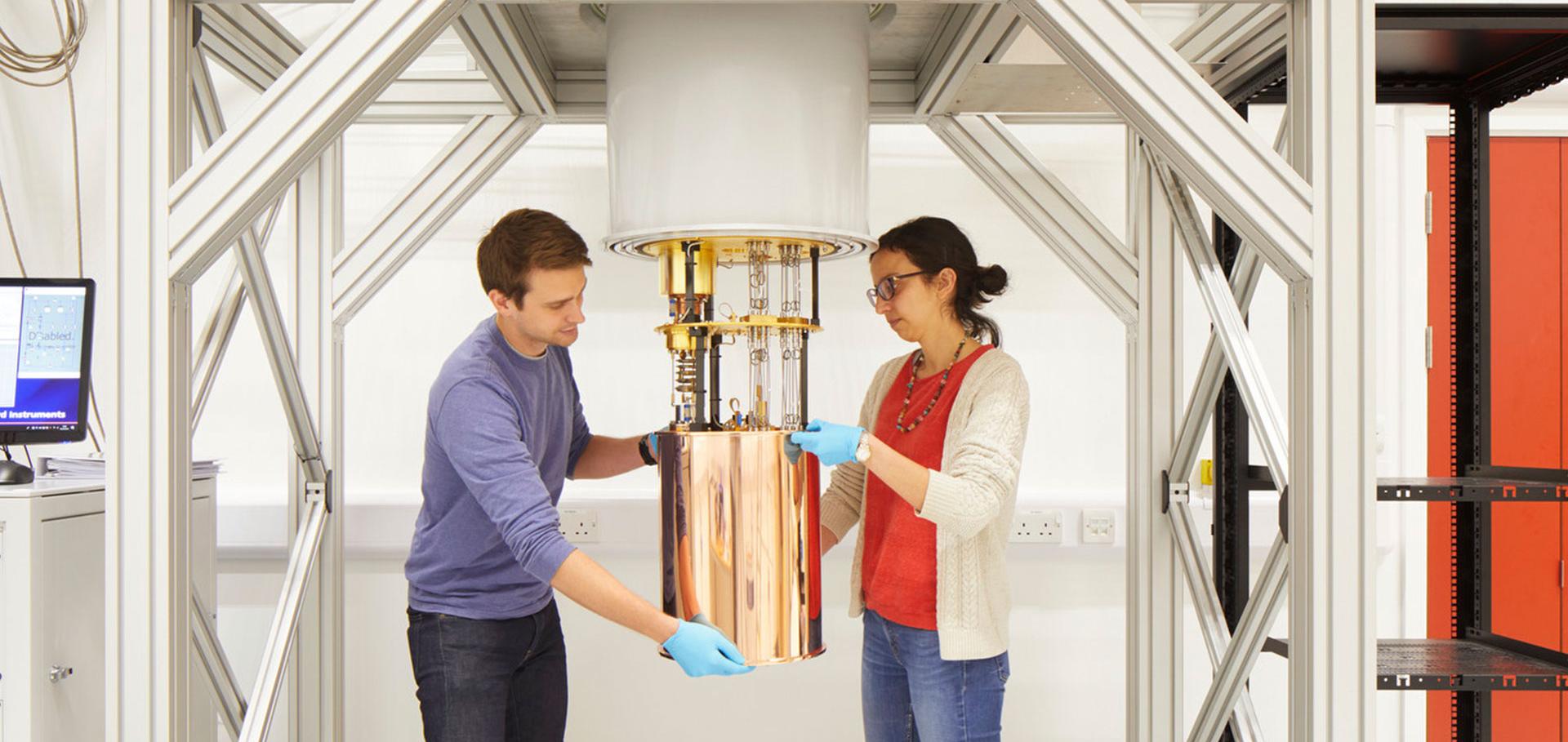
Credit: Jack Hobhouse

Professor Achillefs Kapanidis

Professor of Biological Physics

Research theme

  • Biological physics

Sub department

  • Condensed Matter Physics

Research groups

  • Gene machines
Achillefs.Kapanidis@physics.ox.ac.uk
Telephone: 01865 (2)72226
Biochemistry Building
groups.physics.ox.ac.uk/genemachines/group
  • About
  • Publications

Probing biomolecular structures and dynamics of single molecules using in-gel alternating-laser excitation.

Anal Chem 81:23 (2009) 9561-9570

Authors:

Yusdi Santoso, Achillefs N Kapanidis

Abstract:

Gel electrophoresis is a standard biochemical technique used for separating biomolecules on the basis of size and charge. Despite the use of gels in early single-molecule experiments, gel electrophoresis has not been widely adopted for single-molecule fluorescence spectroscopy. We present a novel method that combines gel electrophoresis and single-molecule fluorescence spectroscopy to simultaneously purify and analyze biomolecules in a gel matrix. Our method, in-gel alternating-laser excitation (ALEX), uses nondenaturing gels to purify biomolecular complexes of interest from free components, aggregates, and nonspecific complexes. The gel matrix also slows down translational diffusion of molecules, giving rise to long, high-resolution time traces without surface immobilization, which allow extended observations of conformational dynamics in a biologically friendly environment. We demonstrated the compatibility of this method with different types of single molecule spectroscopy techniques, including confocal detection and fluorescence-correlation spectroscopy. We demonstrated that in-gel ALEX can be used to study conformational dynamics at the millisecond time scale; by studying a DNA hairpin in gels, we directly observed fluorescence fluctuations due to conformational interconversion between folded and unfolded states. Our method is amenable to the addition of small molecules that can alter the equilibrium and dynamic properties of the system. In-gel ALEX will be a versatile tool for studying structures and dynamics of complex biomolecules and their assemblies.
More details from the publisher

Alternating‐Laser Excitation and Pulsed‐Interleaved Excitation of Single Molecules

Chapter in Single Particle Tracking and Single Molecule Energy Transfer, Wiley (2009) 131-162

Authors:

Seamus J Holden, Achillefs N Kapanidis
More details from the publisher

DNA monofunctionalization of quantum dots.

Chembiochem 10:11 (2009) 1781-1783

Authors:

Helen MJ Carstairs, Kostas Lymperopoulos, Achillefs N Kapanidis, Jonathan Bath, Andrew J Turberfield
More details from the publisher
More details

A facile method for reversibly linking a recombinant protein to DNA.

Chembiochem 10:9 (2009) 1551-1557

Authors:

Russell P Goodman, Christoph M Erben, Jonathan Malo, Wei M Ho, Mireya L McKee, Achillefs N Kapanidis, Andrew J Turberfield

Abstract:

We present a facile method for linking recombinant proteins to DNA. It is based on the nickel-mediated interaction between a hexahistidine tag (His(6)-tag) and DNA functionalized with three nitrilotriacetic acid (NTA) groups. The resulting DNA-protein linkage is site-specific. It can be broken quickly and controllably by the addition of a chelating agent that binds nickel. We have used this new linker to bind proteins to a variety of DNA motifs commonly used in the fabrication of nanostructures by DNA self-assembly.
More details from the publisher
More details

Biology, one molecule at a time.

Trends Biochem Sci 34:5 (2009) 234-243

Authors:

Achillefs N Kapanidis, Terence Strick

Abstract:

Single-molecule techniques have moved from being a fascinating curiosity to a highlight of life science research. The single-molecule approach to biology offers distinct advantages over the conventional approach of taking bulk measurements; this additional information content usually comes at the cost of the additional complexity. Popular single-molecule methods include optical and magnetic tweezers, atomic force microscopy, tethered particle motion and single-molecule fluorescence spectroscopy; the complement of these methods offers a wide range of spatial and temporal capabilities. These approaches have been instrumental in addressing important biological questions in diverse areas such as protein-DNA interactions, protein folding and the function(s) of membrane proteins.
More details from the publisher

Pagination

  • First page First
  • Previous page Prev
  • …
  • Page 32
  • Page 33
  • Page 34
  • Page 35
  • Current page 36
  • Page 37
  • Page 38
  • Page 39
  • Page 40
  • …
  • Next page Next
  • Last page Last

Footer Menu

  • Contact us
  • Giving to the Dept of Physics
  • Work with us
  • Media

User account menu

  • Log in

Follow us

FIND US

Clarendon Laboratory,

Parks Road,

Oxford,

OX1 3PU

CONTACT US

Tel: +44(0)1865272200

University of Oxfrod logo Department Of Physics text logo
IOP Juno Champion logo Athena Swan Silver Award logo

© University of Oxford - Department of Physics

Cookies | Privacy policy | Accessibility statement

Built by: Versantus

  • Home
  • Research
  • Study
  • Engage
  • Our people
  • News & Comment
  • Events
  • Our facilities & services
  • About us
  • Giving to Physics
  • Current students
  • Staff intranet