Home
Department Of Physics text logo
  • Research
    • Our research
    • Our research groups
    • Our research in action
    • Research funding support
    • Summer internships for undergraduates
  • Study
    • Undergraduates
    • Postgraduates
  • Engage
    • For alumni
    • For business
    • For schools
    • For the public
Menu
CMP
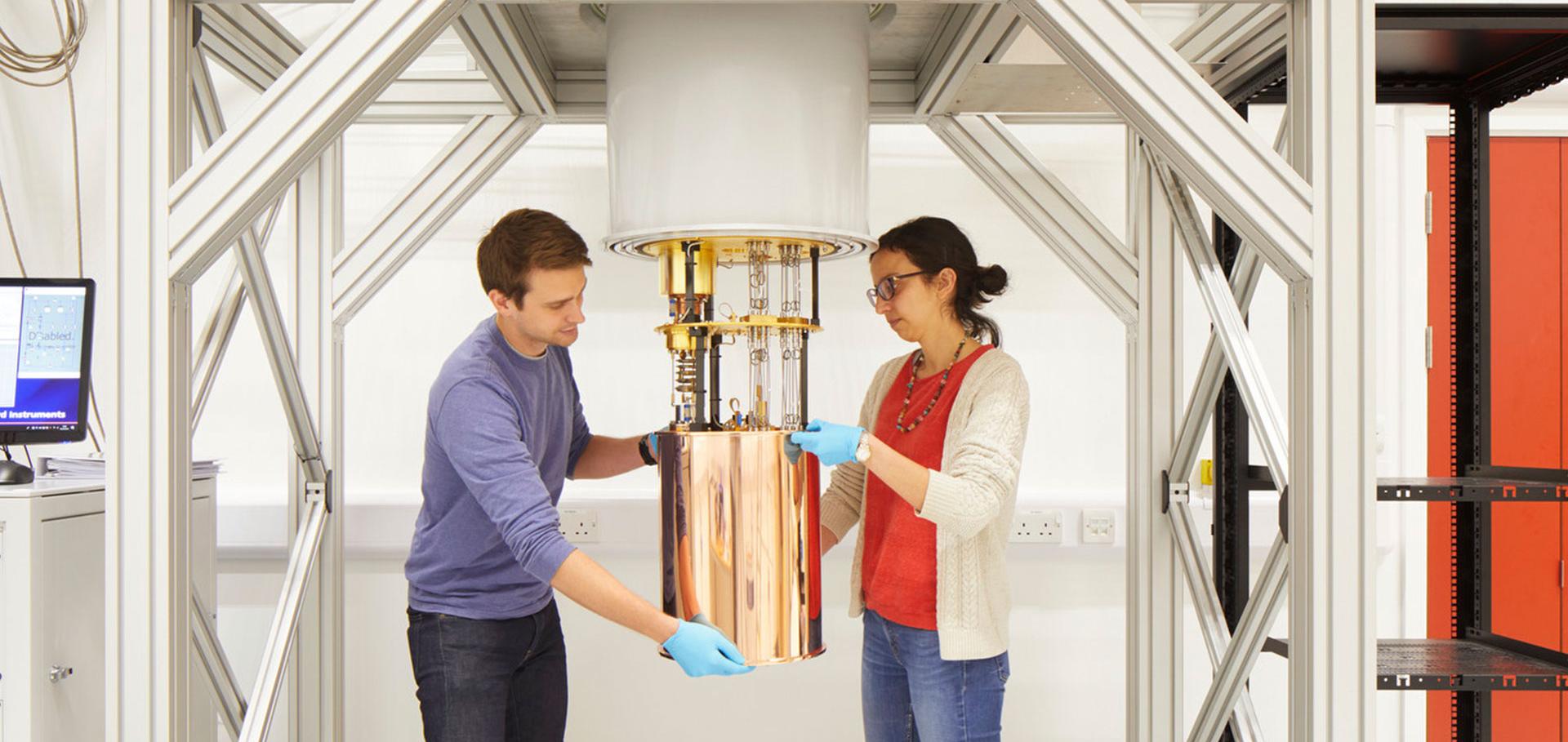
Credit: Jack Hobhouse

Professor Achillefs Kapanidis

Professor of Biological Physics

Research theme

  • Biological physics

Sub department

  • Condensed Matter Physics

Research groups

  • Gene machines
Achillefs.Kapanidis@physics.ox.ac.uk
Telephone: 01865 (2)72226
Biochemistry Building
groups.physics.ox.ac.uk/genemachines/group
  • About
  • Publications

Sensing DNA opening in transcription using quenchable Förster resonance energy transfer.

Biochemistry 49:43 (2010) 9171-9180

Authors:

Thorben Cordes, Yusdi Santoso, Alexandra I Tomescu, Kristofer Gryte, Ling Chin Hwang, Beatriz Camará, Sivaramesh Wigneshweraraj, Achillefs N Kapanidis

Abstract:

Many biological processes, such as gene transcription and replication, involve opening and closing of short regions of double-stranded DNA (dsDNA). Few techniques, however, can study these processes in real time or at the single-molecule level. Here, we present a Förster resonance energy transfer (FRET) assay that monitors the state of DNA (double- vs single-stranded) at a specific region within a DNA fragment, at both the ensemble level and the single-molecule level. The assay utilizes two closely spaced fluorophores: a FRET donor fluorophore (Cy3B) on the first DNA strand and a FRET acceptor fluorophore (ATTO647N) on the complementary strand. Because our assay is based on quenching and dequenching FRET processes, i.e., the presence or absence of contact-induced fluorescence quenching, we have named it a "quenchable FRET" assay or "quFRET". Using lac promoter DNA fragments, quFRET allowed us to sense transcription bubble expansion and compaction during abortive initiation by bacterial RNA polymerase. We also used quFRET to confirm the mode of action of gp2 (a phage-encoded protein that acts as a potent inhibitor of Escherichia coli transcription) and rifampicin (an antibiotic that blocks transcription initiation). Our results demonstrate that quFRET should find numerous applications in many processes involving DNA opening and closing, as well as in the development of new antibacterial therapies involving transcription.
More details from the publisher
More details

Monitoring multiple distances within a single molecule using switchable FRET.

Nat Methods 7:10 (2010) 831-836

Authors:

Stephan Uphoff, Seamus J Holden, Ludovic Le Reste, Javier Periz, Sebastian van de Linde, Mike Heilemann, Achillefs N Kapanidis

Abstract:

The analysis of structure and dynamics of biomolecules is important for understanding their function. Toward this aim, we introduce a method called 'switchable FRET', which combines single-molecule fluorescence resonance energy transfer (FRET) with reversible photoswitching of fluorophores. Typically, single-molecule FRET is measured within a single donor-acceptor pair and reports on only one distance. Although multipair FRET approaches that monitor multiple distances have been developed, they are technically challenging and difficult to extend, mainly because of their reliance on spectrally distinct acceptors. In contrast, switchable FRET sequentially probes FRET between a single donor and spectrally identical photoswitchable acceptors, dramatically reducing the experimental and analytical complexity and enabling direct monitoring of multiple distances. Our experiments on DNA molecules, a protein-DNA complex and dynamic Holliday junctions demonstrate the potential of switchable FRET for studying dynamic, multicomponent biomolecules.
More details from the publisher
More details

Surfing on a new wave of single-molecule fluorescence methods.

Phys Biol 7:3 (2010) 031001

Authors:

Johannes Hohlbein, Kristofer Gryte, Mike Heilemann, Achillefs N Kapanidis

Abstract:

Single-molecule fluorescence microscopy is currently one of the most popular methods in the single-molecule toolbox. In this review, we discuss recent advances in fluorescence instrumentation and assays: these methods are characterized by a substantial increase in complexity of the instrumentation or biological samples involved. Specifically, we describe new multi-laser and multi-colour fluorescence spectroscopy and imaging techniques, super-resolution microscopy imaging and the development of instruments that combine fluorescence detection with other single-molecule methods such as force spectroscopy. We also highlight two pivotal developments in basic and applied biosciences: the new information available from detection of single molecules in single biological cells and exciting developments in fluorescence-based single-molecule DNA sequencing.
More details from the publisher
More details

Characterizing single-molecule FRET dynamics with probability distribution analysis.

Chemphyschem 11:10 (2010) 2209-2219

Authors:

Yusdi Santoso, Joseph P Torella, Achillefs N Kapanidis

Abstract:

Probability distribution analysis (PDA) is a recently developed statistical tool for predicting the shapes of single-molecule fluorescence resonance energy transfer (smFRET) histograms, which allows the identification of single or multiple static molecular species within a single histogram. We used a generalized PDA method to predict the shapes of FRET histograms for molecules interconverting dynamically between multiple states. This method is tested on a series of model systems, including both static DNA fragments and dynamic DNA hairpins. By fitting the shape of this expected distribution to experimental data, the timescale of hairpin conformational fluctuations can be recovered, in good agreement with earlier published results obtained using different techniques. This method is also applied to studying the conformational fluctuations in the unliganded Klenow fragment (KF) of Escherichia coli DNA polymerase I, which allows both confirmation of the consistency of a simple, two-state kinetic model with the observed smFRET distribution of unliganded KF and extraction of a millisecond fluctuation timescale, in good agreement with rates reported elsewhere. We expect this method to be useful in extracting rates from processes exhibiting dynamic FRET, and in hypothesis-testing models of conformational dynamics against experimental data.
More details from the publisher

Einzelmolekül‐DNA‐Biosensoren zur Detektion von Proteinen und Liganden

Angewandte Chemie Wiley 122:7 (2010) 1338-1342

Authors:

Konstantinos Lymperopoulos, Robert Crawford, Joseph P Torella, Mike Heilemann, Ling Chin Hwang, Seamus J Holden, Achillefs N Kapanidis
More details from the publisher

Pagination

  • First page First
  • Previous page Prev
  • …
  • Page 29
  • Page 30
  • Page 31
  • Page 32
  • Current page 33
  • Page 34
  • Page 35
  • Page 36
  • Page 37
  • …
  • Next page Next
  • Last page Last

Footer Menu

  • Contact us
  • Giving to the Dept of Physics
  • Work with us
  • Media

User account menu

  • Log in

Follow us

FIND US

Clarendon Laboratory,

Parks Road,

Oxford,

OX1 3PU

CONTACT US

Tel: +44(0)1865272200

University of Oxfrod logo Department Of Physics text logo
IOP Juno Champion logo Athena Swan Silver Award logo

© University of Oxford - Department of Physics

Cookies | Privacy policy | Accessibility statement

Built by: Versantus

  • Home
  • Research
  • Study
  • Engage
  • Our people
  • News & Comment
  • Events
  • Our facilities & services
  • About us
  • Giving to Physics
  • Current students
  • Staff intranet