Home
Department Of Physics text logo
  • Research
    • Our research
    • Our research groups
    • Our research in action
    • Research funding support
    • Summer internships for undergraduates
  • Study
    • Undergraduates
    • Postgraduates
  • Engage
    • For alumni
    • For business
    • For schools
    • For the public
  • Support
Menu
CMP
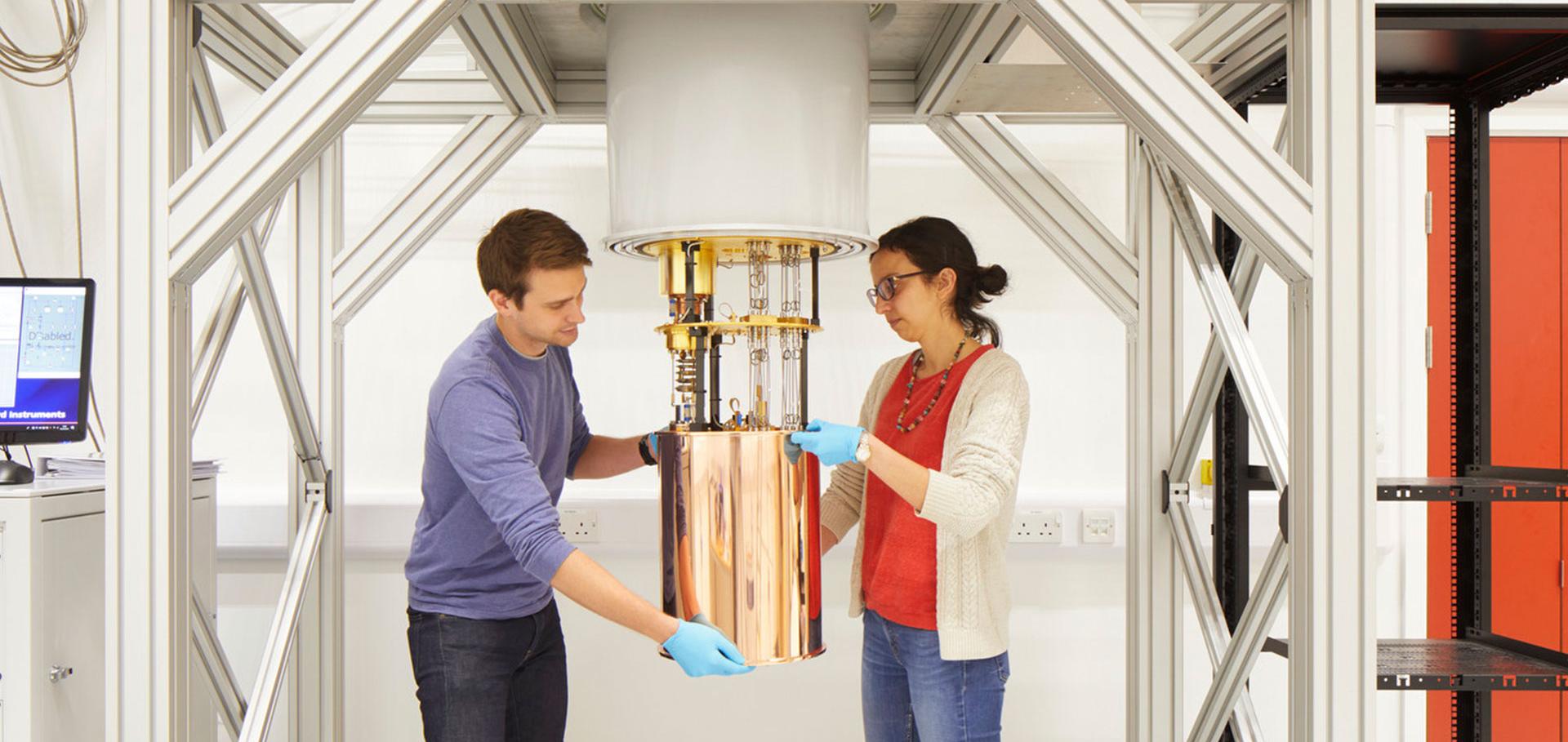
Credit: Jack Hobhouse

Professor Achillefs Kapanidis

Professor of Biological Physics

Research theme

  • Biological physics

Sub department

  • Condensed Matter Physics

Research groups

  • Gene machines
Achillefs.Kapanidis@physics.ox.ac.uk
Telephone: 01865 (2)72226
Biochemistry Building
groups.physics.ox.ac.uk/genemachines/group
  • About
  • Publications

Virus Detection and Identification in Minutes Using Single-Particle Imaging and Deep Learning.

ACS nano (2022)

Authors:

Nicolas Shiaelis, Alexander Tometzki, Leon Peto, Andrew McMahon, Christof Hepp, Erica Bickerton, Cyril Favard, Delphine Muriaux, Monique Andersson, Sarah Oakley, Ali Vaughan, Philippa C Matthews, Nicole Stoesser, Derrick W Crook, Achillefs N Kapanidis, Nicole C Robb

Abstract:

The increasing frequency and magnitude of viral outbreaks in recent decades, epitomized by the COVID-19 pandemic, has resulted in an urgent need for rapid and sensitive diagnostic methods. Here, we present a methodology for virus detection and identification that uses a convolutional neural network to distinguish between microscopy images of fluorescently labeled intact particles of different viruses. Our assay achieves labeling, imaging, and virus identification in less than 5 min and does not require any lysis, purification, or amplification steps. The trained neural network was able to differentiate SARS-CoV-2 from negative clinical samples, as well as from other common respiratory pathogens such as influenza and seasonal human coronaviruses. We were also able to differentiate closely related strains of influenza, as well as SARS-CoV-2 variants. Additional and novel pathogens can easily be incorporated into the test through software updates, offering the potential to rapidly utilize the technology in future infectious disease outbreaks or pandemics. Single-particle imaging combined with deep learning therefore offers a promising alternative to traditional viral diagnostic and genomic sequencing methods and has the potential for significant impact.
More details from the publisher
More details
More details

Single-Molecule Fluorescence Spectroscopy of Molecular Machines

World Scientific Publishing, 2022

Authors:

Achillefs Kapanidis, Mike Heilemann
More details from the publisher

Single-Molecule Tracking Reveals the Functional Allocation, in vivo Interactions and Spatial Organization of Universal Transcription Factor NusG

(2022)

Authors:

Hafez El Sayyed, Oliver J Pambos, Mathew Stracy, Max Gottesman, Achillefs N Kapanidis
More details from the publisher

Real-Time Single-Molecule Studies of RNA Polymerase–Promoter Open Complex Formation Reveal Substantial Heterogeneity Along the Promoter-Opening Pathway

Journal of Molecular Biology Elsevier 434:2 (2022) 167383

Authors:

Anssi M Malinen, Jacob Bakermans, Emil Aalto-Setälä, Martin Blessing, David LV Bauer, Olena Parilova, Georgiy A Belogurov, David Dulin, Achillefs N Kapanidis
More details from the publisher
More details
More details

The rate-limiting step of DNA synthesis by DNA polymerase occurs in the fingers-closed conformation

Journal of Molecular Biology Elsevier 434:2 (2021) 167410

Authors:

Geraint W Evans, Timothy Craggs, Achillefs N Kapanidis

Abstract:

DNA polymerases maintain genomic integrity by copying DNA with high fidelity, part of which relies on the polymerase fingers opening-closing transition, a series of conformational changes during the DNA synthesis reaction cycle. Fingers opening and closing has been challenging to study, mainly due to the need to synchronise molecular ensembles. We previously studied fingers opening-closing on single polymerase-DNA complexes using single-molecule FRET; however, our work was limited to pre-chemistry reaction steps. Here, we advance our analysis to extensible substrates, and observe DNA polymerase (Pol) conformational changes across the entire DNA polymerisation reaction in real-time, gaining direct access to an elusive post-chemistry step rate-limiting for DNA synthesis. Our results showed that Pol adopts the fingers-closed conformation during polymerisation, and that the post-chemistry rate-limiting step occurs in the fingers-closed conformation. We found that fingers-opening in the Pol-DNA binary complex in the absence of polymerisation is slow (∼5.3 s−1), and comparable to the rate of fingers-opening after polymerisation (3.4 s−1); this indicates that the fingers-opening step itself could be largely responsible for the slow post-chemistry step, with the residual rate potentially accounted for by pyrophosphase release. We also observed that DNA chain-termination of the 3′ end of the primer increases substantially the rate of fingers-opening in the Pol-DNA binary complex (5.3 → 29 s−1), demonstrating that the 3′-OH residue is important for the kinetics of fingers conformational changes. Our observations offer mechanistic insight and tools to offer mechanistic insight for all nucleic acid polymerases.
More details from the publisher
Details from ORA
More details

Pagination

  • First page First
  • Previous page Prev
  • …
  • Page 2
  • Page 3
  • Page 4
  • Page 5
  • Current page 6
  • Page 7
  • Page 8
  • Page 9
  • Page 10
  • …
  • Next page Next
  • Last page Last

Footer Menu

  • Contact us
  • Giving to the Dept of Physics
  • Work with us
  • Media

User account menu

  • Log in

Follow us

FIND US

Clarendon Laboratory,

Parks Road,

Oxford,

OX1 3PU

CONTACT US

Tel: +44(0)1865272200

University of Oxfrod logo Department Of Physics text logo
IOP Juno Champion logo Athena Swan Silver Award logo

© University of Oxford - Department of Physics

Cookies | Privacy policy | Accessibility statement

Built by: Versantus

  • Home
  • Research
  • Study
  • Engage
  • Our people
  • News & Comment
  • Events
  • Our facilities & services
  • About us
  • Giving to Physics
  • Current students
  • Staff intranet