Home
Department Of Physics text logo
  • Research
    • Our research
    • Our research groups
    • Our research in action
    • Research funding support
    • Summer internships for undergraduates
  • Study
    • Undergraduates
    • Postgraduates
  • Engage
    • For alumni
    • For business
    • For schools
    • For the public
Menu
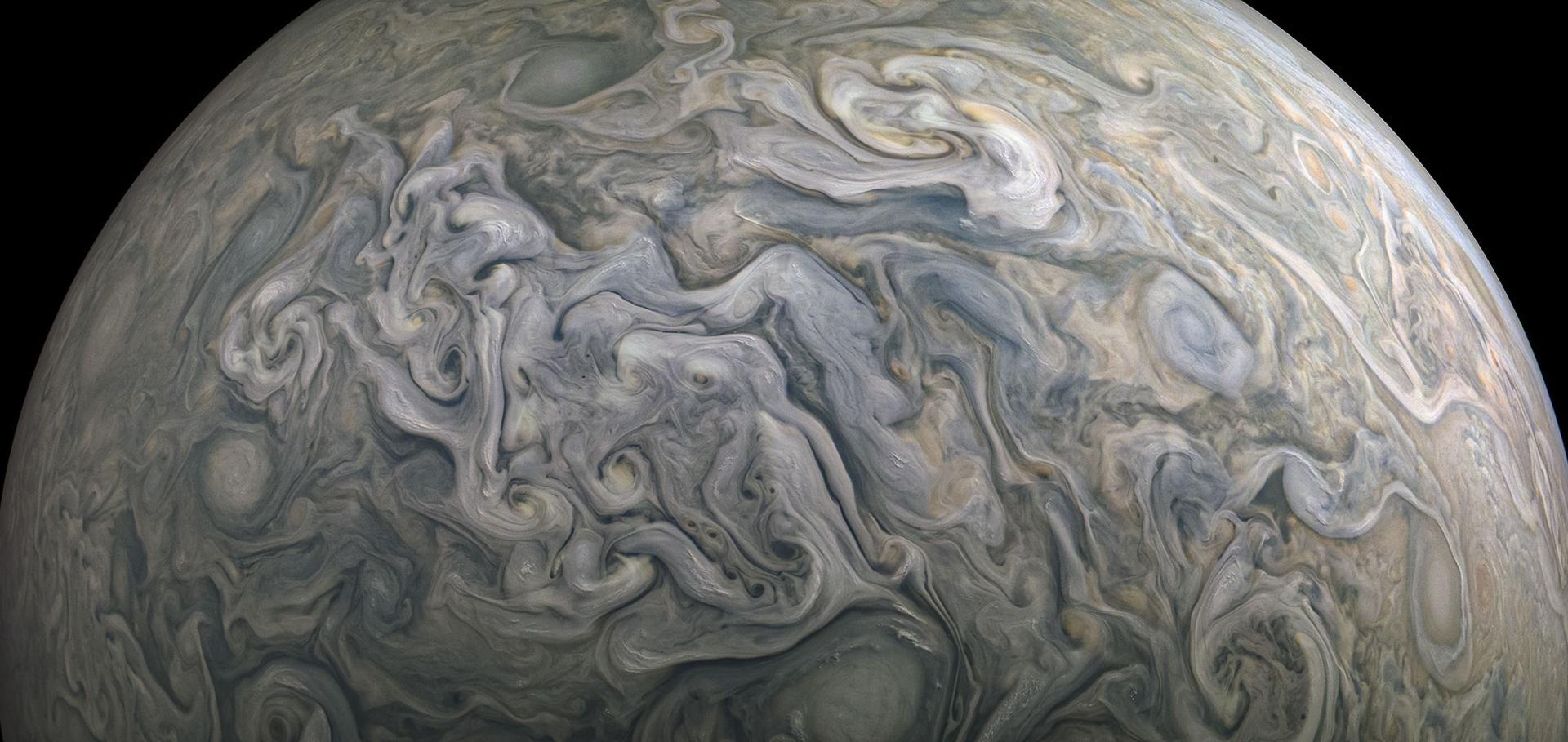
Juno Jupiter image

David Marshall

Professor of Physical Oceanography

Research theme

  • Climate physics

Sub department

  • Atmospheric, Oceanic and Planetary Physics

Research groups

  • Physical oceanography
David.Marshall@physics.ox.ac.uk
Telephone: 01865 (2)72099
Robert Hooke Building, room F47
my personal webpage (external)
  • About
  • Publications

Relative strength of the Antarctic Circumpolar Current and Atlantic Meridional Overturning Circulation

Tellus A: Dynamic Meteorology and Oceanography Taylor and Francis 69:1 (2017) 1338884-1338884

Authors:

David Marshall, Helen Johnson

Abstract:

A simple relationship, based on thermal wind balance, is derived that relates the relative strength of the Antarctic Circumpolar Current (ACC) and Atlantic Meridional Overturning Circulation (AMOC) to the ratios of three depth scales: the e-folding depth of the global stratification, the depth of maximum overturning streamfunction and the maximum depth of the ACC. For realistic values of these depth scales, the relationship predicts a factor 8 ± 4 difference in the volume transports of the ACC and AMOC, consistent with the observation-based ratio of 8 ± 2.

More details from the publisher
Details from ORA
More details

The statistical nature of turbulent barotropic ocean jets

Ocean Modelling Elsevier 113 (2017) 34-49

Authors:

Tomos W David, David Marshall, Laure Zanna

Abstract:

Jets are an important element of the global ocean circulation. Since these jets are turbulent, it is important that they are characterized using a statistical framework. A high resolution barotropic channel ocean model is used to study jet statistics over a wide range of forcing and dissipation parameters. The first four moments of the potential vorticity distribution on contours of time-averaged streamfunction are considered: mean, standard deviation, skewness and kurtosis. A self-similar response to forcing is found in the mean and standard deviation for eastward barotropic jets which exhibit strong mixing barriers; this self-similarity is related to the global potential enstrophy of the flow. The skewness and kurtosis give a behaviour which is characteristic of mixing barriers, revealing a bi/trimodal statistical distribution of potential vorticity with homogenized potential vorticity on each side of the barrier. The mixing barrier can be described by a simple statistical model. This behaviour is shown to be lost in westward jets due to an asymmetry in the formation of zonal mixing barriers. Moreover, when the statistical analysis is performed on eastward jets in a streamfunction following frame of reference, the distribution becomes monomodal. In this way we can distinguish between the statistics due to wave-like meandering of the jet and the statistics due to the more diffusive eddies. The statistical signature of mixing barriers can be seen in more realistic representations of the Southern Ocean and is shown to be an useful diagnostic tool for identifying strong jets on isopycnal surfaces. The statistical consequences of the presence, and absence, of mixing barriers are likely to be valuable for the development of stochastic representations of eddies and their dynamics in ocean models.
More details from the publisher
Details from ORA
More details
More details

Emergent eddy saturation from an energy constrained eddy parameterisation

Ocean Modelling Elsevier 112 (2017) 125-138

Authors:

Julian Mak, David Marshall, James R Maddison, Scott D Bachman

Abstract:

The large-scale features of the global ocean circulation and the sensitivity of these features with respect to forcing changes are critically dependent upon the influence of the mesoscale eddy field. One such feature, observed in numerical simulations whereby the mesoscale eddy field is at least partially resolved, is the phenomenon of eddy saturation, where the time-mean circumpolar transport of the Antarctic Circumpolar Current displays relative insensitivity to wind forcing changes. Coarse-resolution models employing the Gent–McWilliams parameterisation with a constant Gent–McWilliams eddy transfer coefficient seem unable to reproduce this phenomenon. In this article, an idealised model for a wind-forced, zonally symmetric flow in a channel is used to investigate the sensitivity of the circumpolar transport to changes in wind forcing under different eddy closures. It is shown that, when coupled to a simple parameterised eddy energy budget, the Gent–McWilliams eddy transfer coefficient of the form described in Marshall et al. (2012) [ A framework for parameterizing eddy potential vorticity fluxes , J. Phys. Oceanogr., vol. 42, 539–557], which includes a linear eddy energy dependence, produces eddy saturation as an emergent property.
More details from the publisher
Details from ORA
More details
Details from ArXiV
More details

Eddy saturation and frictional control of the Antarctic Circumpolar Current

Geophysical Research Letters American Geophysical Union 44:1 (2017) 286-292

Authors:

David Marshall, MHP Ambaum, JR Maddison, DR Munday, L Novak

Abstract:

The Antarctic Circumpolar Current is the strongest current in the ocean and has a pivotal impact on ocean stratification, heat content, and carbon content. The circumpolar volume transport is relatively insensitive to surface wind forcing in models that resolve turbulent ocean eddies, a process termed “eddy saturation.” Here a simple model is presented that explains the physics of eddy saturation with three ingredients: a momentum budget, a relation between the eddy form stress and eddy energy, and an eddy energy budget. The model explains both the insensitivity of circumpolar volume transport to surface wind stress and the increase of eddy energy with wind stress. The model further predicts that circumpolar transport increases with increased bottom friction, a counterintuitive result that is confirmed in eddy-permitting calculations. These results suggest an unexpected and important impact of eddy energy dissipation, through bottom drag or lee wave generation, on ocean stratification, ocean heat content, and potentially atmospheric CO2.
More details from the publisher
Details from ORA
More details

Evaluation of a scalar eddy transport coefficient based on geometric constraints

Ocean Modelling Elsevier 109 (2016) 44-54

Authors:

SD Bachman, David P Marshall, JR Maddison, J Mak

Abstract:

A suite of idealized models is used to evaluate and compare several previously proposed scalings for the eddy transport coefficient in downgradient mesoscale eddy closures. Of special interest in this comparison is a scaling introduced as part of the eddy parameterization framework of Marshall et al. (2012), which is derived using the inherent geometry of the Eliassen–Palm eddy flux tensor. The primary advantage of using this coefficient in a downgradient closure is that all dimensional terms are explicitly specified and the only uncertainty is a nondimensional parameter, α, which is bounded by one in magnitude. In each model a set of passive tracers is initialized, whose flux statistics are used to invert for the eddy- induced tracer transport. Unlike previous work, where this technique has been employed to diagnose the tensor coefficient of a linear flux-gradient relationship, the idealization of these models allows the lateral eddy transport to be described by a scalar coefficient. The skill of the extant scalings is then measured by comparing their predicted values against the coefficients diagnosed using this method. The Marshall et al. (2012) scaling is shown to scale most closely with the diagnosed coefficients across all simulations. It is shown that the skill of this scaling is due to its functional dependence on the total eddy energy, and that this scaling provides an excellent match to the diagnosed fluxes even in the limit of constant α. Possible extensions to this work, including how to incorporate the resultant transport coefficient into the Gent and McWilliams parameterization, are discussed.
More details from the publisher
Details from ORA
More details

Pagination

  • First page First
  • Previous page Prev
  • …
  • Page 7
  • Page 8
  • Page 9
  • Page 10
  • Current page 11
  • Page 12
  • Page 13
  • Page 14
  • Page 15
  • …
  • Next page Next
  • Last page Last

Footer Menu

  • Contact us
  • Giving to the Dept of Physics
  • Work with us
  • Media

User account menu

  • Log in

Follow us

FIND US

Clarendon Laboratory,

Parks Road,

Oxford,

OX1 3PU

CONTACT US

Tel: +44(0)1865272200

University of Oxfrod logo Department Of Physics text logo
IOP Juno Champion logo Athena Swan Silver Award logo

© University of Oxford - Department of Physics

Cookies | Privacy policy | Accessibility statement

Built by: Versantus

  • Home
  • Research
  • Study
  • Engage
  • Our people
  • News & Comment
  • Events
  • Our facilities & services
  • About us
  • Giving to Physics
  • Current students
  • Staff intranet