Home
Department Of Physics text logo
  • Research
    • Our research
    • Our research groups
    • Our research in action
    • Research funding support
    • Summer internships for undergraduates
  • Study
    • Undergraduates
    • Postgraduates
  • Engage
    • For alumni
    • For business
    • For schools
    • For the public
  • Support
Menu
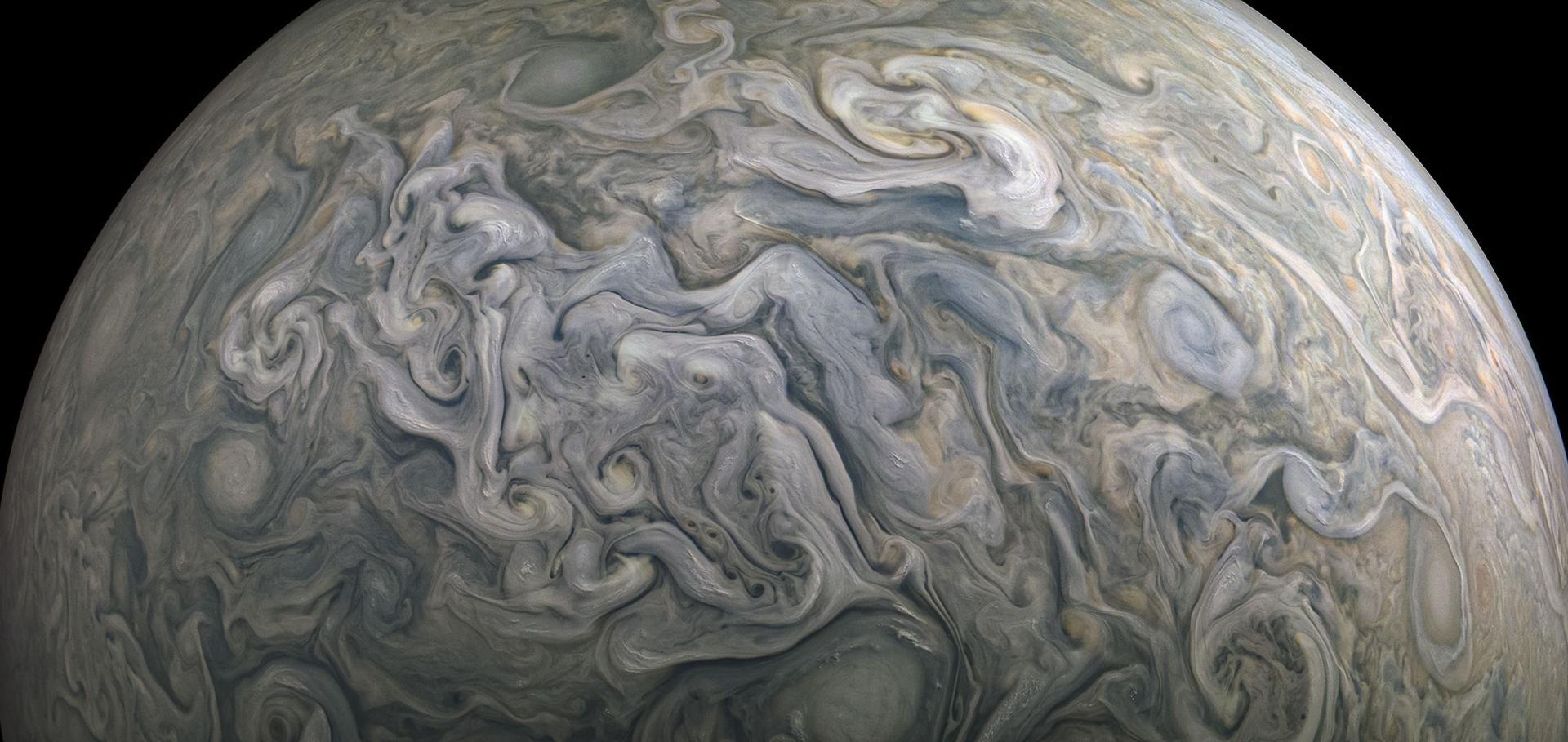
Juno Jupiter image

Dr Scott Osprey FRMetS

Senior NCAS Research Scientist

Research theme

  • Climate physics

Sub department

  • Atmospheric, Oceanic and Planetary Physics

Research groups

  • Climate dynamics
  • Predictability of weather and climate
Scott.Osprey@physics.ox.ac.uk
Telephone: 01865 (2)82434,01865 (2)72923
Robert Hooke Building, room S36
National Centre for Atmospheric Science
SPARC QBOi
Explaining & Predicting Earth System Change
  • About
  • Publications

Impacts, processes and projections of the quasi-biennial oscillation

Nature Reviews Earth and Environment Springer Nature 3 (2022) 588-603

Authors:

James Anstey, Scott Osprey, Joan Alexander, Mark Baldwin, Neal Butchart, Lesley Gray, Yoshio Kawatani, Paul Newman, Jadwiga Richter

Abstract:

In the tropical stratosphere, deep layers of eastward and westward winds encircle the globe and descend regularly from the upper stratosphere to the tropical tropopause. With a complete cycle typically lasting almost 2.5 years, this quasi-biennial oscillation (QBO) is arguably the most predictable mode of atmospheric variability that is not linked to the changing seasons. The QBO affects climate phenomena outside the tropical stratosphere, including ozone transport, the North Atlantic Oscillation and the Madden–Julian Oscillation, and its high predictability could enable better forecasts of these phenomena if models can accurately represent the coupling processes. Climate and forecasting models are increasingly able to simulate stratospheric oscillations resembling the QBO, but exhibit common systematic errors such as weak amplitude in the lowermost tropical stratosphere. Uncertainties about the waves that force the oscillation, particularly the momentum fluxes from small-scale gravity waves excited by deep convection, make its simulation challenging. Improved representation of the processes governing the QBO is expected to lead to better forecasts of the oscillation and its impacts, increased understanding of unusual events such as the two QBO disruptions observed since 2016, and more reliable future projections of QBO behaviour under climate change.
More details from the publisher
Details from ORA
More details

Surface-to-space atmospheric waves from Hunga Tonga-Hunga Ha’apai eruption

Nature Springer Nature 609 (2022) 741-746

Authors:

Corwin J Wright, Neil P Hindley, M Joan Alexander, Mathew Barlow, Lars Hoffmann, Cathryn N Mitchell, Fred Prata, Marie Bouillon, Justin Carstens, Cathy Clerbaux, Scott Osprey, Nick Powell, Cora E Randall, Jia Yue

Abstract:

The January 2022 Hunga Tonga–Hunga Haʻapai eruption was one of the most explosive volcanic events of the modern era1,2, producing a vertical plume which peaked > 50km above the Earth3. The initial explosion and subsequent plume triggered atmospheric waves which propagated around the world multiple times4. A global-scale wave response of this magnitude from a single source has not previously been observed. Here we show the details of this response, using a comprehensive set of satellite and ground-based observations to quantify it from surface to ionosphere. A broad spectrum of waves was triggered by the initial explosion, including Lamb waves5,6 propagating at phase speeds of 318.2±6 ms-1 at surface level and between 308±5 to 319±4 ms-1 in the stratosphere, and gravity waves7 propagating at 238±3 to 269±3 ms-1 in the stratosphere. Gravity waves at sub-ionospheric heights have not previously been observed propagating at this speed or over the whole Earth from a single source8,9. Latent heat release from the plume remained the most significant individual gravity wave source worldwide for >12 hours, producing circular wavefronts visible across the Pacific basin in satellite observations. A single source dominating such a large region is also unique in the observational record. The Hunga Tonga eruption represents a key natural experiment in how the atmosphere responds to a sudden point-source-driven state change, which will be of use for improving weather and climate models.

More details from the publisher
Details from ORA
More details
More details

Autonomous balloons take flight with artificial intelligence

Nature Springer Science and Business Media LLC 588:7836 (2020) 33-34
More details from the publisher
Details from ORA
More details
More details
More details

An unexpected disruption of the atmospheric quasi-biennial oscillation

Science American Association for the Advancement of Science 353:6306 (2016) 1424-1427

Authors:

Scott Osprey, Neal Butchart, Jeff R Knight, Adam A Scaife, Kevin Hamilton, James A Anstey, Verena Schenzinger, Chunxi Zhang

Abstract:

One of the most repeatable phenomena seen in the atmosphere, the quasi-biennial oscillation (QBO) between prevailing eastward and westward wind-jets in the equatorial stratosphere (~16-50 km altitude), was unexpectedly disrupted in February 2016. An unprecedented westward jet formed within the eastward phase in the lower stratosphere and cannot be accounted for by the standard QBO paradigm based on vertical momentum transport. Instead the primary cause was waves transporting momentum from the Northern Hemisphere. Seasonal forecasts did not predict the disruption but analogous QBO disruptions are seen very occasionally in some climate simulations. A return to more typical QBO behavior within the next year is forecast, though the possibility of more frequent occurrences of similar disruptions is projected for a warming climate.
More details from the publisher
Details from ORA
More details
More details

Disentangling Anthropogenic Effects on Southern Hemisphere Circulation and Surface Climate: A Multi‐Model Large Ensemble Approach

Journal of Geophysical Research: Atmospheres 131:16 (2026)

Authors:

Leandro B Díaz, Amy H Butler, David Avisar, Sabine Bischof, Chloe L Boehm, Ghyslaine Boschat, William J Dow, Chaim I Garfinkel, Kevin M Grise, Hemant Khatri, Bianca Mezzina, Marisol Osman, Jonathon S Wright, Panos J Athanasiadis, Julie M Arblaster, Erik Behrens, Thomas J Bracegirdle, Yuanrui Chen, Eun‐Pa Lim, Amanda C Maycock, Seung‐Ki Min, Julia Mindlin, Scott M Osprey, Michael Sigmond, Doug Smith, Tiffany Shaw

Abstract:

Southern Hemisphere (SH) circulation and surface climate changes are emerging in recent decades. For example, in most seasons, the SH Hadley cell edge and the eddy‐driven jet stream have shifted polewards, and the Southern Annular Mode (SAM) has trended towards its positive phase. However, attributing these changes to specific external forcings, such as greenhouse gas (GHG) increases or stratospheric ozone depletion, has been hindered by small ensemble sizes and lack of coherent forcing methodology across multiple models. In this study, we analyzed simulations from 10 models within the Large Ensemble Single Forcing Model Intercomparison Project (LESFMIP) to isolate the long‐term (1850–2014) SH climate response to individual forcings (GHGs, aerosols, and ozone). We found that long‐term SH climate trends are dominated by GHGs across all seasons. Over this time period, stratospheric ozone depletion exerts an influence comparable to GHGs but is restricted to austral spring and summer. Although anthropogenic aerosols show weaker effects on climate trends that oppose those induced by GHG forcing and ozone depletion, they have a noticeable impact. Notably, ozone recovery following the Montreal Protocol is currently weakening or reversing spring and summer trends in key circulation metrics. Finally, we quantify the degree to which the observed sea surface cooling of the Southern Ocean and Antarctic sea ice increase from 1980 to 2014 fall outside the models' ensemble spread. Our results highlight the need to better understand the roles of different forcings, model differences, and discrepancies between models and observations to constrain projections of future Southern Hemisphere climate change. Atmospheric and oceanic circulation changes are emerging in the Southern Hemisphere (SH). To better understand the drivers of these changes, in this study we use a new multi‐model large ensemble data set to look at how specific factors (forcings) have individually influenced the long‐term SH climate trends from 1850 to 2014. We find that greenhouse gases are the main driver of long‐term changes in the SH since the preindustrial era. The impact of stratospheric ozone depletion is comparable to greenhouse gases, but only during austral spring and summer. On the other hand, anthropogenic aerosols partially counteract greenhouse gas effects on the circulation. The models are able to simulate the recent weakening or even reversal of some of the trends in key atmospheric circulation metrics due to the recovery of the ozone layer following the enactment of the Montreal Protocol and its amendments. However, the disagreement between model simulations and real‐world observations for recent trends in Southern Ocean sea surface temperatures and Antarctic sea ice highlights the need for more research to reliably project future climate change in this crucial region. Greenhouse gases drive Southern Hemisphere circulation changes year‐round, while ozone is a key driver during austral spring and summer Although weaker, anthropogenic aerosol effects are substantial and should be accounted for in attribution studies Persistent model‐observational discrepancies exist for recent trends in Southern Ocean sea surface temperature and sea ice extent Greenhouse gases drive Southern Hemisphere circulation changes year‐round, while ozone is a key driver during austral spring and summer Although weaker, anthropogenic aerosol effects are substantial and should be accounted for in attribution studies Persistent model‐observational discrepancies exist for recent trends in Southern Ocean sea surface temperature and sea ice extent
More details from the publisher

Pagination

  • Current page 1
  • Page 2
  • Page 3
  • Page 4
  • Page 5
  • Page 6
  • Page 7
  • Page 8
  • Page 9
  • …
  • Next page Next
  • Last page Last

Footer Menu

  • Contact us
  • Giving to the Dept of Physics
  • Work with us
  • Media

User account menu

  • Log in

Follow us

FIND US

Clarendon Laboratory,

Parks Road,

Oxford,

OX1 3PU

CONTACT US

Tel: +44(0)1865272200

University of Oxfrod logo Department Of Physics text logo
IOP Juno Champion logo Athena Swan Silver Award logo

© University of Oxford - Department of Physics

Cookies | Privacy policy | Accessibility statement

Built by: Versantus

  • Home
  • Research
  • Study
  • Engage
  • Our people
  • News & Comment
  • Events
  • Our facilities & services
  • About us
  • Giving to Physics
  • Current students
  • Staff intranet