Home
Department Of Physics text logo
  • Research
    • Our research
    • Our research groups
    • Our research in action
    • Research funding support
    • Summer internships for undergraduates
  • Study
    • Undergraduates
    • Postgraduates
  • Engage
    • For alumni
    • For business
    • For schools
    • For the public
Menu
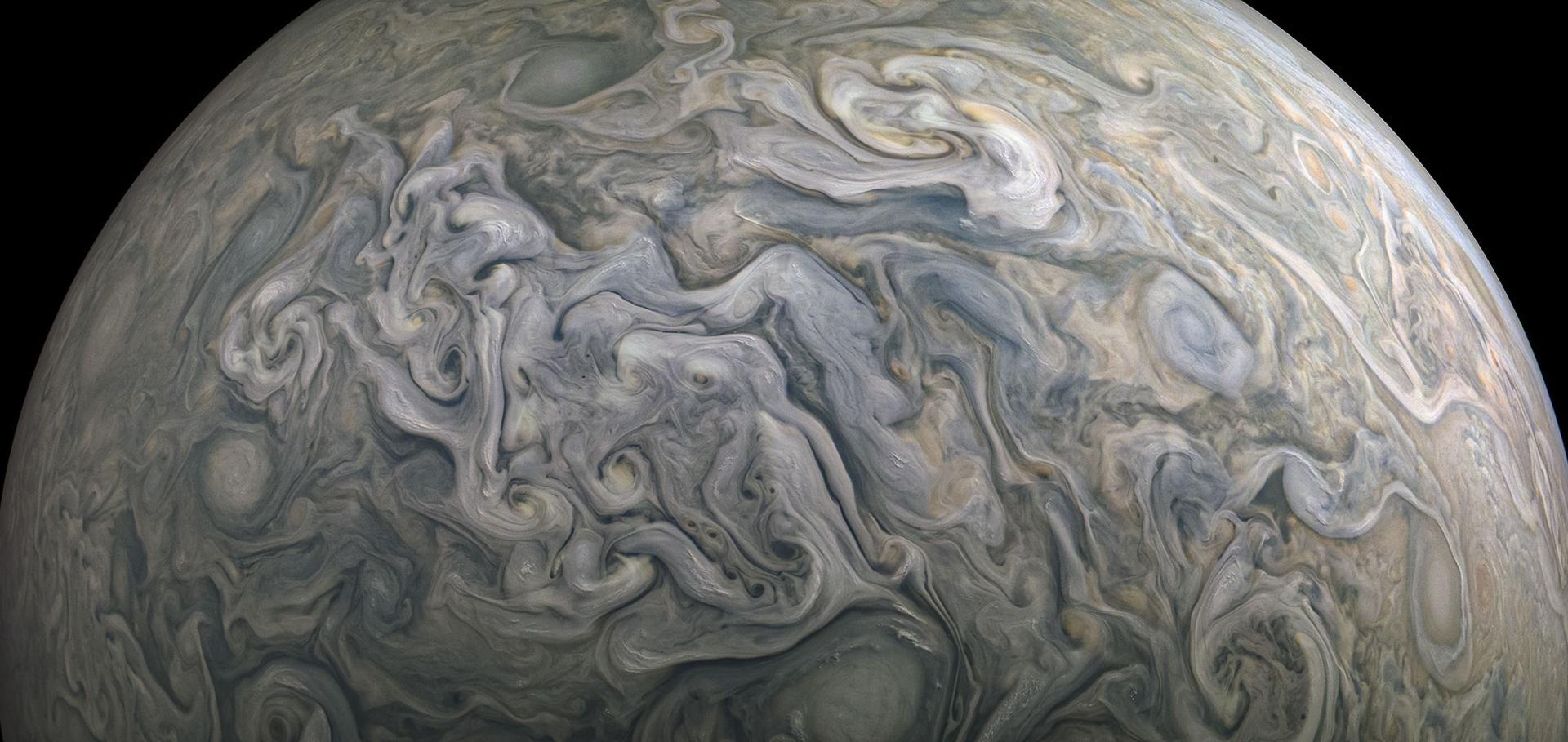
Juno Jupiter image

Dr Scott Osprey FRMetS

Senior NCAS Research Scientist

Research theme

  • Climate physics

Sub department

  • Atmospheric, Oceanic and Planetary Physics

Research groups

  • Climate dynamics
Scott.Osprey@physics.ox.ac.uk
Telephone: 01865 (2)82434,01865 (2)72923
Atmospheric Physics Clarendon Laboratory, room 111
National Centre for Atmospheric Science
SPARC QBOi
Explaining & Predicting Earth System Change
  • About
  • Publications

The Evaluation of the North Atlantic Climate System in UKESM1 Historical Simulations for CMIP6

Journal of Advances in Modeling Earth Systems American Geophysical Union (AGU) 12:9 (2020)

Authors:

Jon Robson, Yevgeny Aksenov, Thomas J Bracegirdle, Oscar Dimdore‐Miles, Paul T Griffiths, Daniel P Grosvenor, Daniel LR Hodson, James Keeble, Claire MacIntosh, Alex Megann, Scott Osprey, Adam C Povey, David Schröder, Mingxi Yang, Alexander T Archibald, Ken S Carslaw, Lesley Gray, Colin Jones, Brian Kerridge, Diane Knappett, Till Kuhlbrodt, Maria Russo, Alistair Sellar, Richard Siddans, Bablu Sinha, Rowan Sutton, Jeremy Walton, Laura J Wilcox
More details from the publisher

The American Monsoon System in HadGEM3.0 and UKESM1 CMIP6

Weather and Climate Dynamics Copernicus GmbH (2020)

Authors:

Jorge L García-Franco, Lesley J Gray, Scott Osprey

Abstract:

<p><strong>Abstract.</strong> The simulated climate in the American Monsoon System (AMS) in the CMIP6 submissions of HadGEM3.0 GC3.1 and the UKESM1 is assessed and compared to observations and reanalysis. Pre-industrial control and historical experiments are analysed to evaluate the model representation of this monsoon under different configurations, resolutions and with and without Earth System processes. The simulations exhibit a good representation of the temperature and precipitation seasonal cycles, although the historical experiments overestimate summer temperature in the Amazon, Mexico and Central America by more than 1.5 K. The seasonal cycle of rainfall and general characteristics of the North American Monsoon are well represented by all the simulations. The models simulate the bimodal regime of precipitation in southern Mexico, Central America and the Caribbean known as the midsummer drought, although with a stronger intraseasonal variation than observed. Austral summer biases in the modelled Atlantic Intertropical Convergence Zone (ITCZ), Walker Circulation, cloud cover and regional temperature distributions are significant and influenced the simulated spatial distribution of rainfall in the South American Monsoon. These biases lead to an overestimation of precipitation in southeastern Brazil and an underestimation of precipitation in the Amazon. El Niño Southern Oscillation (ENSO) characteristics and teleconnections to the AMS are well represented by the simulations. The precipitation responses to the positive and negative phase of ENSO in subtropical America are linear in both pre-industrial and historical experiments. Overall, the UKESM has the same performance as the lower resolution simulation of HadGEM3.0 GC3.1 and no significant difference for the AMS was found between the two model configurations. In contrast, the medium resolution HadGEM3.0 GC3.1 N216 simulation outperforms the low-resolution simulations in temperature, rainfall, ITCZ and Walker circulation biases.</p>
More details from the publisher
More details

The American monsoon system in HadGEM3 and UKESM1

Weather and Climate Dynamics Copernicus Publications 1:2 (2020) 349-371

Authors:

Jorge L García-Franco, Scott Osprey, Lesley J Gray

Abstract:

The simulated climate of the American monsoon system (AMS) in the UK models HadGEM3 GC3.1 (GC3) and the Earth system model UKESM1 is assessed and compared to observations and reanalysis. We evaluate the pre-industrial control, AMIP and historical experiments of UKESM1 and two configurations of GC3: a low (1.875∘×1.25∘) and a medium (0.83∘×0.56∘) resolution. The simulations show a good representation of the seasonal cycle of temperature in monsoon regions, although the historical experiments overestimate the observed summer temperature in the Amazon, Mexico and Central America by more than 1.5 K. The seasonal cycle of rainfall and general characteristics of the North American monsoon of all the simulations agree well with observations and reanalysis, showing a notable improvement from previous versions of the HadGEM model. The models reasonably simulate the bimodal regime of precipitation in southern Mexico, Central America and the Caribbean known as the midsummer drought, although with a stronger-than-observed difference between the two peaks of precipitation and the dry period. Austral summer biases in the modelled Atlantic Intertropical Convergence Zone (ITCZ), cloud cover and regional temperature patterns are significant and influence the simulated regional rainfall in the South American monsoon. These biases lead to an overestimation of precipitation in southeastern Brazil and an underestimation of precipitation in the Amazon. The precipitation biases over the Amazon and southeastern Brazil are greatly reduced in the AMIP simulations, highlighting that the Atlantic sea surface temperatures are key for representing precipitation in the South American monsoon. El Niño–Southern Oscillation (ENSO) teleconnections, of precipitation and temperature, to the AMS are reasonably simulated by all the experiments. The precipitation responses to the positive and negative phase of ENSO in subtropical America are linear in both pre-industrial and historical experiments. Overall, the biases in UKESM1 and the low-resolution configuration of GC3 are very similar for precipitation, ITCZ and Walker circulation; i.e. the inclusion of Earth system processes appears to make no significant difference for the representation of the AMS rainfall. In contrast, the medium-resolution HadGEM3 N216 simulation outperforms the low-resolution simulations due to improved SSTs and circulation.
More details from the publisher
Details from ORA

The SPARC Quasi‐Biennial Oscillation initiative

Quarterly Journal of the Royal Meteorological Society Wiley (2020) qj.3820

Authors:

James A Anstey, Neal Butchart, Kevin Hamilton, Scott M Osprey
More details from the publisher
Details from ORA
More details

The Southern Hemisphere sudden stratospheric warming of September 2019

Science Bulletin Elsevier BV (2020)

Authors:

Xiaocen Shen, Lin Wang, Scott Osprey
More details from the publisher
Details from ORA
More details
More details

Pagination

  • First page First
  • Previous page Prev
  • …
  • Page 7
  • Page 8
  • Page 9
  • Page 10
  • Current page 11
  • Page 12
  • Page 13
  • Page 14
  • Page 15
  • …
  • Next page Next
  • Last page Last

Footer Menu

  • Contact us
  • Giving to the Dept of Physics
  • Work with us
  • Media

User account menu

  • Log in

Follow us

FIND US

Clarendon Laboratory,

Parks Road,

Oxford,

OX1 3PU

CONTACT US

Tel: +44(0)1865272200

University of Oxfrod logo Department Of Physics text logo
IOP Juno Champion logo Athena Swan Silver Award logo

© University of Oxford - Department of Physics

Cookies | Privacy policy | Accessibility statement

Built by: Versantus

  • Home
  • Research
  • Study
  • Engage
  • Our people
  • News & Comment
  • Events
  • Our facilities & services
  • About us
  • Giving to Physics
  • Current students
  • Staff intranet