Home
Department Of Physics text logo
  • Research
    • Our research
    • Our research groups
    • Our research in action
    • Research funding support
    • Summer internships for undergraduates
  • Study
    • Undergraduates
    • Postgraduates
  • Engage
    • For alumni
    • For business
    • For schools
    • For the public
Menu
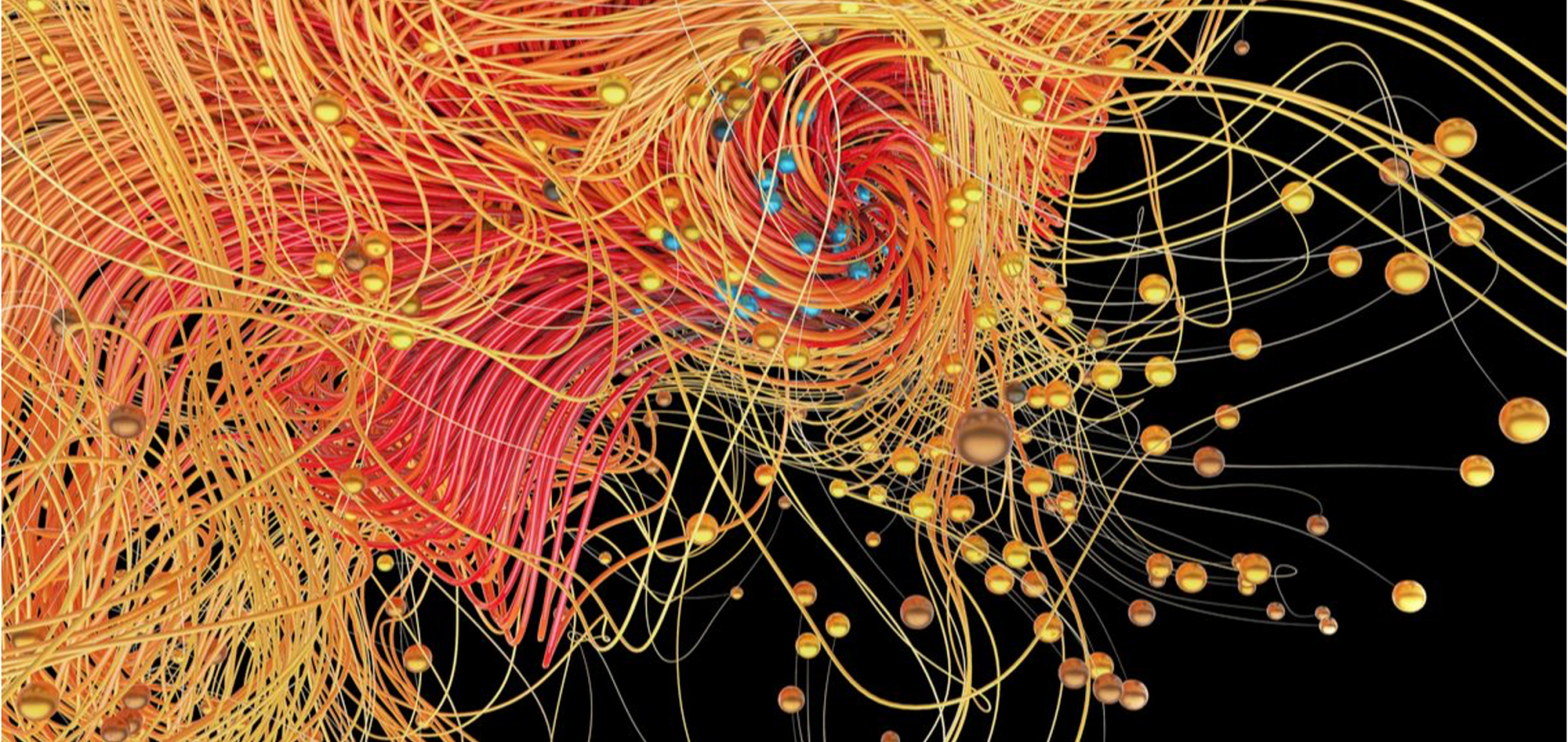
Cosmic strings in hematite

Professor Paolo G. Radaelli OSI

Dr Lee's Professor

Research theme

  • Quantum materials

Sub department

  • Condensed Matter Physics

Research groups

  • Oxide electronics
Paolo.Radaelli@physics.ox.ac.uk
Telephone: 01865 (2)70957
Clarendon Laboratory, room 111
  • About
  • Research
  • Publications

Prof Radaelli recognised with an MPLS "Excellent Supervisor" Award

Physics Award Winners
Prof Radaelli is one of the 5 Oxford Physicists recognised in the inaugural "Excellence in Research Supervision" award

Read the story at this link

Excellence in Research Supervision

Structural anomalies and multiferroic behavior in magnetically frustrated TbMn2O5

Physical Review Letters 93:17 (2004) 1-177402

Authors:

LC Chapon, GR Blake, MJ Gutmann, S Park, N Hur, PO Radaelli, SW Cheong

Abstract:

The magnetostructural phase diagram of multiferroic TbMn2O 5 was investigated as a function of temperature and magnetic field by neutron diffraction. It was observed that dielectric and magnetic anomalies were associated with steps in the magnetic propagation vector, and in the structural parameters. The geometrically frustrated magnetic structure were found to be stabilized by "canted antiferroelectric" displacements of the Mn3+ ions. It was found that the Tb moments order ferromagnetically at low temperatures in an applied field, while the Mn magnetic structure is largely unchanged.
More details from the publisher
More details

Unconventional Magnetism, Sliding Ferroelectricity, and Magneto-Optical Kerr Effect in Multiferroic Bilayers

ACS Applied Materials & Interfaces American Chemical Society (ACS) (2025)

Authors:

Xinfeng Chen, Ning Ding, Paolo Barone, Carlo Rizza, Shuai Dong, Wei Ren, Paolo G Radaelli, Gaoyang Gou, Alessandro Stroppa

Abstract:

Antiferromagnetic (AFM) materials provide a platform to couple altermagnetic (AM) spin-splitting with the magneto-optical Kerr effect (MOKE), offering potential for next-generation quantum technologies. In this work, first-principles calculations, symmetry analysis, and k·p modeling are employed to show that interlayer sliding in AFM multiferroic bilayers enables control of electronic, magnetic, and magneto-optical properties. This study reveals an intriguing dimension-driven AM crossover: the 2D paraelectric (PE) bilayer exhibits spin-degenerate bands protected by the [C2∥Mc] spin-space symmetry, whereas the 3D counterpart manifests AM spin-splitting along kz ≠ 0 paths. Furthermore, interlayer sliding breaks this Mc symmetry and stabilizes a ferroelectric (FE) state with compensated ferrimagnetism, where the Zeeman-like field is responsible for the nonrelativistic spin-splitting. In the FE phase, spin-orbit coupling (SOC) lifts accidental degeneracies and produces "alternating" spin-polarized bands through the interplay of Zeeman and Rashba effects. Crucially, spin polarization, ferrovalley polarization (ΔEV), and the Kerr angle (θk) can all be reversed by switching either sliding ferroelectricity or the Néel vector. Our findings reveal the rich coupling among electronic, magnetic, and optical orders in sliding multiferroics, illustrating new prospects for ultralow-power spintronic and optoelectronic devices.
More details from the publisher
More details

Room Temperature Control of Axial and Basal Antiferromagnetic Anisotropies Using Strain

ACS Nano American Chemical Society 19:50 (2025) 42118-42127

Authors:

Jack Harrison, Junxiong Hu, Charles Godfrey, Jheng-Cyuan Lin, Tim A Butcher, Jörg Raabe, Simone Finizio, Hariom Jani, Paolo G Radaelli

Abstract:

Antiferromagnetic materials are promising platforms for the development of ultrafast spintronics and magnonics due to their robust magnetism, high-frequency relativistic dynamics, low-loss transport, and the ability to support topological textures. However, achieving deterministic control over antiferromagnetic order in thin films is a major challenge due to the formation of multidomain states stabilized by competing magnetic and destressing interactions. Thus, the successful implementation of antiferromagnetic materials necessitates careful engineering of their anisotropy. Here, we demonstrate strain-based, robust control over multiple antiferromagnetic anisotropies and nanoscale domains in the promising spintronic candidate α-Fe2O3 at room temperature. By applying isotropic and anisotropic in-plane strains across a broad temperature–strain phase space, we systematically tune the interplay between magneto-crystalline and magneto-elastic interactions. We observe that strain-driven control steers the system toward an aligned antiferromagnetic state, while preserving topological spin textures, such as merons, antimerons, and bimerons. We directly map the nanoscale antiferromagnetic order using linear dichroic scanning transmission X-ray microscopy integrated with in situ strain and temperature control. A Landau model and micromagnetic simulations reveal how strain reshapes the magnetic energy landscape. These findings suggest that strain could serve as a versatile control mechanism to reconfigure equilibrium or dynamic antiferromagnetic states on demand in α-Fe2O3 for implementation in next-generation spintronic and magnonic devices.
More details from the publisher
Details from ORA
More details
More details

A new dawn for Advances in Physics

Advances In Physics Taylor & Francis ahead-of-print:ahead-of-print (2025) 1-2

Authors:

Paolo Radaelli, Nigel Balmforth
More details from the publisher

Tailoring a Lead-Free Organic–Inorganic Halobismuthate for Large Piezoelectric Effect

Journal of the American Chemical Society American Chemical Society 147:49 (2025) 45366-45376

Authors:

Esther YH Hung, Benjamin M Gallant, Robert Harniman, Jakob Möbs, Santanu Saha, Khaled Kaja, Charles Godfrey, Shrestha Banerjee, Nikolaos Famakidis, Harish Bhaskaran, Marina R Filip, Paolo Radaelli, Nakita K Noel, Dominik J Kubicki, Harry C Sansom, Henry J Snaith

Abstract:

Molecular piezoelectrics are a potentially disruptive technology, enabling a new generation of self-powered electronics that are flexible, high performing, and inherently low in toxicity. Although significant efforts have been made toward understanding their structural design by targeted manipulation of phase transition behavior, the resulting achievable piezoresponse has remained limited. In this work, we use a low-symmetry, zero-dimensional (0D) inorganic framework alongside a carefully selected ‘quasi-spherical’ organic cation to manipulate organic–inorganic interactions and thus form the hybrid, piezoelectric material [(CH3)3NCH2I]3Bi2I9. Using variable–temperature single crystal X-ray diffraction and solid-state nuclear magnetic resonance spectroscopy, we demonstrate that this material simultaneously exhibits an order–disorder and displacive symmetry-breaking phase transition. This phase transition is mediated by halogen bonding between the organic and inorganic frameworks and results in a large piezoelectric response, d 33 = 161.5 pm/V. This value represents a 4-fold improvement on previously reported halobismuthate piezoelectrics and is comparable to those of commercial inorganic piezoelectrics, thus offering a new pathway toward low-cost, low-toxicity mechanical energy harvesting and actuating devices.
More details from the publisher
Details from ORA
More details
More details

Pagination

  • First page First
  • Previous page Prev
  • Page 1
  • Current page 2
  • Page 3
  • Page 4
  • Page 5
  • Page 6
  • Page 7
  • Page 8
  • Page 9
  • …
  • Next page Next
  • Last page Last

Footer Menu

  • Contact us
  • Giving to the Dept of Physics
  • Work with us
  • Media

User account menu

  • Log in

Follow us

FIND US

Clarendon Laboratory,

Parks Road,

Oxford,

OX1 3PU

CONTACT US

Tel: +44(0)1865272200

University of Oxfrod logo Department Of Physics text logo
IOP Juno Champion logo Athena Swan Silver Award logo

© University of Oxford - Department of Physics

Cookies | Privacy policy | Accessibility statement

Built by: Versantus

  • Home
  • Research
  • Study
  • Engage
  • Our people
  • News & Comment
  • Events
  • Our facilities & services
  • About us
  • Giving to Physics
  • Current students
  • Staff intranet