Home
Department Of Physics text logo
  • Research
    • Our research
    • Our research groups
    • Our research in action
    • Research funding support
    • Summer internships for undergraduates
  • Study
    • Undergraduates
    • Postgraduates
  • Engage
    • For alumni
    • For business
    • For schools
    • For the public
Menu
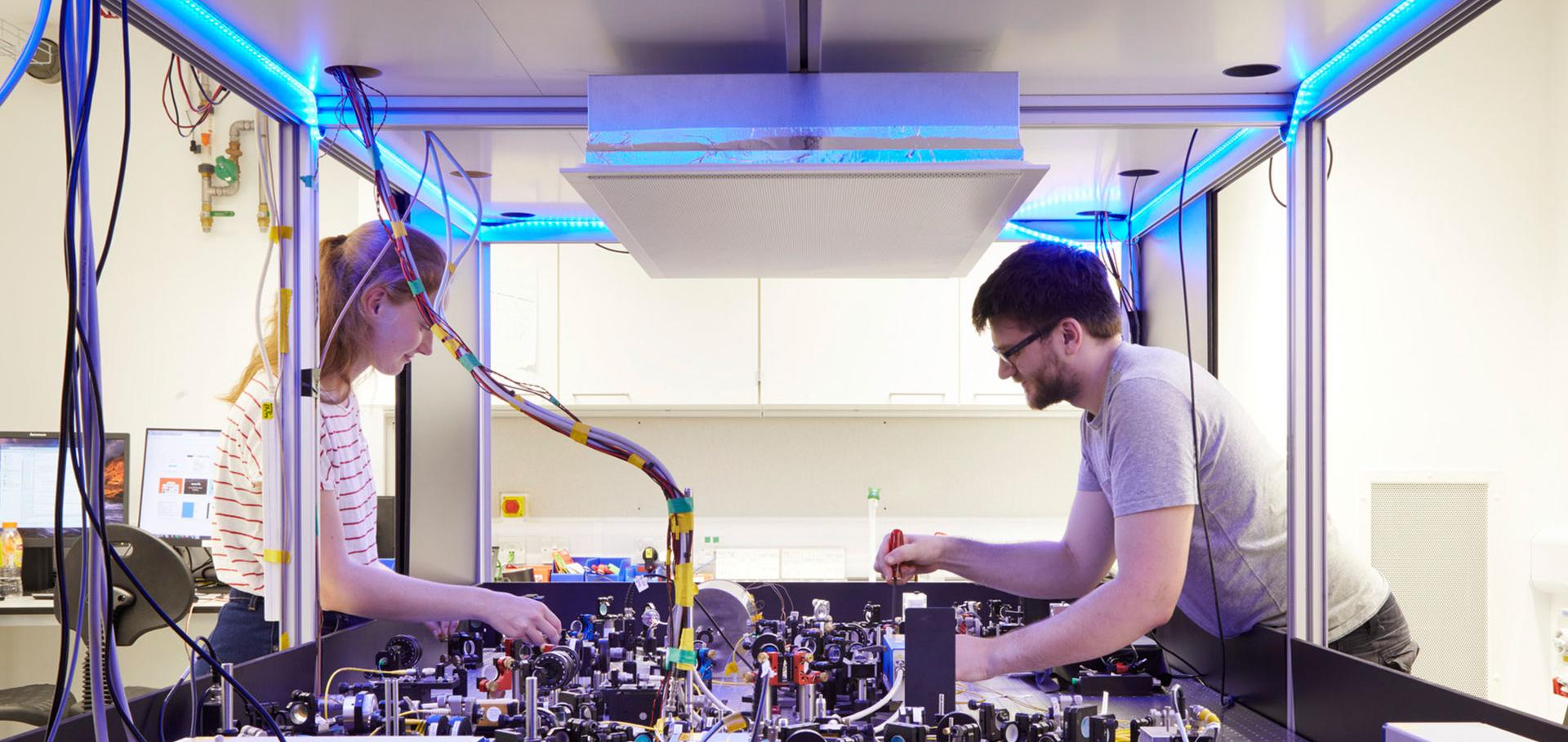
Atomic and Laser Physics
Credit: Jack Hobhouse

Prof Christopher Ramsey

Professor of Archaeological Science

Research theme

  • Accelerator physics
  • Climate physics
  • Instrumentation

Sub department

  • Atomic and Laser Physics
christopher.ramsey@physics.ox.ac.uk
Telephone: 01865285215
School of Archaeology
  • About
  • Publications

Problems associated with the AMS dating of small bone samples: The question of the arrival of Polynesian rats to New Zealand

Radiocarbon 46:1 (2004) 207-218

Authors:

TFG Higham, REM Hedges, AJ Anderson, CB Ramsey, B Fankhauser

Abstract:

We have AMS dated samples of Pacific rat (Rattus exulans) bone "collagen" and filtered gelatin samples from the prehistoric site of Shag River Mouth, New Zealand. The age of occupation of this site has previously been determined based on 50 radiocarbon measurements. The site dates to the late Archaic phase of southern New Zealand prehistory (about 650-500 BP; 14th-15th century AD). The results of rat bones which we have dated produce a range in ages, from about 980-480 BP, a difference we attribute to a combination of effects. Pretreatment appears to be an important variable, with results showing differences in 14C age between the progressive "collagen" and filtered gelatin chemical treatment stages. Amino acid profiles suggest there is a proteinaceous but non-collagenous contaminant which is removed by the more rigorous pretreatment. Stable isotopes vary between pretreatments, supporting the removal of a contaminant, or contaminants. Variation in δ15N values imply a range in uptake of dietary protein, and might suggest a potential influence from the local aquatic environment or the consumption of marine-derived protein. Rats are opportunistic, omnivorous mammals, and, therefore, obtain carbon from a variety of reservoirs and so we ought to expect that in environments where there is a variety of reservoirs, these will be exploited. Taken together, the results show that rat bone AMS 14C determinations vary in comparison with the established age of the site, but are in notably better agreement with non-collagenous data than in previously published determinations (Anderson 1996).
More details from the publisher
More details

The potential significance of dietary offsets for the interpretation of radiocarbon dates: An archaeologically significant example from medieval Norwich

Journal of Archaeological Science 31:8 (2004) 563-575

Authors:

A Bayliss, E Shepherd Popescu, N Beavan-Athfield, C Bronk Ramsey, GT Cook, A Locker

Abstract:

The increasing application of the Bayesian approach for the interpretation of radiocarbon dates over the past decade has led to the production of more precise chronologies for archaeological sites. This has highlighted the practical significance of some scientific aspects of radiocarbon dating. The potential importance of one of these, the sources of the carbon component of human bone collagen, is demonstrated by a recent application of radiocarbon dating in medieval Norwich. Crown © 2003 Published by Elsevier Ltd. All rights reserved.
More details from the publisher

The potential significance of dietary offsets for the interpretation of radiocarbon dates: An archaeologically significant example from medieval Norwich

Journal of Archaeological Science 31:5 (2004) 563-575

Authors:

A Bayliss, ES Popescu, N Beavan-Athfield, CB Ramsey, GT Cook, A Locker

Abstract:

The increasing application of the Bayesian approach for the interpretation of radiocarbon dates over the past decade has led to the production of more precise chronologies for archaeological sites. This has highlighted the practical significance of some scientific aspects of radiocarbon dating. The potential importance of one of these, the sources of the carbon component of human bone collagen, is demonstrated by a recent application of radiocarbon dating in medieval Norwich. Crown © 2003 Published by Elsevier Ltd. All rights reserved.
More details from the publisher
More details

Towards high-precision AMS: Progress and limitations

Radiocarbon 46:1 (2004) 17-24

Authors:

CB Ramsey, T Higham, P Leach

Abstract:

Precision and accuracy in accelerator mass spectrometry (AMS) dating relies on the systematic reduction of errors at all stages of the dating process, from sampling to AMS measurement. With new AMS systems providing much better precision and accuracy for the final stage of the process, we need to review the process as a whole to test the accuracy of reported results. A new High Voltage Engineering Europa (HVEE) AMS system was accepted at Oxford in September 2002. Since then, the system has been in routine use for AMS dating and here we report on our experiences during the first year. The AMS system itself is known to be capable of making measurements on single targets to a precision of better than 0.2% for the 14C/13C ratio and better than 0.1% for the 13C/12C ratio. In routine operation, we measure known-age wood to a precision of just above 0.3%, including uncertainties in background and pretreatment. At these levels, the scatter in results is no higher than reported errors, suggesting that uncertainties of ±25 to ±30 14C yr can be reliably reported on single target measurements. This provides a test of all parts of the process for a particular material in a particular state of preservation. More generally, sample pretreatment should remove as much contamination as feasible from the sample while adding as little laboratory contamination as possible. For more complex materials, such as bone, there is clearly more work needed to prove good reproducibility and insignificant offsets in all circumstances. Strategies for testing accuracy and precision on unknown material are discussed here, as well as the possibilities of one day reaching precisions equivalent to errors of <±20 14C yr.
More details from the publisher
More details

Using a gas ion source for radiocarbon AMS and GC-AMS

Radiocarbon 46:1 (2004) 25-32

Authors:

CB Ramsey, P Ditchfield, M Humm

Abstract:

This paper reports on the performance of a new method of sample injection using the High Voltage Engineering Europa (HVEE) SO-110 ion source jointly developed between HVEE and Oxford. In order to use this source, we have developed a new gas handling system which works on the direct injection of carbon dioxide mixed into a continuous flow of helium. Preliminary work has also been carried out on online gas chromatography-accelerator mass spectrometry (GC-AMS). In this application, a GC is directly coupled to the AMS system using a GC-IRMS combustion interface and Nafion™ drier. We show here results for the measurement of natural abundance in separated compounds with good peak separation and precisions of about 10%. This type of system should be ideal for source apportionment studies, biomedical, and other similar work where high precision is not required but where sample sizes are very low.
More details from the publisher
More details

Pagination

  • First page First
  • Previous page Prev
  • …
  • Page 64
  • Page 65
  • Page 66
  • Page 67
  • Current page 68
  • Page 69
  • Page 70
  • Page 71
  • Page 72
  • …
  • Next page Next
  • Last page Last

Footer Menu

  • Contact us
  • Giving to the Dept of Physics
  • Work with us
  • Media

User account menu

  • Log in

Follow us

FIND US

Clarendon Laboratory,

Parks Road,

Oxford,

OX1 3PU

CONTACT US

Tel: +44(0)1865272200

University of Oxfrod logo Department Of Physics text logo
IOP Juno Champion logo Athena Swan Silver Award logo

© University of Oxford - Department of Physics

Cookies | Privacy policy | Accessibility statement

Built by: Versantus

  • Home
  • Research
  • Study
  • Engage
  • Our people
  • News & Comment
  • Events
  • Our facilities & services
  • About us
  • Giving to Physics
  • Current students
  • Staff intranet