Home
Department Of Physics text logo
  • Research
    • Our research
    • Our research groups
    • Our research in action
    • Research funding support
    • Summer internships for undergraduates
  • Study
    • Undergraduates
    • Postgraduates
  • Engage
    • For alumni
    • For business
    • For schools
    • For the public
  • Support
Menu
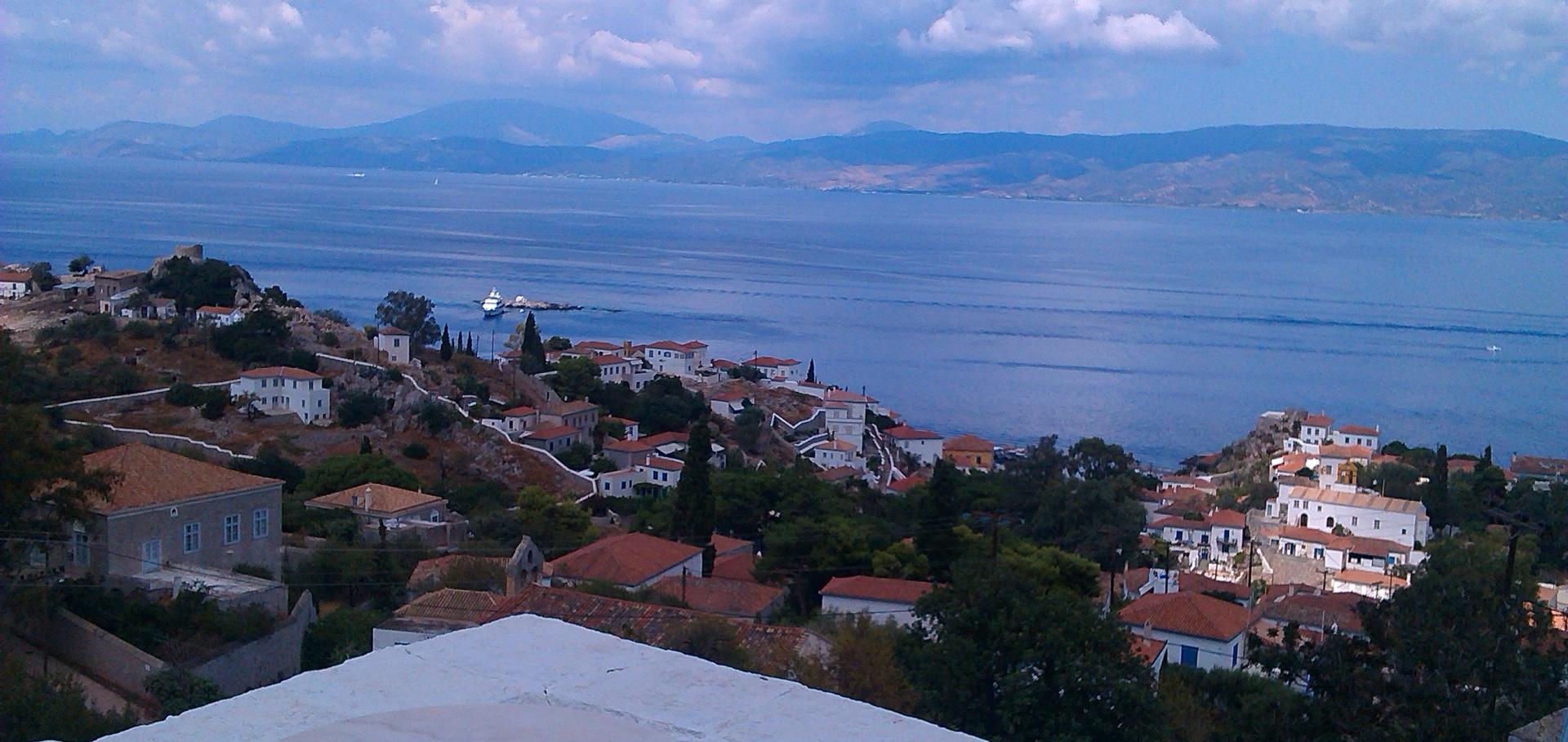
where I'd like to be ...

Prof Subir Sarkar

Professor Emeritus

Research theme

  • Particle astrophysics & cosmology
  • Fundamental particles and interactions

Sub department

  • Rudolf Peierls Centre for Theoretical Physics

Research groups

  • Particle theory
Subir.Sarkar@physics.ox.ac.uk
Telephone: 01865 (2)73962
Rudolf Peierls Centre for Theoretical Physics, room 60.12
Old homepage
Brief CV
  • About
  • Research
  • Teaching
  • Service
  • Outreach
  • Awards/News
  • IceCube@Oxford
  • Publications

IceCube

Physics World 2013 Breakthrough of the Year
IceCube at Oxford

I am a member since 2004 of the IceCube collaboration which discovered cosmic high energy neutrinos and identified some of their astrophysical sources.

IceCube @ Oxford

Active Galactic Nuclei population studies with the Cherenkov Telescope Array

Proceedings of Science 395 (2022)

Authors:

H Abdalla, H Abe, S Abe, A Abusleme, F Acero, A Acharyya, V Acín Portella, K Ackley, R Adam, C Adams, SS Adhikari, I Aguado-Ruesga, I Agudo, R Aguilera, A Aguirre-Santaella, F Aharonian, A Alberdi, R Alfaro, J Alfaro, C Alispach, R Aloisio, R Alves Batista, JP Amans, L Amati, E Amato, L Ambrogi, G Ambrosi, M Ambrosio, R Ammendola, J Anderson, M Anduze, EO Angüner, LA Antonelli, V Antonuccio, P Antoranz, R Anutarawiramkul, J Aragunde Gutierrez, C Aramo, A Araudo, M Araya, A Arbet-Engels, C Arcaro, V Arendt, C Armand, T Armstrong, F Arqueros, L Arrabito, B Arsioli, M Artero, K Asano, Y Ascasíbar, J Aschersleben, M Ashley, P Attinà, P Aubert, CB Singh, D Baack, A Babic, M Backes, V Baena, S Bajtlik, A Baktash, C Balazs, M Balbo, O Ballester, J Ballet, B Balmaverde, A Bamba, R Bandiera, A Baquero Larriva, P Barai, C Barbier, V Barbosa Martins, M Barcelo, M Barkov, M Barnard, L Baroncelli, U Barres de Almeida, JA Barrio, D Bastieri, PI Batista, I Batkovic, C Bauer, R Bautista-González, J Baxter, U Becciani, J Becerra González, Y Becherini, G Beck, J Becker Tjus, W Bednarek, A Belfiore, L Bellizzi, R Belmont, W Benbow, D Berge, E Bernardini, MI Bernardos, K Bernlöhr, A Berti

Abstract:

The Cherenkov Telescope Array (CTA) observatory is the next generation of ground-based imaging atmospheric Cherenkov telescopes (IACTs). Building on the strengths of current IACTs, CTA is designed to achieve an order of magnitude improvement in sensitivity, with unprecedented angular and energy resolution. CTA will also increase the energy reach of IACTs, observing photons in the energy range from 20 GeV to beyond 100 TeV. These advances in performance will see CTA heralding in a new era for high-energy astrophysics, with the emphasis shifting from source discovery, to population studies and precision measurements. In this talk we discuss CTA’s ability to conduct source population studies of γ-ray bright active galactic nuclei and how this ability will enhance our understanding on the redshift evolution of this dominant γ-ray source class.

Analysis framework for Multi-messenger Astronomy with IceCube

Proceedings of Science 395 (2022)

Authors:

KL Fan, J Evans, M Larson, R Abbasi, M Ackermann, J Adams, JA Aguilar, M Ahlers, M Ahrens, C Alispach, AA Alves, NM Amin, R An, K Andeen, T Anderson, G Anton, C Argüelles, Y Ashida, S Axani, X Bai, AV Balagopal, A Barbano, SW Barwick, B Bastian, V Basu, S Baur, R Bay, JJ Beatty, KH Becker, J Becker Tjus, C Bellenghi, S BenZvi, D Berley, E Bernardini, DZ Besson, G Binder, D Bindig, E Blaufuss, S Blot, M Boddenberg, F Bontempo, J Borowka, S Böser, O Botner, J Böttcher, E Bourbeau, F Bradascio, J Braun, S Bron, J Brostean-Kaiser, S Browne, A Burgman, RT Burley, RS Busse, MA Campana, EG Carnie-Bronca, C Chen, D Chirkin, K Choi, BA Clark, K Clark, L Classen, A Coleman, GH Collin, JM Conrad, P Coppin, P Correa, DF Cowen, R Cross, C Dappen, P Dave, C De Clercq, JJ DeLaunay, H Dembinski, K Deoskar, S De Ridder, A Desai, P Desiati, KD de Vries, G de Wasseige, M de With, T DeYoung, S Dharani, A Diaz, JC Díaz-Vélez, M Dittmer, H Dujmovic, M Dunkman, MA DuVernois, E Dvorak, T Ehrhardt, P Eller, R Engel, H Erpenbeck, J Evans, PA Evenson, AR Fazely, S Fiedlschuster, AT Fienberg, K Filimonov

Abstract:

Combining observational data from multiple instruments for multi-messenger astronomy can be challenging due to the complexity of the instrument response functions and likelihood calculation. We introduce a python-based unbinned-likelihood analysis package called i3mla (IceCube Maximum Likelihood Analysis). i3mla is designed to be compatible with the Multi-Mission Maximum Likelihood (3ML) framework, which enables multi-messenger astronomy analyses by combining the likelihood across different instruments. By making it possible to use IceCube data in the 3ML framework, we aim to facilitate the use of neutrino data in multi-messenger astronomy. In this work we illustrate how to use the i3mla package with 3ML and present preliminary sensitivities using the i3mla package and 3ML through a joint-fit with HAWC Public dataset.
More details

CTA sensitivity for probing cosmology and fundamental physics with gamma rays

Proceedings of Science 395 (2022)

Authors:

I Vovk, J Biteau, H Martinez-Huerta, M Meyer, S Pita, H Abdalla, H Abe, F Acero, A Acharyya, R Adam, I Agudo, A Aguirre-Santaella, R Alfaro, J Alfaro, C Alispach, R Aloisio, RA Batista, L Amati, E Amato, G Ambrosi, EO Angüner, A Araudo, T Armstrong, F Arqueros, L Arrabito, K Asano, Y Ascasíbar, M Ashley, M Backes, C Balazs, M Balbo, B Balmaverde, AB Larriva, VB Martins, M Barkov, L Baroncelli, UB de Almeida, JA Barrio, PI Batista, JB González, Y Becherini, G Beck, JB Tjus, R Belmont, W Benbow, E Bernardini, A Berti, M Berton, B Bertucci, V Beshley, B Bi, B Biasuzzi, A Biland, E Bissaldi, O Blanch, F Bocchino, C Boisson, J Bolmont, G Bonanno, LB Arbeletche, G Bonnoli, P Bordas, E Bottacini, M Böttcher, V Bozhilov, J Bregeon, A Brill, AM Brown, P Bruno, A Bruno, A Bulgarelli, M Burton, M Buscemi, A Caccianiga, R Cameron, M Capasso, M Caprai, A Caproni, R Capuzzo-Dolcetta, P Caraveo, R Carosi, A Carosi, S Casanova, E Cascone, D Cauz, K Cerny, M Cerruti, P Chadwick, S Chaty, A Chen, M Chernyakova, G Chiaro, A Chiavassa, L Chytka, V Conforti, F Conte, JL Contreras, J Coronado-Blazquez, J Cortina, A Costa

Abstract:

The Cherenkov Telescopic Array (CTA), the next-generation ground-based gamma-ray observatory, will have unprecedented sensitivity, providing answers to open questions in gamma-ray cosmology and fundamental physics. Using simulations of active galactic nuclei observations foreseen in the CTA Key Science Program, we find that CTA will measure gamma-ray absorption on the extragalactic background light with a statistical error below 15% up to the redshift of 2 and detect or establish limits on gamma halos induced by the intergalactic magnetic field of at least 0.3 pG. Extragalactic observations using CTA also demonstrate the potential for testing physics beyond the Standard Model. The best state-of-the-art constraints on the Lorentz invariance violation from astronomical gamma-ray observations will be improved at least two- to threefold. CTA will also probe the parameter space where axion-like particles can represent a significant proportion – if not all – of dark matter. Joint multiwavelength and multimessenger observations, carried out together with other future observatories, will further foster the growth of gamma-ray cosmology.

Characterization of the PeV astrophysical neutrino energy spectrum with IceCube using down-going tracks

Proceedings of Science 395 (2022)

Authors:

R Abbasi, M Ackermann, J Adams, JA Aguilar, M Ahlers, M Ahrens, C Alispach, AA Alves, NM Amin, R An, K Andeen, T Anderson, G Anton, C Argüelles, Y Ashida, S Axani, X Bai, AV Balagopal, A Barbano, SW Barwick, B Bastian, V Basu, S Baur, R Bay, JJ Beatty, KH Becker, J Becker Tjus, C Bellenghi, S BenZvi, D Berley, E Bernardini, DZ Besson, G Binder, D Bindig, E Blaufuss, S Blot, M Boddenberg, F Bontempo, J Borowka, S Böser, O Botner, J Böttcher, E Bourbeau, F Bradascio, J Braun, S Bron, J Brostean-Kaiser, S Browne, A Burgman, RT Burley, RS Busse, MA Campana, EG Carnie-Bronca, C Chen, D Chirkin, K Choi, BA Clark, K Clark, L Classen, A Coleman, GH Collin, JM Conrad, P Coppin, P Correa, DF Cowen, R Cross, C Dappen, P Dave, C De Clercq, JJ DeLaunay, H Dembinski, K Deoskar, S De Ridder, A Desai, P Desiati, KD de Vries, G de Wasseige, M de With, T DeYoung, S Dharani, A Diaz, JC Díaz-Vélez, M Dittmer, H Dujmovic, M Dunkman, MA DuVernois, E Dvorak, T Ehrhardt, P Eller, R Engel, H Erpenbeck, J Evans, PA Evenson, KL Fan, AR Fazely, S Fiedlschuster, AT Fienberg, K Filimonov, C Finley, L Fischer

Abstract:

The IceCube Neutrino Observatory has observed a diffuse flux of astrophysical neutrinos with energies from TeV to a few PeV. Recent IceCube analyses have limited sensitivity to PeV neutrinos because upward-going neutrino fluxes are attenuated by the Earth while the Extremely High Energy (EHE) result targets cosmogenic neutrinos only above 10 PeV. In this work, we present a new event selection that fills the gap between 1 PeV and 10 PeV. This sample is obtained by selecting high-energy down-going through-going tracks from 8 years of data. To reduce the atmospheric muon backgrounds and achieve a high signal-to-background ratio, we combine two techniques. The first technique selects events with high stochasticity because single muons created by neutrinos lose energy more stochastically than atmospheric muon bundles whose energy losses are smoothened due to large muon multiplicities. The second technique uses the IceTop surface array as a veto of atmospheric background events. To characterize the astrophysical neutrino flux and test the existence of a cut-off in the neutrino energy spectrum at a few PeV, a global fit will be performed by combining this sample with results from the 7-year High Energy Starting Events (HESE) analysis.
More details

Combining Maximum-Likelihood with Deep Learning for Event Reconstruction in IceCube

Proceedings of Science 395 (2022)

Authors:

M Hünnefeld, R Abbasi, M Ackermann, J Adams, JA Aguilar, M Ahlers, M Ahrens, C Alispach, AA Alves, NM Amin, R An, K Andeen, T Anderson, G Anton, C Argüelles, Y Ashida, S Axani, X Bai, AV Balagopal, A Barbano, SW Barwick, B Bastian, V Basu, S Baur, R Bay, JJ Beatty, KH Becker, J Becker Tjus, C Bellenghi, S BenZvi, D Berley, E Bernardini, DZ Besson, G Binder, D Bindig, E Blaufuss, S Blot, M Boddenberg, F Bontempo, J Borowka, S Böser, O Botner, J Böttcher, E Bourbeau, F Bradascio, J Braun, S Bron, J Brostean-Kaiser, S Browne, A Burgman, RT Burley, RS Busse, MA Campana, EG Carnie-Bronca, C Chen, D Chirkin, K Choi, BA Clark, K Clark, L Classen, A Coleman, GH Collin, JM Conrad, P Coppin, P Correa, DF Cowen, R Cross, C Dappen, P Dave, C De Clercq, JJ DeLaunay, H Dembinski, K Deoskar, S De Ridder, A Desai, P Desiati, KD de Vries, G de Wasseige, M de With, T DeYoung, S Dharani, A Diaz, JC Díaz-Vélez, M Dittmer, H Dujmovic, M Dunkman, MA DuVernois, E Dvorak, T Ehrhardt, P Eller, R Engel, H Erpenbeck, J Evans, PA Evenson, KL Fan, AR Fazely, S Fiedlschuster, AT Fienberg, K Filimonov, C Finley

Abstract:

The field of deep learning has become increasingly important for particle physics experiments, yielding a multitude of advances, predominantly in event classification and reconstruction tasks. Many of these applications have been adopted from other domains. However, data in the field of physics are unique in the context of machine learning, insofar as their generation process and the laws and symmetries they abide by are usually well understood. Most commonly used deep learning architectures fail at utilizing this available information. In contrast, more traditional likelihood-based methods are capable of exploiting domain knowledge, but they are often limited by computational complexity. In this contribution, a hybrid approach is presented that utilizes generative neural networks to approximate the likelihood, which may then be used in a traditional maximum-likelihood setting. Domain knowledge, such as invariances and detector characteristics, can easily be incorporated in this approach. The hybrid approach is illustrated by the example of event reconstruction in IceCube.
More details

Pagination

  • First page First
  • Previous page Prev
  • …
  • Page 78
  • Page 79
  • Page 80
  • Page 81
  • Current page 82
  • Page 83
  • Page 84
  • Page 85
  • Page 86
  • …
  • Next page Next
  • Last page Last

Footer Menu

  • Contact us
  • Giving to the Dept of Physics
  • Work with us
  • Media

User account menu

  • Log in

Follow us

FIND US

Clarendon Laboratory,

Parks Road,

Oxford,

OX1 3PU

CONTACT US

Tel: +44(0)1865272200

University of Oxfrod logo Department Of Physics text logo
IOP Juno Champion logo Athena Swan Silver Award logo

© University of Oxford - Department of Physics

Cookies | Privacy policy | Accessibility statement

Built by: Versantus

  • Home
  • Research
  • Study
  • Engage
  • Our people
  • News & Comment
  • Events
  • Our facilities & services
  • About us
  • Giving to Physics
  • Current students
  • Staff intranet