

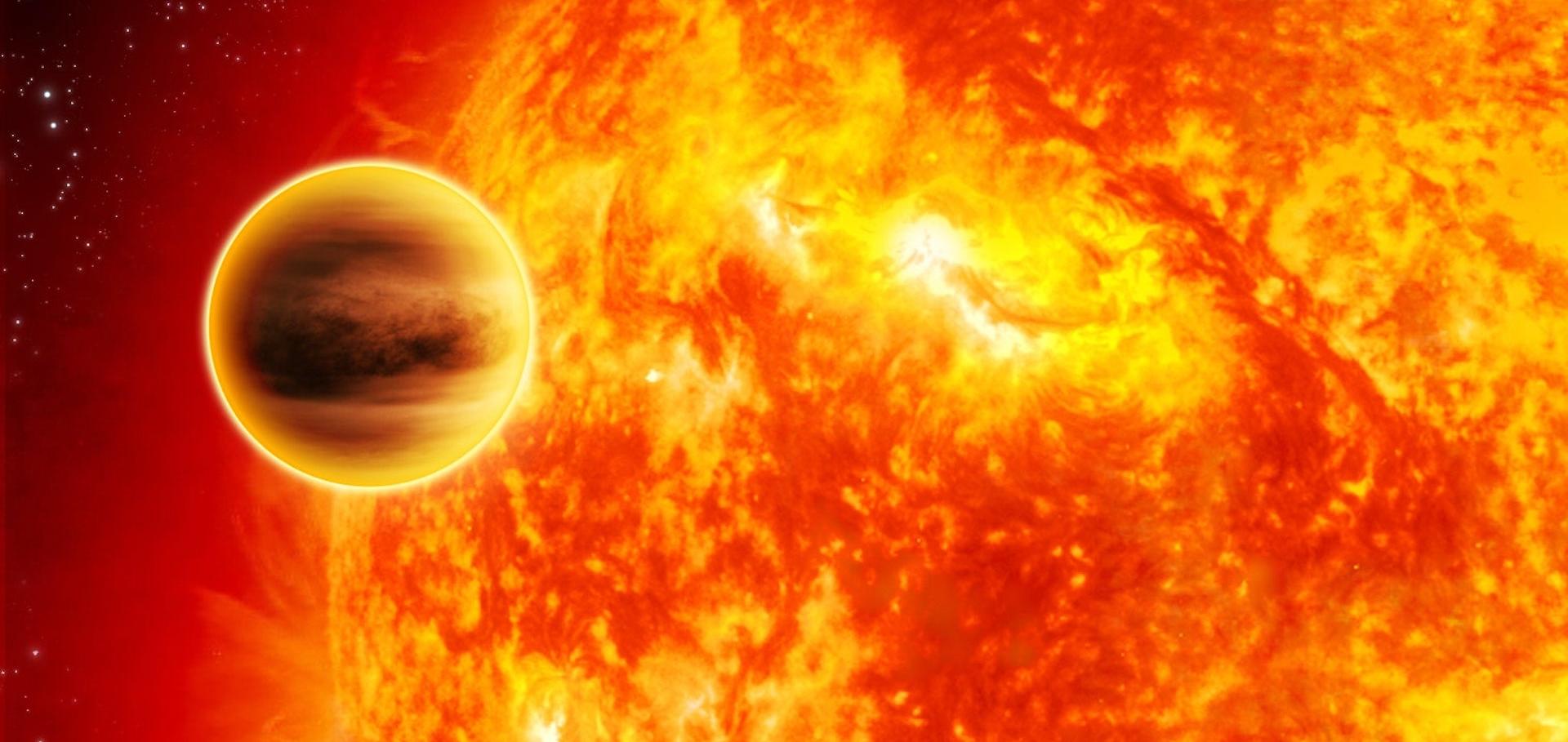
Stellar activity and rotation of the planet host Kepler-17 from long-term space-borne photometry
(2019)
Detecting Earth-like Biosignatures on Rocky Exoplanets around Nearby Stars with Ground-based Extremely Large Telescopes
(2019)
K2-264: a transiting multiplanet system in the Praesepe open cluster
Monthly Notices of the Royal Astronomical Society Oxford University Press (OUP) 484:1 (2019) 8-18
Craters, boulders and regolith of (101955) Bennu indicative of an old and dynamic surface
Nature Geoscience Springer Nature 12:4 (2019) 242-246
Abstract:
Small, kilometre-sized near-Earth asteroids are expected to have young and frequently refreshed surfaces for two reasons: collisional disruptions are frequent in the main asteroid belt where they originate, and thermal or tidal processes act on them once they become near-Earth asteroids. Here we present early measurements of numerous large candidate impact craters on near-Earth asteroid (101955) Bennu by the OSIRIS-REx (Origins, Spectral Interpretation, Resource Identification, and Security-Regolith Explorer) mission, which indicate a surface that is between 100 million and 1 billion years old, predating Bennu’s expected duration as a near-Earth asteroid. We also observe many fractured boulders, the morphology of which suggests an influence of impact or thermal processes over a considerable amount of time since the boulders were exposed at the surface. However, the surface also shows signs of more recent mass movement: clusters of boulders at topographic lows, a deficiency of small craters and infill of large craters. The oldest features likely record events from Bennu’s time in the main asteroid belt.Evidence for widespread hydrated minerals on asteroid (101955) Bennu
Nature Astronomy Springer Nature 3:4 (2019) 332-340