

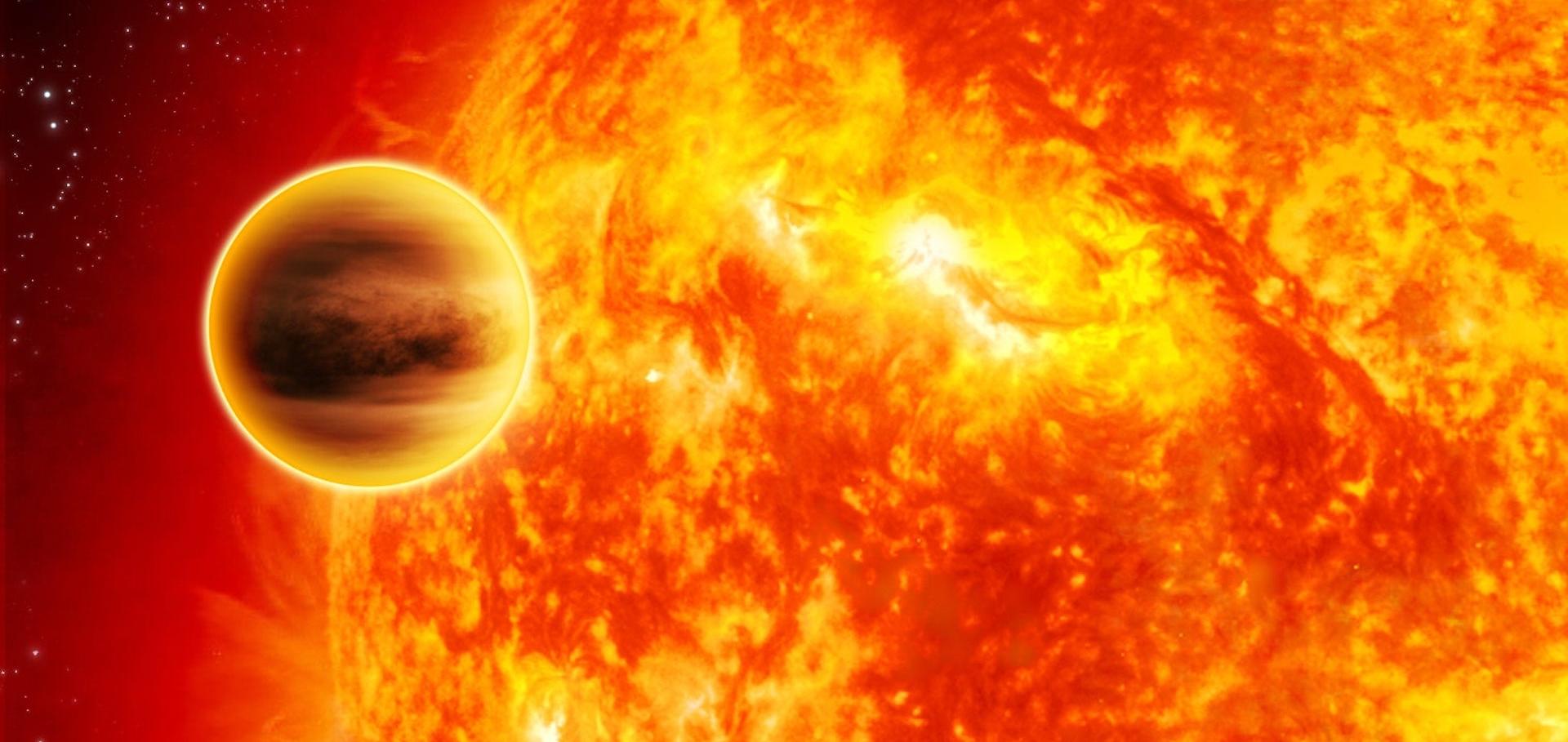
HD 219666 b: a hot-Neptune from TESS Sector 1★
Astronomy & Astrophysics EDP Sciences 623 (2019) a165
Climate impacts of cultured meat and beef cattle
Frontiers in Sustainable Food Systems Frontiers Media 3 (2019) 5
Abstract:
Improved greenhouse gas (GHG) emission efficiency of production has been proposed as one of the biggest potential advantages of cultured meat over conventional livestock production systems. Comparisons with beef are typically highlighted, as it is a highly emissions intensive food product. In this study, we present a more rigorous comparison of the potential climate impacts of cultured meat and cattle production than has previously been made. Warming impacts are evaluated using a simple climate model that simulates the different behaviors of carbon dioxide (CO2), methane (CH4), and nitrous oxide (N2O), rather than relying on carbon dioxide equivalent (CO2e) metrics. We compare the temperature impact of beef cattle and cultured meat production at all times to 1,000 years in the future, using four synthetic meat GHG footprints currently available in the literature and three different beef production systems studied in an earlier climate modeling paper. Cattle systems are associated with the production of all three GHGs above, including significant emissions of CH4, while cultured meat emissions are almost entirely CO2 from energy generation. Under continuous high global consumption, cultured meat results in less warming than cattle initially, but this gap narrows in the long term and in some cases cattle production causes far less warming, as CH4 emissions do not accumulate, unlike CO2. We then model a decline in meat consumption to more sustainable levels following high consumption, and show that although cattle systems generally result in greater peak warming than cultured meat, the warming effect declines and stabilizes under the new emission rates of cattle systems, while the CO2 based warming from cultured meat persists and accumulates even under reduced consumption, again overtaking cattle production in some scenarios. We conclude that cultured meat is not prima facie climatically superior to cattle; its relative impact instead depends on the availability of decarbonized energy generation and the specific production systems that are realized.K2-140b and K2-180b – Characterization of a hot Jupiter and a mini-Neptune from the K2 mission
Monthly Notices of the Royal Astronomical Society Oxford University Press (OUP) 482:2 (2019) 1807-1823
First-order mean motion resonances in two-planet systems: general analysis and observed systems
Monthly Notices of the Royal Astronomical Society Oxford University Press (OUP) (2019)
A story of errors and bias: The optimization of the LGS WFS for HARMONI
Ao4elt 2019 Proceedings 6th Adaptive Optics for Extremely Large Telescopes (2019)