Hydrogen cyanide in nitrogen-rich atmospheres of rocky exoplanets

Icarus Elsevier 329:September (2019) 124-131

Authors:

Sarah Rugheimer, P Rimmer

Abstract:

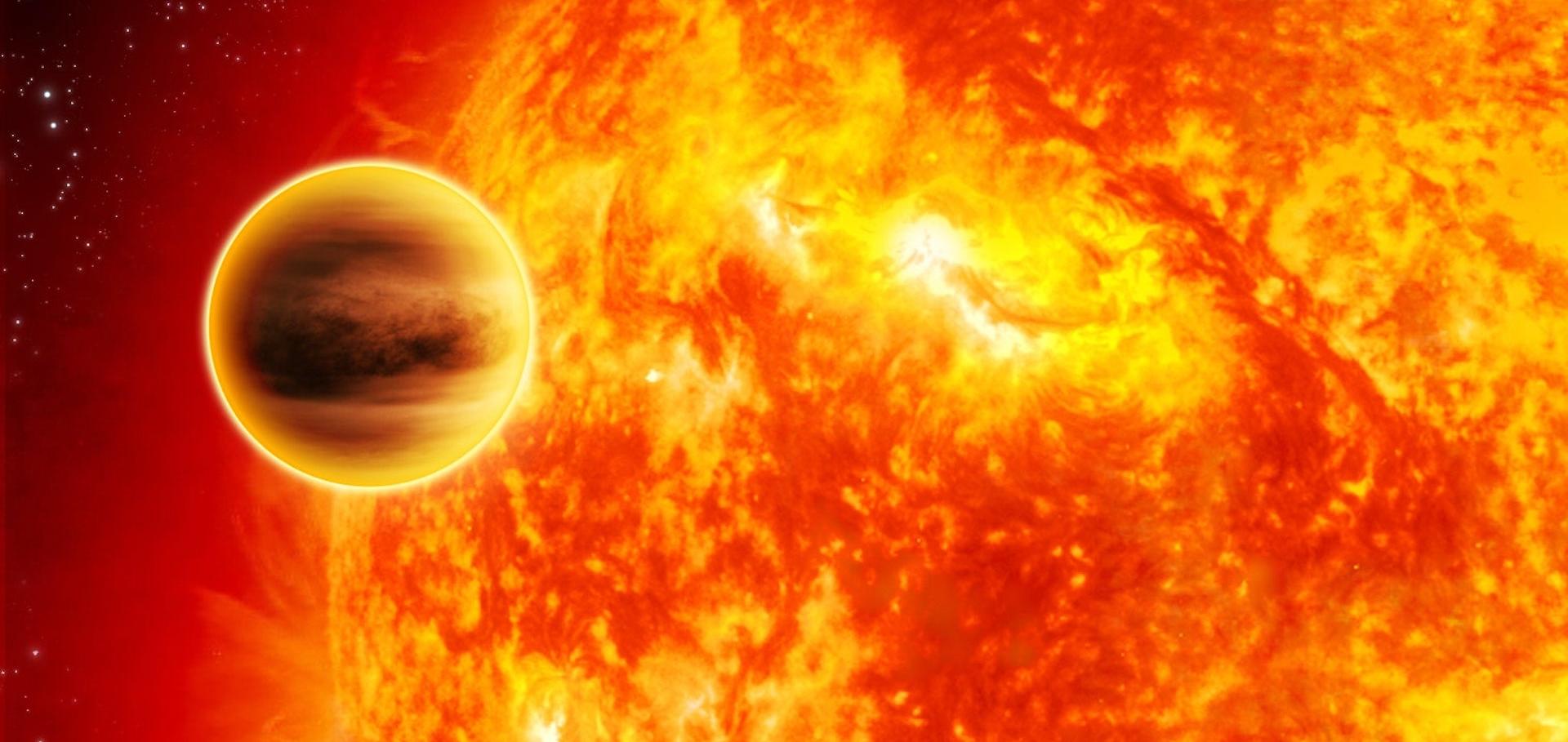
Hydrogen cyanide (HCN) is a key feedstock molecule for the production of life's building blocks. The formation of HCN in an N2-rich atmospheres requires first that the triple bond between N≡N be severed, and then that the atomic nitrogen find a carbon atom. These two tasks can be accomplished via photochemistry, lightning, impacts, or volcanism. The key requirements for producing appreciable amounts of HCN are the free availability of N2 and a local carbon to oxygen ratio of C/O ≥ 1. We discuss the chemical mechanisms by which HCN can be formed and destroyed on rocky exoplanets with Earth-like N2 content and surface water inventories, varying the oxidation state of the dominant carbon-containing atmospheric species. HCN is most readily produced in an atmosphere rich in methane (CH4) or acetylene (C2H2), but can also be produced in significant amounts (>1 ppm) within CO-dominated atmospheres. Methane is not necessary for the production of HCN. We show how destruction of HCN in a CO2-rich atmosphere depends critically on the poorly-constrained energetic barrier for the reaction of HCN with atomic oxygen. We discuss the implications of our results for detecting photochemically produced HCN, for concentrating HCN on the planet's surface, and its importance for prebiotic chemistry.

K2-264: a transiting multiplanet system in the Praesepe open cluster

Monthly Notices of the Royal Astronomical Society Oxford University Press (OUP) 484:1 (2019) 8-18

Authors:

John H Livingston, Fei Dai, Teruyuki Hirano, Davide Gandolfi, Alessandro A Trani, Grzegorz Nowak, William D Cochran, Michael Endl, Simon Albrecht, Oscar Barragan, Juan Cabrera, Szilard Csizmadia, Jerome P de Leon, Hans Deeg, Philipp Eigmüller, Anders Erikson, Malcolm Fridlund, Akihiko Fukui, Sascha Grziwa, Eike W Guenther, Artie P Hatzes, Judith Korth, Masayuki Kuzuhara, Pilar Montañes, Norio Narita, David Nespral, Enric Palle, Martin Pätzold, Carina M Persson, Jorge Prieto-Arranz, Heike Rauer, Motohide Tamura, Vincent Van Eylen, Joshua N Winn

Properties of the Bare Nucleus of Comet 96P/Machholz 1

ArXiv 1903.105 (2019)

Authors:

Nora L Eisner, Matthew M Knight, Colin Snodgrass, Michael SP Kelley, Alan Fitzsimmons, Rosita Kokotanekova

Craters, boulders and regolith of (101955) Bennu indicative of an old and dynamic surface

Nature Geoscience Springer Nature 12:4 (2019) 242-246

Authors:

KJ Walsh, ER Jawin, R-L Ballouz, OS Barnouin, EB Bierhaus, CHC Jr, JL Molaro, TJ McCoy, M Delbo', CM Hartzell, M Pajola, D Trang, E Asphaug, KJ Becker, CB Beddingfield, CA Bennett, WF Bottke, KN Burke, BC Clark, DN Dellagiustina, JP Dworkin, CM Elder

Abstract:

Small, kilometre-sized near-Earth asteroids are expected to have young and frequently refreshed surfaces for two reasons: collisional disruptions are frequent in the main asteroid belt where they originate, and thermal or tidal processes act on them once they become near-Earth asteroids. Here we present early measurements of numerous large candidate impact craters on near-Earth asteroid (101955) Bennu by the OSIRIS-REx (Origins, Spectral Interpretation, Resource Identification, and Security-Regolith Explorer) mission, which indicate a surface that is between 100 million and 1 billion years old, predating Bennu’s expected duration as a near-Earth asteroid. We also observe many fractured boulders, the morphology of which suggests an influence of impact or thermal processes over a considerable amount of time since the boulders were exposed at the surface. However, the surface also shows signs of more recent mass movement: clusters of boulders at topographic lows, a deficiency of small craters and infill of large craters. The oldest features likely record events from Bennu’s time in the main asteroid belt.

Evidence for widespread hydrated minerals on asteroid (101955) Bennu

Nature Astronomy Springer Nature 3:4 (2019) 332-340

Authors:

VE Hamilton, AA Simon, PR Christensen, DC Reuter, BE Clark, MA Barucci, Neil Bowles, WV Boynton, Brucato, EA Cloutis, CHC Jr, KLD Hannah, JP Emery, HL Enos, S Fornasier, CW Haberle, RD Hanna, ES Howell, HH Kaplan, LP Keller, C Lantz, J-Y Li, LF Lim, TJ McCoy, F Merlins, MC Nolan, A Praet, B Rozitis, Sandford, DL Schrader, CA Thomas, X-D Zou, DS Lauretta, DE Highsmith, J Small, D Vokrouhlicky, E Brown, T Warren, C Brunet, RA Chicoine, S Desjardins, D Gaudreau, T Haltigin, S Millington-Veloza, A Rubi, J Aponte, N Gorius, A Lunsford, B Allen, J Grindlay

Abstract:

Early spectral data from the Origins, Spectral Interpretation, Resource Identification, and Security-Regolith Explorer (OSIRIS-REx) mission reveal evidence for abundant hydrated minerals on the surface of near-Earth asteroid (101955) Bennu in the form of a near-infrared absorption near 2.7 µm and thermal infrared spectral features that are most similar to those of aqueously altered CM-type carbonaceous chondrites. We observe these spectral features across the surface of Bennu, and there is no evidence of substantial rotational variability at the spatial scales of tens to hundreds of metres observed to date. In the visible and near-infrared (0.4 to 2.4 µm) Bennu’s spectrum appears featureless and with a blue (negative) slope, confirming previous ground-based observations. Bennu may represent a class of objects that could have brought volatiles and organic chemistry to Earth.