

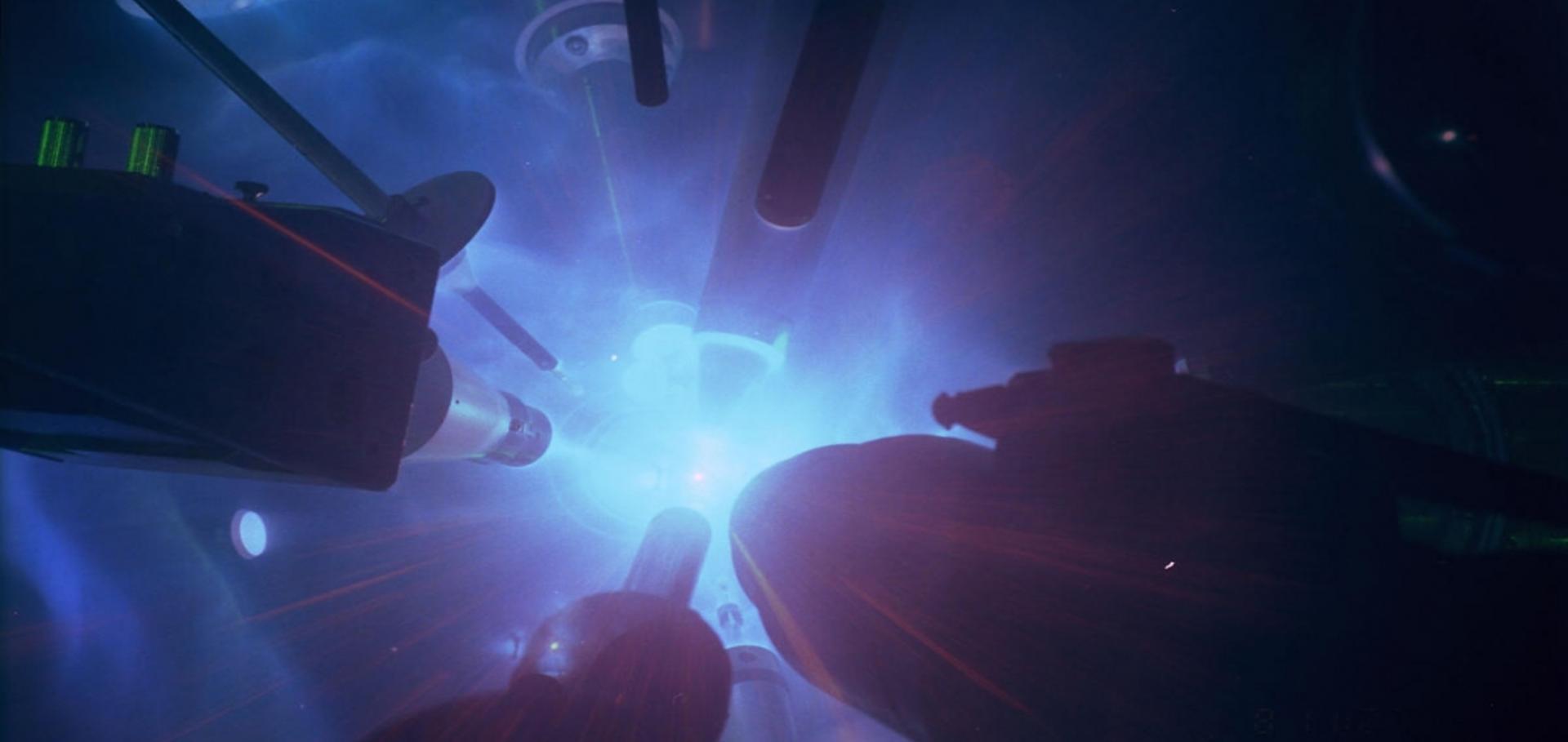
Data for development of a new quantum trajectory molecular dynamics framework
University of Oxford (2023)
Abstract:
Data generated for the figures in 'Development of a new quantum trajectory molecular dynamics framework' at https://dx.doi.org/10.1098/rsta.2022.0325 (and at https://doi.org/10.48550/arXiv.2211.08560) and statically compiled version of the code.The freedman and imperial prosecutor Nicocles, the cultores Larum dominorum nnn. and a curia Larum impp. Auggg. in an unpublished inscription from Bedjene (Algeria)
Zeitschrift fur Papyrologie und Epigraphik (2023) 279-285
Gli interventi di recupero nella porticus post scaenam del teatro di Terracina e Una nuova dedica di statua per Costanzo II
Antiquité Tardive Brepols Publishers NV 31 (2023) 271-280
Cosmic-ray electron transport in the galaxy M 51
Astronomy & Astrophysics EDP Sciences 669 (2022) A111-A111
Abstract:
Context. Indirect observations of the cosmic-ray electron (CRE) distribution via synchrotron emission is crucial for deepening the understanding of the CRE transport in the interstellar medium, and in investigating the role of galactic outflows. Aims. In this paper, we quantify the contribution of diffusion- and advection-dominated transport of CREs in the galaxy M51 considering relevant energy loss processes. Methods. We used recent measurement from M 51 that allow for the derivation of the diffusion coefficient, the star formation rate, and the magnetic field strength. With this input, we solved the 3D transport equation numerically including the spatial dependence as provided by the measurements, using the open-source transport framework CRPropa (v3.1). We included 3D transport (diffusion and advection), and the relevant loss processes. Results. We find that the data can be described well with the parameters from recent measurements. For the best fit, it is required that the wind velocity, following from the observed star formation rate, must be decreased by a factor of 5. We find a model in which the inner galaxy is dominated by advective escape and the outer galaxy is composed by both diffusion and advection. Conclusions. Three-dimensional modelling of cosmic-ray transport in the face-on galaxy M51 allows for conclusions about the strength of the outflow of such galaxies by quantifying the need for a wind in the description of the cosmic-ray signatures. This opens up the possibility of investigating galactic winds in face-on galaxies in general.Comment: 6 pages, 7 figureAstro-COLIBRI 2 -- an advanced platform for real-time multi-messenger discoveries
ArXiv 2212.00805 (2022)