

Full orbital solution for the binary system in the northern Galactic disc microlensing event Gaia16aye⋆
Astronomy & Astrophysics EDP Sciences 633 (2020) a98
Evidence for Late-stage Eruptive Mass Loss in the Progenitor to SN2018gep, a Broad-lined Ic Supernova: Pre-explosion Emission and a Rapidly Rising Luminous Transient
The Astrophysical Journal American Astronomical Society 887:2 (2019) 169
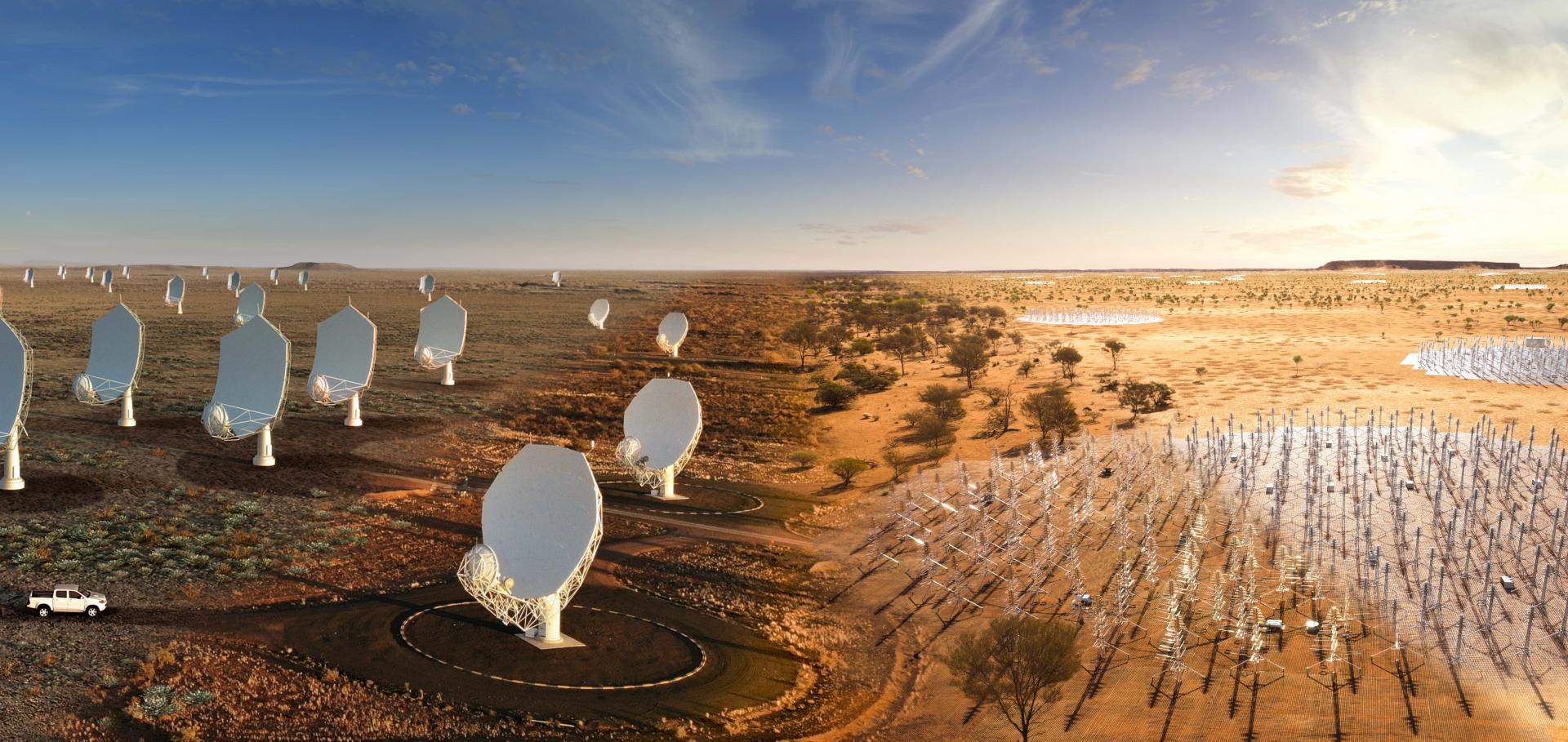
Non-Gaussianity constraints using future radio continuum surveys and the multitracer technique
Monthly Notices of the Royal Astronomical Society Oxford University Press 492:1 (2019) 1513-1522
Abstract:
Tighter constraints on measurements of primordial non-Gaussianity (PNG) will allow the differentiation of inflationary scenarios. The cosmic microwave background bispectrum – the standard method of measuring the local non-Gaussianity – is limited by cosmic variance. Therefore, it is sensible to investigate measurements of non-Gaussianity using the large-scale structure. This can be done by investigating the effects of non-Gaussianity on the power spectrum on large scales. In this study, we forecast the constraints on the local PNG parameter fNL that can be obtained with future radio surveys. We utilize the multitracer method that reduces the effect of cosmic variance and takes advantage of the multiple radio galaxy populations that are differently biased tracers of the same underlying dark matter distribution. Improvements on previous work include the use of observational bias and halo mass estimates, updated simulations, and realistic photometric redshift expectations, thus producing more realistic forecasts. Combinations of Square Kilometre Array simulations and radio observations were used as well as different redshift ranges and redshift bin sizes. It was found that in the most realistic case the 1σ error on fNL falls within the range 4.07–6.58, rivalling the tightest constraints currently available.The performance of photometric reverberation mapping at high redshift and the reliability of damped random walk models
Monthly Notices of the Royal Astronomical Society Oxford University Press 492:3 (2019) 3940-3959
Abstract:
<jats:title>ABSTRACT</jats:title> <jats:p>Accurate methods for reverberation mapping using photometry are highly sought after since they are inherently less resource intensive than spectroscopic techniques. However, the effectiveness of photometric reverberation mapping for estimating black hole masses is sparsely investigated at redshifts higher than z ≈ 0.04. Furthermore, photometric methods frequently assume a damped random walk (DRW) model, which may not be universally applicable. We perform photometric reverberation mapping using the javelin photometric DRW model for the QSO SDSS-J144645.44+625304.0 at z = 0.351 and estimate the Hβ lag of $65^{+6}_{-1}$ d and black hole mass of $10^{8.22^{+0.13}_{-0.15}}\, \mathrm{M_{\odot }}$. An analysis of the reliability of photometric reverberation mapping, conducted using many thousands of simulated CARMA process light curves, shows that we can recover the input lag to within 6 per cent on average given our target’s observed signal-to-noise of &gt;20 and average cadence of 14 d (even when DRW is not applicable). Furthermore, we use our suite of simulated light curves to deconvolve aliases and artefacts from our QSO’s posterior probability distribution, increasing the signal-to-noise on the lag by a factor of ∼2.2. We exceed the signal-to-noise of the Sloan Digital Sky Survey Reverberation Mapping Project (SDSS-RM) campaign with a quarter of the observing time per object, resulting in a ∼200 per cent increase in signal-to-noise efficiency over SDSS-RM.</jats:p>A radio parallax to the black hole X-ray binary MAXI J1820+070
(2019)