Home
Department Of Physics text logo
  • Research
    • Our research
    • Our research groups
    • Our research in action
    • Research funding support
    • Summer internships for undergraduates
  • Study
    • Undergraduates
    • Postgraduates
  • Engage
    • For alumni
    • For business
    • For schools
    • For the public
Menu
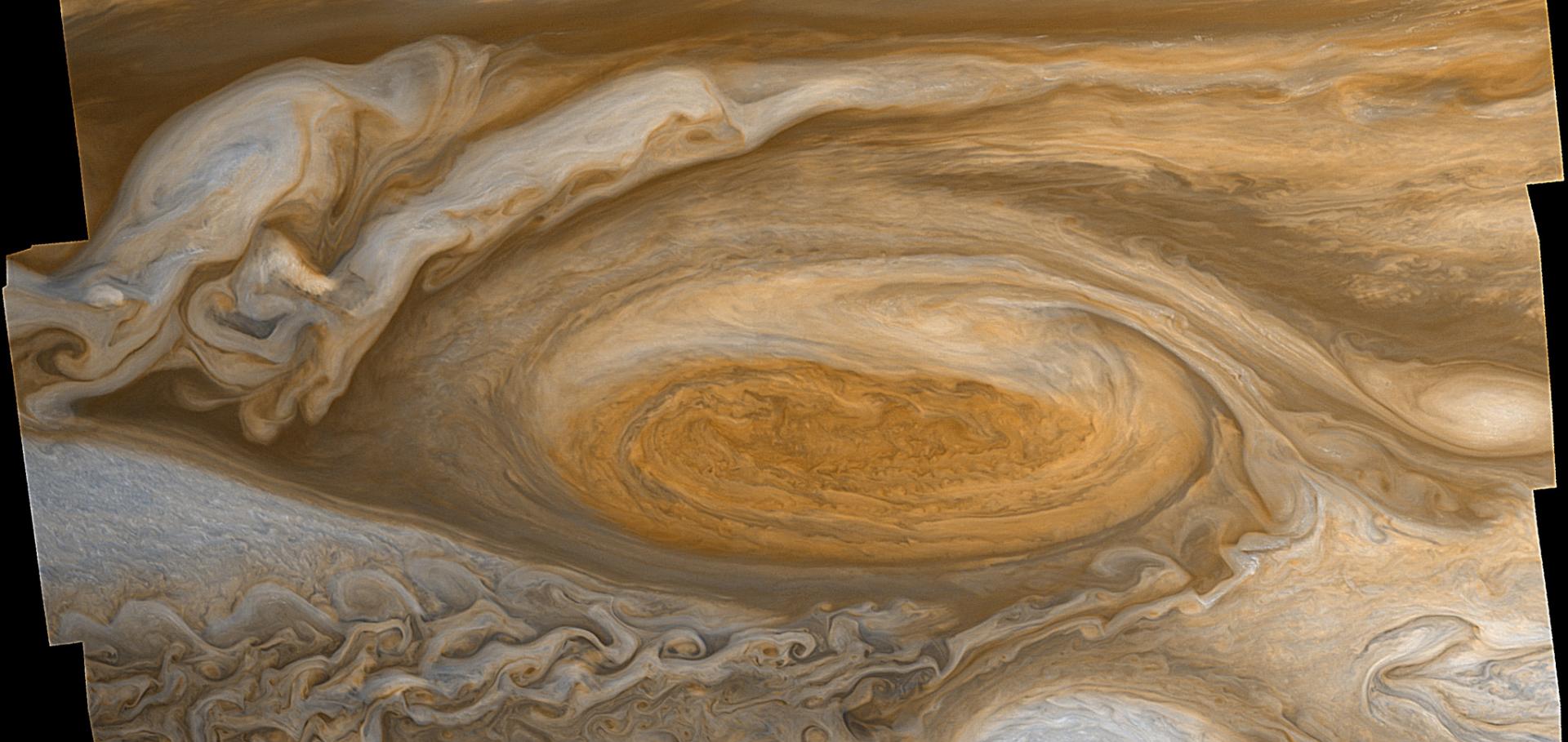
Image of Jupiter's Great Red Spot from Voyager 1

Image of Jupiter's Great Red Spot, obtained during the fly-by of Jupiter by NASA's Voyager 1 spacecraft in 1979.

Credit: NASA/JPL

Prof. Peter Read

Emeritus/researcher

Research theme

  • Climate physics
  • Exoplanets and planetary physics

Sub department

  • Atmospheric, Oceanic and Planetary Physics

Research groups

  • Geophysical and Astrophysical Fluid Dynamics
  • Planetary Climate Dynamics
Peter.Read@physics.ox.ac.uk
Telephone: 01865 (2)72082
Atmospheric Physics Clarendon Laboratory, room 210
  • About
  • Publications

Responses to Referee comments

Copernicus GmbH (2019)
More details from the publisher

Raymond Hide. 17 May 19296 September 2016

Biographical Memoirs of Fellows of the Royal Society The Royal Society 67 (2019) 191-215
More details from the publisher

Investigating the semiannual oscillation on Mars using data assimilation

Icarus Elsevier 333 (2019) 404-414 )

Authors:

Tao Ruan, Neil Lewis, S Lewis, Luca Montabone, Peter Read

Abstract:

A Martian semiannual oscillation (SAO), similar to that in the Earths tropical stratosphere, is evident in the Mars Analysis Correction Data Assimilation reanalysis dataset (MACDA) version 1.0, not only in the tropics, but also extending to higher latitudes. Unlike on Earth, the Martian SAO is found not always to reverse its zonal wind direction, but only manifests itself as a deceleration of the dominant wind at certain pressure levels and latitudes. Singular System Analysis (SSA) is further applied on the zonal-mean zonal wind in different latitude bands to reveal the characteristics of SAO phenomena at different latitudes. The second pair of principal components (PCs) is usually dominated by a SAO signal, though the SAO signal can be strong enough to manifest itself also in the first pair of PCs. An analysis of terms in the Transformed Eulerian Mean equation (TEM) is applied in the tropics to further elucidate the forcing processes driving the tendency of the zonal-mean zonal wind. The zonal-mean meridional advection is found to correlate strongly with the observed oscillations of zonal-mean zonal wind, and supplies the majority of the westward (retrograde) forcing in the SAO cycle. The forcing due to various non-zonal waves supplies forcing to the zonal-mean zonal wind that is nearly the opposite of the forcing due to meridional advection above ∼3 Pa altitude, but it also partly supports the SAO between 40 Pa and 3 Pa. Some distinctive features occurring during the period of the Mars year (MY) 25 global-scale dust storm (GDS) are also notable in our diagnostic results with substantially stronger values of eastward and westward momentum in the second half of MY 25 and stronger forcing due to vertical advection, transient waves and thermal tides
More details from the publisher
Details from ORA
More details

Comparative terrestrial atmospheric circulation regimes in simplified global circulation models: II. energy budgets and spectral transfers

(2019)

Authors:

Peter Read, Fachreddin Tabataba-Vakili, Yixiong Wang, Pierre Augier, Erik Lindborg, Alexandru Valeanu, Roland Young
More details from the publisher

Comparative terrestrial atmospheric circulation regimes in simplified global circulation models: I. from cyclostrophic super-rotation to geostrophic turbulence

(2019)

Authors:

Yixiong Wang, Peter Read, Fachreddin Tabataba-Vakili, Roland Young
More details from the publisher

Pagination

  • First page First
  • Previous page Prev
  • …
  • Page 5
  • Page 6
  • Page 7
  • Page 8
  • Current page 9
  • Page 10
  • Page 11
  • Page 12
  • Page 13
  • …
  • Next page Next
  • Last page Last

Footer Menu

  • Contact us
  • Giving to the Dept of Physics
  • Work with us
  • Media

User account menu

  • Log in

Follow us

FIND US

Clarendon Laboratory,

Parks Road,

Oxford,

OX1 3PU

CONTACT US

Tel: +44(0)1865272200

University of Oxfrod logo Department Of Physics text logo
IOP Juno Champion logo Athena Swan Silver Award logo

© University of Oxford - Department of Physics

Cookies | Privacy policy | Accessibility statement

Built by: Versantus

  • Home
  • Research
  • Study
  • Engage
  • Our people
  • News & Comment
  • Events
  • Our facilities & services
  • About us
  • Giving to Physics
  • Current students
  • Staff intranet