Home
Department Of Physics text logo
  • Research
    • Our research
    • Our research groups
    • Our research in action
    • Research funding support
    • Summer internships for undergraduates
  • Study
    • Undergraduates
    • Postgraduates
  • Engage
    • For alumni
    • For business
    • For schools
    • For the public
Menu
CMP
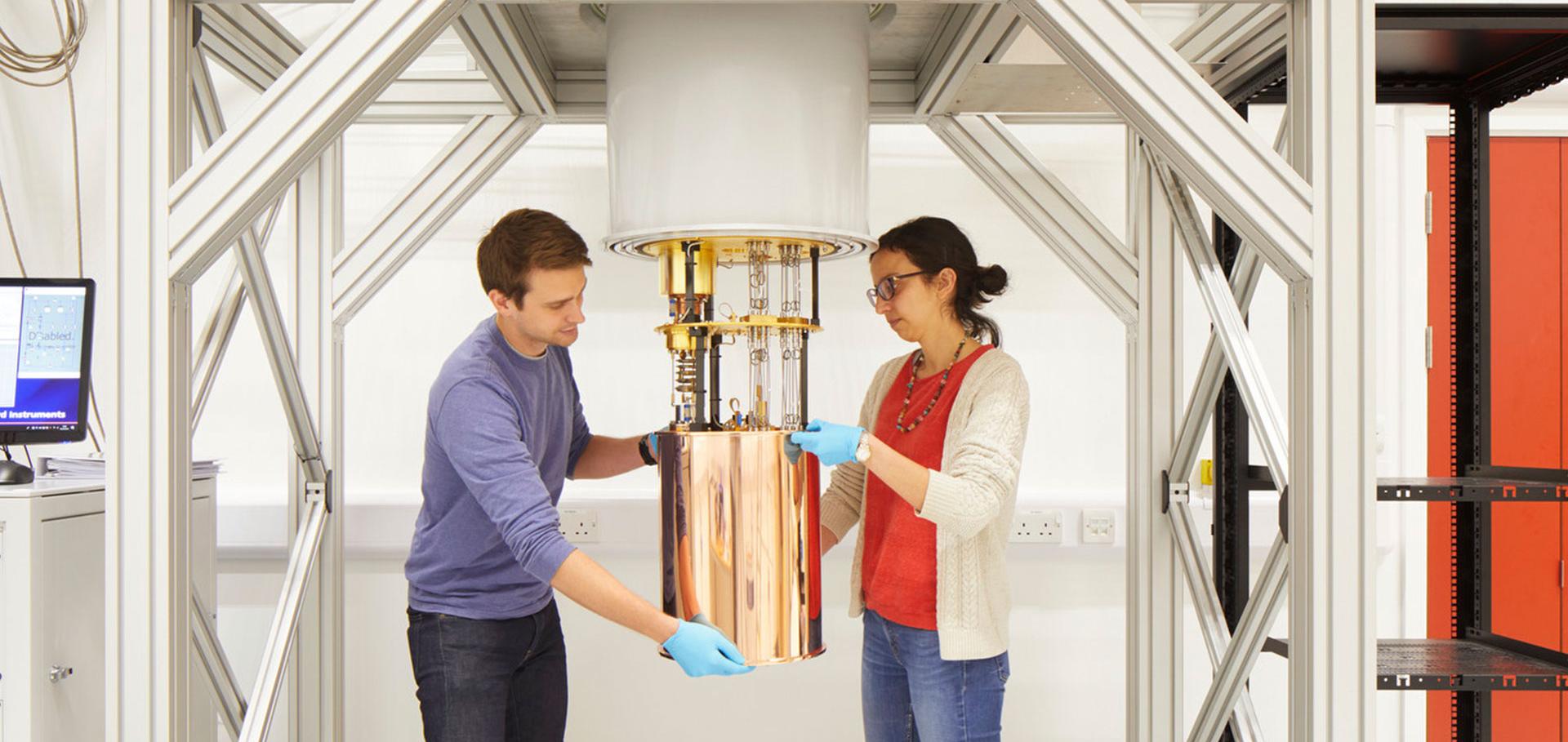
Credit: Jack Hobhouse

Prof Henry Snaith FRS

Professor of Physics

Sub department

  • Condensed Matter Physics

Research groups

  • Snaith group
  • Advanced Device Concepts for Next-Generation Photovoltaics
Henry.Snaith@physics.ox.ac.uk
Robert Hooke Building, room G21
  • About
  • Publications

Dual molecular bridges at perovskite heterointerfaces for efficient inverted solar cells

National Science Review Oxford University Press 12:7 (2025) nwaf211

Authors:

Qing Lian, Lina Wang, Guoliang Wang, Guojun Mi, Bowei Li, Joel A Smith, Pietro Caprioglio, Manuel Kober-Czerny, Deng Wang, Qiming Yin, Jiong Yang, Sibo Li, Xiao Liang, Shaokuan Gong, Dongyang Li, Hanlin Hu, Xihan Chen, Xugang Guo, Longbin Qiu, Baomin Xu, Gang Li, Anita WY Ho-Baillie, Wei Zhang, Guangfu Luo, Henry J Snaith

Abstract:

Utilizing molecular bridges presents a promising means to enhance the performance of perovskite solar cells (PSCs). However, concurrently bridging the perovskite absorber and its two adjacent interfaces remains a significant challenge that is yet to be achieved. Here, we construct dual molecular bridges at perovskite heterointerfaces, enabled by a self-organizing additive of 4-fluoro-phenethylammonium formate (4-F-PEAFa) and a synthesized hole transporter of [2-(7H-dibenzo[c, g]carbazol-7-yl)ethyl]phosphonic acid (DBZ-2PACz). The molecular bridges spanning two interfaces lead to the formation of an ‘integral carrier transport pathway’, mitigating both non-radiative recombination and charge-transport losses in the fabricated PSC devices. We thus achieve a champion power conversion efficiency (PCE) of 26.0% (25.6% certified) in inverted PSCs, accompanied by an exceptionally high fill factor of 0.87 (maximum 0.88 from the certified devices, 97% of its Shockley–Queisser limit) and a low ideality factor of 1.06. The unencapsulated devices retain 96% of their PCEs after aging at 85°C for 2200 h and 90% after maximum power point tracking at an elevated temperature of 50°C for 973 h.
More details from the publisher
Details from ORA
More details
More details

Indium and Silver Recovery from Perovskite Thin Film Solar Cell Waste by Means of Nanofiltration

ACS Sustainable Resource Management American Chemical Society 2:6 (2025) 1087-1095

Authors:

Meret Amrein, Karina Rohrer, Dirk Hengevoss, Heon Jin, Henry J Snaith, Michael Thomann, Frank Nüesch, Markus Lenz

Abstract:

Due to minimal material use and low-cost processing, next-generation thin film solar cells represent a promising alternative to traditional crystalline silicon solar cells. Among these, metal-halide perovskite solar cells have seen significant improvements in power conversion efficiency and are now on the verge of market entry. However, most efficient and stable perovskite solar cells contain lead in the perovskite absorber layer, along with indium and silver in their electrodes. This study demonstrates an environmentally benign recycling process for recovering all three elements from end-of-life perovskite solar cells. In short, the process consists of mechanical dismantling (milling), aqueous extraction/purification of PbI2, and acid extraction and purification of indium and silver by nanofiltration. After the quantitative recovery of lead as PbI2 (95 ± 5%), indium and silver were dissolved using nitric acid with recovery rates of 87 ± 7% for both metals. Life cycle assessment calculations were used to determine optimal conditions in terms of minimal environmental impact per gram of extracted element. After acid extraction, nanofiltration was employed using both custom-made layer-by-layer membranes and commercially available acid-resistant flat sheet membranes to separate indium from silver. Using an optimized membrane design, indium was almost entirely retained (96.9 ± 0.4%) using a layer-by-layer membrane at 50% permeate recovery. Hence, a twofold concentration of indium was achieved over the course of the filtration. In contrast, silver was not retained (retention of -7.6 ± 6.3%), resulting in a dilute Ag permeate. Using the commercial flat sheet membrane resulted in similar retention rates, with 98.5 ± 0.4% for indium and 5.8 ± 11.6% for silver. However, this came at the expense of considerably higher operating pressure (25 bar vs 5 bar) and lower flux (6 L/m2h vs 30 L/m2h), resulting in higher energy demand (72 Wh/L vs 9 Wh/L). Therefore, layer-by-layer membrane filtration proved to be the superior method for element recovery from perovskite photovoltaic devices. This study has shown that combining hydrometallurgical processing (aqueous and acidic extraction) with layer-by-layer membrane filtration offers an efficient and environmentally benign approach for metal recovery from end-of-life solar cells. Since indium and silver are also key elements for other thin film photovoltaic applications, layer-by-layer membrane filtration may represent a platform technology for future photovoltaic panel recycling.
More details from the publisher
Details from ORA
More details

Charge Extraction Multilayers Enable Positive-Intrinsic-Negative Perovskite Solar Cells with Carbon Electrodes

ACS Energy Letters American Chemical Society 10:6 (2025) 2736-2742

Authors:

Tino Lukas, Seongrok Seo, Philippe Holzhey, Katherine Stewart, Charlie Henderson, Lukas Wagner, David Beynon, Trystan M Watson, Ji-Seon Kim, Markus Kohlstädt, Henry J Snaith

Abstract:

Perovskite solar cells achieve high power conversion efficiencies but usually rely on vacuum-deposited metallic contacts, leading to high material costs for noble metals and stability issues for more reactive metals. Carbon-based materials offer a cost-effective and potentially more stable alternative. The vast majority of carbon-electrode PSCs use the negative-intrinsic-positive (n-i-p) or “hole-transport-layer-free” architectures. Here, we present a systematic study to assess the compatibility of “inverted”, p-i-n configuration PSC contact layers with carbon top electrodes. We identify incompatibilities between common electron transport layers and the carbon electrode deposition process and previously unobserved semiconducting properties in carbon electrodes with unique implications for charge extraction and electronic behavior. To overcome these issues, we introduce a double-layer atomic layer deposited tin oxide (SnO2) and Poly­(2,3-dihydrothieno-1,4-dioxin)-poly­(styrenesulfonate) (PEDOT:PSS), yielding up to 16.1% PCE and a retained 94% performance after 500 h of outdoor aging. The study is a crucial step forward for printable, metal-electrode-free, and evaporation-free perovskite PV technologies.
More details from the publisher
Details from ORA
More details
More details

Influence of Interfacial Reactions on Perovskite Optoelectronic Devices

small methods Wiley (2025) 2500438

Authors:

Zhongcheng Yuan, Sai Bai, Feng Gao, Henry J Snaith

Abstract:

Interfacial materials tend to alter the crystallization, films growth and defect formation process of the as‐deposited perovskites, which has been a critical and fundamental factor in determining the efficiency and operational stability of perovskite‐based optoelectronic devices. This review explores the underlying mechanism of interfacial reactions, which can either result in degradations or be beneficial. The influence of interfacial reactions, mainly interface‐induced deprotonation of organic cations and amidation processes, are discussed in relation to their impact on perovskite film growth and ensuing optoelectronic device performance. It is further proposed strategies to regulate these reactions and mitigate their negative effects to achieve high performance optoelectronic devices.
More details from the publisher
Details from ORA
More details
More details

Interfacial energetics reversal strategy for efficient perovskite solar cells

Advanced Materials Wiley 37:26 (2025) e2503110

Authors:

Sheng Jiang, Shaobing Xiong, Zhongcheng Yuan, Yafang Li, Xiaomeng You, Hongbo Wu, Menghui Jia, Zhennan Lin, Zaifei Ma, Yuning Wu, Yefeng Yao, Xianjie Liu, Junhao Chu, Zhenrong Sun, Mats Fahlman, Henry J Snaith, Qinye Bao

Abstract:

Reducing heterointerface nonradiative recombination is a key challenge for realizing highly efficient perovskite solar cells (PSCs). Motivated by this, a facile strategy is developed via interfacial energetics reversal to functionalize perovskite heterointerface. A surfactant molecule, trichloro[3-(pentafluorophenyl)propyl]silane (TPFS) reverses perovskite surface energetics from intrinsic n-type to p-type, evidently demonstrated by ultraviolet and inverse photoelectron spectroscopies. The reconstructed perovskite surface energetics match well with the upper deposited hole transport layer, realizing an exquisite energy level alignment for accelerating hole extraction across the heterointerface. Meanwhile, TPFS further diminishes surface defect density. As a result, this cooperative strategy leads to greatly minimized nonradiative recombination. PSCs achieve an impressive power conversion efficiency of 25.9% with excellent reproducibility, and a nonradiative recombination-induced qVoc loss of only 57 meV, which is the smallest reported to date in n-i-p structured PSCs.
More details from the publisher
Details from ORA
More details
More details

Pagination

  • First page First
  • Previous page Prev
  • Page 1
  • Page 2
  • Page 3
  • Current page 4
  • Page 5
  • Page 6
  • Page 7
  • Page 8
  • Page 9
  • …
  • Next page Next
  • Last page Last

Footer Menu

  • Contact us
  • Giving to the Dept of Physics
  • Work with us
  • Media

User account menu

  • Log in

Follow us

FIND US

Clarendon Laboratory,

Parks Road,

Oxford,

OX1 3PU

CONTACT US

Tel: +44(0)1865272200

University of Oxfrod logo Department Of Physics text logo
IOP Juno Champion logo Athena Swan Silver Award logo

© University of Oxford - Department of Physics

Cookies | Privacy policy | Accessibility statement

Built by: Versantus

  • Home
  • Research
  • Study
  • Engage
  • Our people
  • News & Comment
  • Events
  • Our facilities & services
  • About us
  • Giving to Physics
  • Current students
  • Staff intranet