

Dependencies of Simulated Convective Cell and System Growth Biases on Atmospheric Instability and Model Resolution
Journal of Geophysical Research: Atmospheres American Geophysical Union 129:22 (2024) e2024JD041090
Abstract:
This study evaluates convective cell properties and their relationships with convective and stratiform rainfall within a season‐long convection‐permitting weather research and forecasting simulation over central Argentina using radar, satellite, and radiosonde measurements from the RELAMPAGO‐CACTI field campaign. The simulation slightly underestimates radar‐estimated rainfall over the ∼3.5‐month evaluation period but underestimates stratiform rainfall by 46% and overestimates convective rainfall by 43%. As convective available potential energy (CAPE) increases, the convective rainfall overestimation decreases, but the stratiform rainfall underestimation increases such that the contribution of convective to total rainfall remains constantly high biased by ∼26%. Overestimated convective rainfall arises from the simulation generating 2.6 times more precipitating convective cells (14,299) than observed by radar (5,662) despite similar observed and simulated cell growth processes, with relatively wide cells contributing mostly to excessive convective rainfall. Relatively shallow cells, typically reaching heights of 4–7 km, contribute most to the cell number bias. This cell number bias increases as CAPE decreases, potentially because cells and their updrafts become narrower and more under‐resolved as CAPE decreases. The gross overproduction of precipitating shallow cells leads to overly efficient precipitation and inadequate detrainment of ice aloft, thereby diminishing the formation of robust stratiform rainfall regions. Decreasing model horizontal grid spacing from 3 to 1 or 0.333 km for low (<300 J kg−1) and high CAPE (>1,000 J kg−1) cases results in minimal change to cell number, depth, and convective‐to‐stratiform partitioning biases. This suggests that improving prediction of these convective properties depends on factors beyond solely increasing model resolution.Advancing Our Understanding of Eddy-driven Jet Stream Responses to Climate Change – A Roadmap
Current Climate Change Reports Springer 11:1 (2024) 2
Abstract:
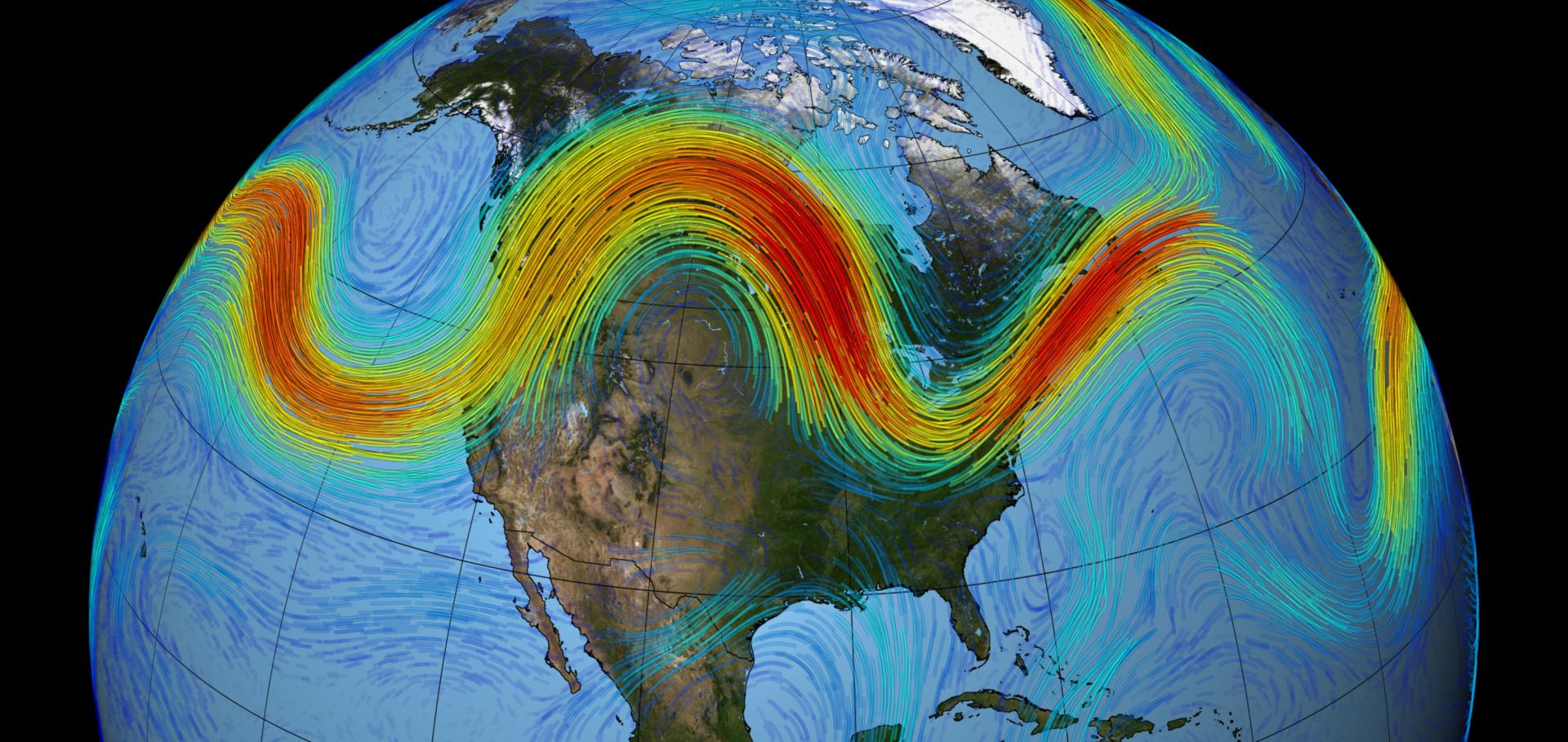
Purpose of Review: Extratropical jets and associated storm tracks significantly influence weather and regional climate across various timescales. Understanding jet responses to climate change is essential for reliable regional climate projections. This review serves two main purposes: (1) to provide an accessible overview of extratropical jet dynamics and a comprehensive examination of current challenges and uncertainties in predicting jet responses to greenhouse gas increases and (2) to suggest innovative experiments to advance our understanding of these responses. Recent Findings: While successive generations of climate model ensembles consistently project a mean poleward shift of the midlatitude zonal-mean maximum winds, there remains considerable intermodel spread and large uncertainty across seasonal and regional jet responses. Of particular note is our limited understanding of how these jets respond to the intricate interplay of multiple concurrent drivers, such as the strong warming in polar and tropical regions, and the relative importance of each factor. Furthermore, the difficulty of simulating processes requiring high resolution, such as those linked to sharp sea surface temperature gradients or diabatic effects related to tropical convection and extratropical cyclones, has historically hindered progress. Summary: We advocate for a collaborative effort to enhance our understanding of the jet stream response to climate change. We propose a series of new experiments that take advantage of recent advances in computing power and modelling capabilities to better resolve small-scale processes such as convective circulations, which we consider essential for a good representation of jet dynamics.Quasi-Biennial Oscillation
Chapter in Atmospheric oscillations: sources of subseasonal-to-seasonal variability and predictability, Elsevier (2024) 253-275
Abstract:
The Quasi-Biennial Oscillation (QBO) is one of the most cyclic phenomena in the atmosphere except for the annular and diurnal cycles, which provide the predictability source for subseasonal-to-seasonal forecasts on the globe. The QBO is generated by the interaction between the background circulation and the equatorial waves, which cover a wide spectrum consisting of those that are eastward- and westward-propagating. The QBO can affect the climate in both the Northern and Southern Hemispheres through at least three dynamic pathways, including the stratospheric polar vortex pathway, the subtropical downward-arching zonal wind pathway, and the tropical convection pathway. The impact of the QBO on the extratropics is projected to strengthen in future scenario experiments, although the maximum QBO wind magnitude gradually decreased in recent decades. As a newly emerging feature, the QBO disruption during the westerly phase is mainly caused by the extremely active Rossby waves from the extratropics. The QBO disruptions are likely to increase in a warmer climate background.Geodynamics of Super‐Earth GJ 486b
Journal of Geophysical Research: Planets American Geophysical Union 129:10 (2024) e2024JE008491
Abstract:
Many super‐Earths are on very short orbits around their host star and, therefore, more likely to be tidally locked. Because this locking can lead to a strong contrast between the dayside and nightside surface temperatures, these super‐Earths could exhibit mantle convection patterns and tectonics that could differ significantly from those observed in the present‐day solar system. The presence of an atmosphere, however, would allow transport of heat from the dayside toward the nightside and thereby reduce the surface temperature contrast between the two hemispheres. On rocky planets, atmospheric and geodynamic regimes are closely linked, which directly connects the question of atmospheric thickness to the potential interior dynamics of the planet. Here, we study the interior dynamics of super‐Earth GJ 486b ( R = 1.34 $R=1.34$ R ⊕ ${R}_{\oplus }$ , M = 3.0 $M=3.0$ M ⊕ ${M}_{\oplus }$ , T eq ≈ 700 ${\mathrm{T}}_{\text{eq}}\approx 700$ K), which is one of the most suitable M‐dwarf super‐Earth candidates for retaining an atmosphere produced by degassing from the mantle and magma ocean. We investigate how the geodynamic regime of GJ 486b is influenced by different surface temperature contrasts by varying possible atmospheric circulation regimes. We also investigate how the strength of the lithosphere affects the convection pattern. We find that hemispheric tectonics, the surface expression of degree‐1 convection with downwellings forming on one hemisphere and upwelling material rising on the opposite hemisphere, is a consequence of the strong lithosphere rather than surface temperature contrast. Anchored hemispheric tectonics, where downwellings und upwellings have a preferred (day/night) hemisphere, is favored for strong temperature contrasts between the dayside and nightside and higher surface temperatures.Spatio-temporal averaging of jets obscures the reinforcement of baroclinicity by latent heating
Weather and Climate Dynamics Copernicus Publications 5:4 (2024) 1269-1286