

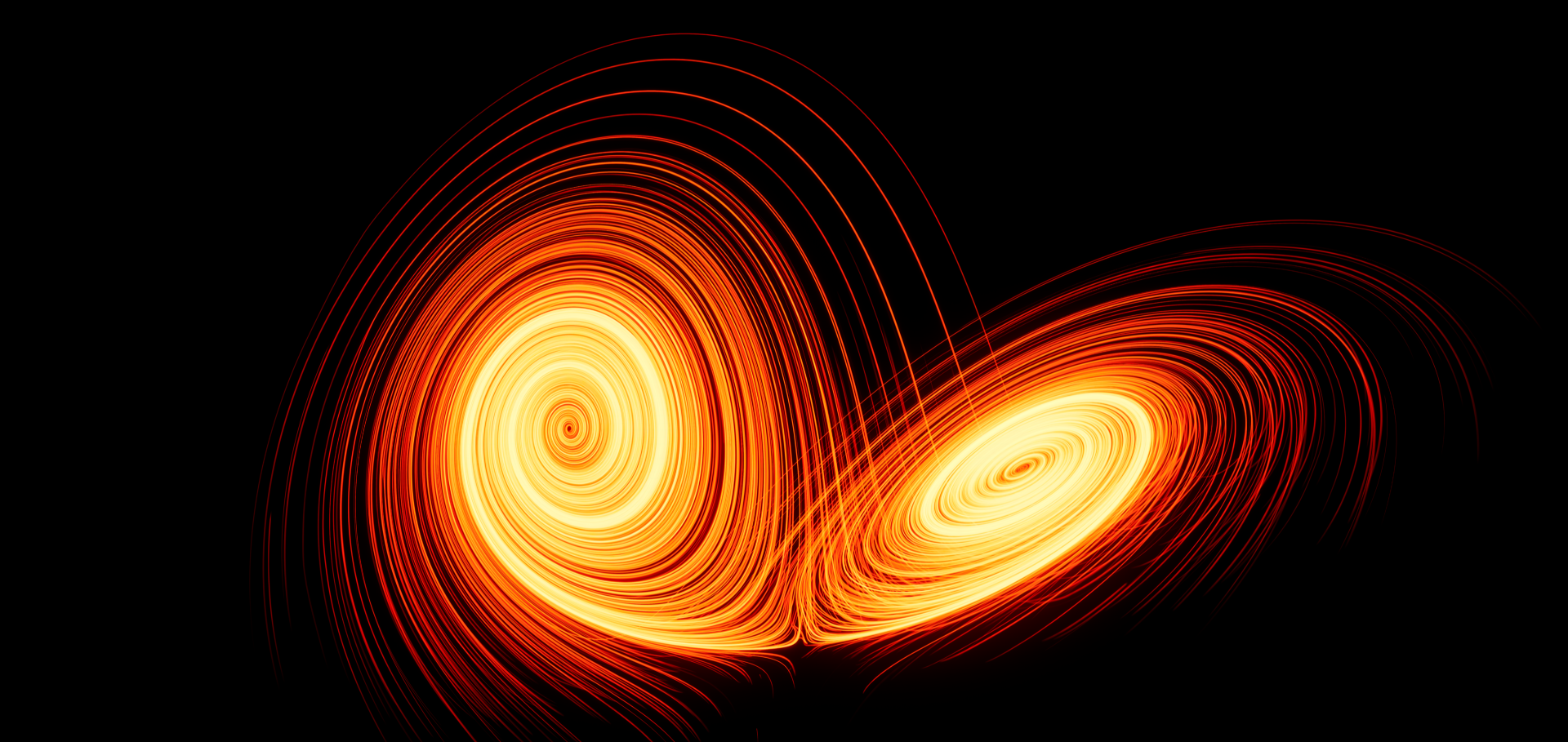
Taxonomy for physics beyond quantum mechanics
Proceedings of the Royal Society A: Mathematical, Physical and Engineering Sciences The Royal Society 480:2294 (2024) 20230779
Abstract:
We propose terminology to classify interpretations of quantum mechanics and models that modify or complete quantum mechanics. Our focus is on models which have previously been referred to as superdeterministic (strong or weak), retrocausal (with or without signalling, dynamical or non-dynamical), future-input-dependent, atemporal and all-at-once, not always with the same meaning or context. Sometimes, these models are assumed to be deterministic, sometimes not, the word deterministic has been given different meanings, and different notions of causality have been used when classifying them. This has created much confusion in the literature, and we hope that the terms proposed here will help to clarify the nomenclature. The general model framework that we will propose may also be useful to classify other interpretations and modifications of quantum mechanics. This document grew out of the discussions at the 2022 Bonn Workshop on Superdeterminism and Retrocausality.A momentum budget study of the semi‐annual oscillation in the Whole Atmosphere Community Climate Model
Quarterly Journal of the Royal Meteorological Society Wiley (2024)
Abstract:
The representation of the semi‐annual oscillation (SAO) in climate models shows a common easterly bias of several tens of metres per second compared to observations. These biases could be due to deficiencies in eastward tropical wave forcing, the position or strength of the climatological summertime jet or the strength/timing of the Brewer–Dobson circulation. This motivates further analysis of the momentum budget of the upper stratosphere within models and a more detailed comparison with reanalyses to determine the origin of the bias. In this study, the transformed Eulerian mean momentum equation is used to evaluate the different forcing terms that contribute to the SAO in the MERRA2 reanalysis dataset. This is then compared with the equivalent analysis using data from a climate simulation of the Whole Atmosphere Community Climate Model (WACCM). The comparison shows that WACCM underestimates eastward forcing by both resolved and parameterised waves at equatorial latitudes when compared with MERRA2 and also has a weaker tropical upwelling above 1 hPa.An introduction to weather, climate and the energy sector
Weather Wiley (2024)
Abstract:
Weather and climate have impacts across the energy sector. This short article introduces the effects of weather on the energy sector with some specific examples and looks ahead to changes that might be seen in weather and climate services for the energy sector in the near future.Impact of ocean in-situ observations on ECMWF sub-seasonal forecasts
Frontiers in Marine Science Frontiers Media 11 (2024) 1396491
Abstract:
We assess for the first time the impact of in-situ ocean observations on European Centre for Medium-Range Weather Forecasts (ECMWF) sub-seasonal forecasts of both ocean and atmospheric conditions. A series of coupled reforecasts have been conducted for the period 1993-2015, in which different sets of ocean observations were withdrawn in the production of the ocean initial conditions. Removal of all ocean in-situ observations in the initial conditions leads to significant degradation in the forecasts of ocean surface and subsurface mean state at lead times from week 1 to week 4. The negative impact is predominantly caused by the removal of the Argo observing system in recent decades. Changes in the mean state of atmospheric variables are comparatively small but significant in the forecasts of lower and upper atmospheric circulation over large regions. Our results highlight the value of continuous, real-time in-situ observations of the surface and subsurface ocean for coupled forecasts in the sub-seasonal range.Comparison between non‐orographic gravity‐wave parameterizations used in QBOi models and Strateole 2 constant‐level balloons
Quarterly Journal of the Royal Meteorological Society Wiley (2024)