

Ultrafast delocalization of excitation in synthetic light-harvesting nanorings
Chemical Science Royal Society of Chemistry 6:1 (2015) 181-189
Abstract:
Rings of chlorophyll molecules harvest sunlight remarkably efficiently during photosynthesis in purple bacteria. The key to their efficiency lies in their highly delocalized excited states that allow for ultrafast energy migration. Here we show that a family of synthetic nanorings mimic the ultrafast energy transfer and delocalization observed in nature. π-Conjugated nanorings with diameters of up to 10 nm, consisting of up to 24 porphyrin units, are found to exhibit excitation delocalization within the first 200 fs of light absorption. Transitions from the first singlet excited state of the circular nanorings are dipole-forbidden as a result of symmetry constraints, but these selection rules can be lifted through static and dynamic distortions of the rings. The increase in the radiative emission rate in the larger nanorings correlates with an increase in static disorder expected from Monte Carlo simulations. For highly symmetric rings, the radiative rate is found to increase with increasing temperature. Although this type of thermally activated superradiance has been theoretically predicted in circular chromophore arrays, it has not previously been observed in any natural or synthetic systems. As expected, the activation energy for emission increases when a nanoring is fixed in a circular conformation by coordination to a radial template. These nanorings offer extended chromophores with high excitation delocalization that is remarkably stable against thermally induced disorder. Such findings open new opportunities for exploring coherence effects in nanometer molecular rings and for implementing these biomimetic light-harvesters in man-made devices. This journal isUltrafast transient terahertz conductivity of monolayer MoS₂ and WSe₂ grown by chemical vapor deposition
ACS nano American Chemical Society 8:11 (2014) 11147-11153
Abstract:
We have measured ultrafast charge carrier dynamics in monolayers and trilayers of the transition metal dichalcogenides MoS2 and WSe2 using a combination of time-resolved photoluminescence and terahertz spectroscopy. We recorded a photoconductivity and photoluminescence response time of just 350 fs from CVD-grown monolayer MoS2, and 1 ps from trilayer MoS2 and monolayer WSe2. Our results indicate the potential of these materials as high-speed optoelectronic materials.Electron mobilities approaching bulk limits in "surface-free" GaAs nanowires.
Nano letters American Chemical Society 14:10 (2014) 5989-5994
Abstract:
Achieving bulk-like charge carrier mobilities in semiconductor nanowires is a major challenge facing the development of nanowire-based electronic devices. Here we demonstrate that engineering the GaAs nanowire surface by overcoating with optimized AlGaAs shells is an effective means of obtaining exceptionally high carrier mobilities and lifetimes. We performed measurements of GaAs/AlGaAs core-shell nanowires using optical pump-terahertz probe spectroscopy: a noncontact and accurate probe of carrier transport on ultrafast time scales. The carrier lifetimes and mobilities both improved significantly with increasing AlGaAs shell thickness. Remarkably, optimized GaAs/AlGaAs core-shell nanowires exhibited electron mobilities up to 3000 cm(2) V(-1) s(-1), reaching over 65% of the electron mobility typical of high quality undoped bulk GaAs at equivalent photoexcited carrier densities. This points to the high interface quality and the very low levels of ionized impurities and lattice defects in these nanowires. The improvements in mobility were concomitant with drastic improvements in photoconductivity lifetime, reaching 1.6 ns. Comparison of photoconductivity and photoluminescence dynamics indicates that midgap GaAs surface states, and consequently surface band-bending and depletion, are effectively eliminated in these high quality heterostructures.Effect of Nanocrystalline Domains in Photovoltaic Devices with Benzodithiophene-Based Donor–Acceptor Copolymers
The Journal of Physical Chemistry C American Chemical Society (ACS) 118:31 (2014) 17351-17361
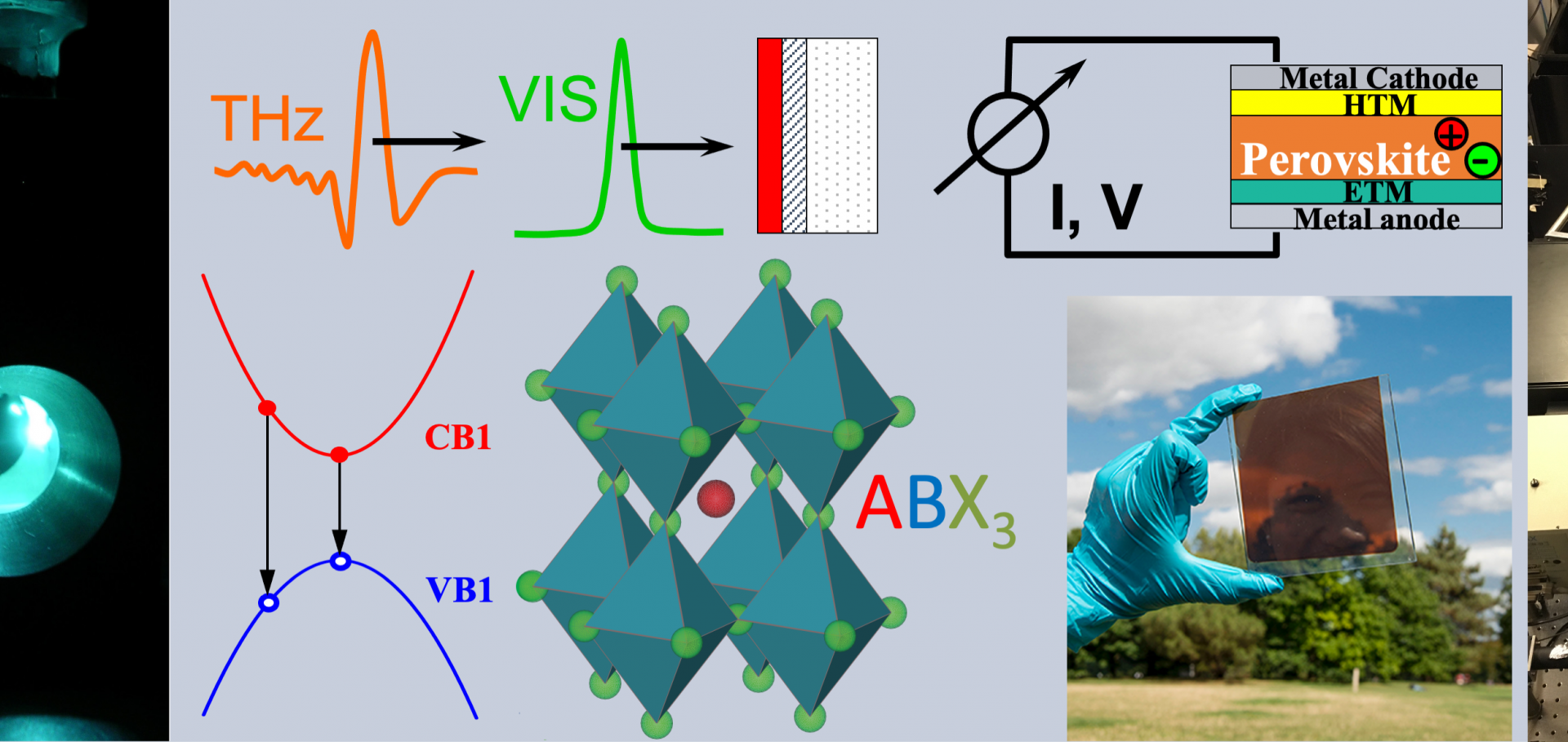
Charge carrier recombination channels in the low-temperature phase of organic-inorganic lead halide perovskite thin films
APL Materials American Institute of Physics 2:8 (2014) 081513-081513