Home
Department Of Physics text logo
  • Research
    • Our research
    • Our research groups
    • Our research in action
    • Research funding support
    • Summer internships for undergraduates
  • Study
    • Undergraduates
    • Postgraduates
  • Engage
    • For alumni
    • For business
    • For schools
    • For the public
Menu
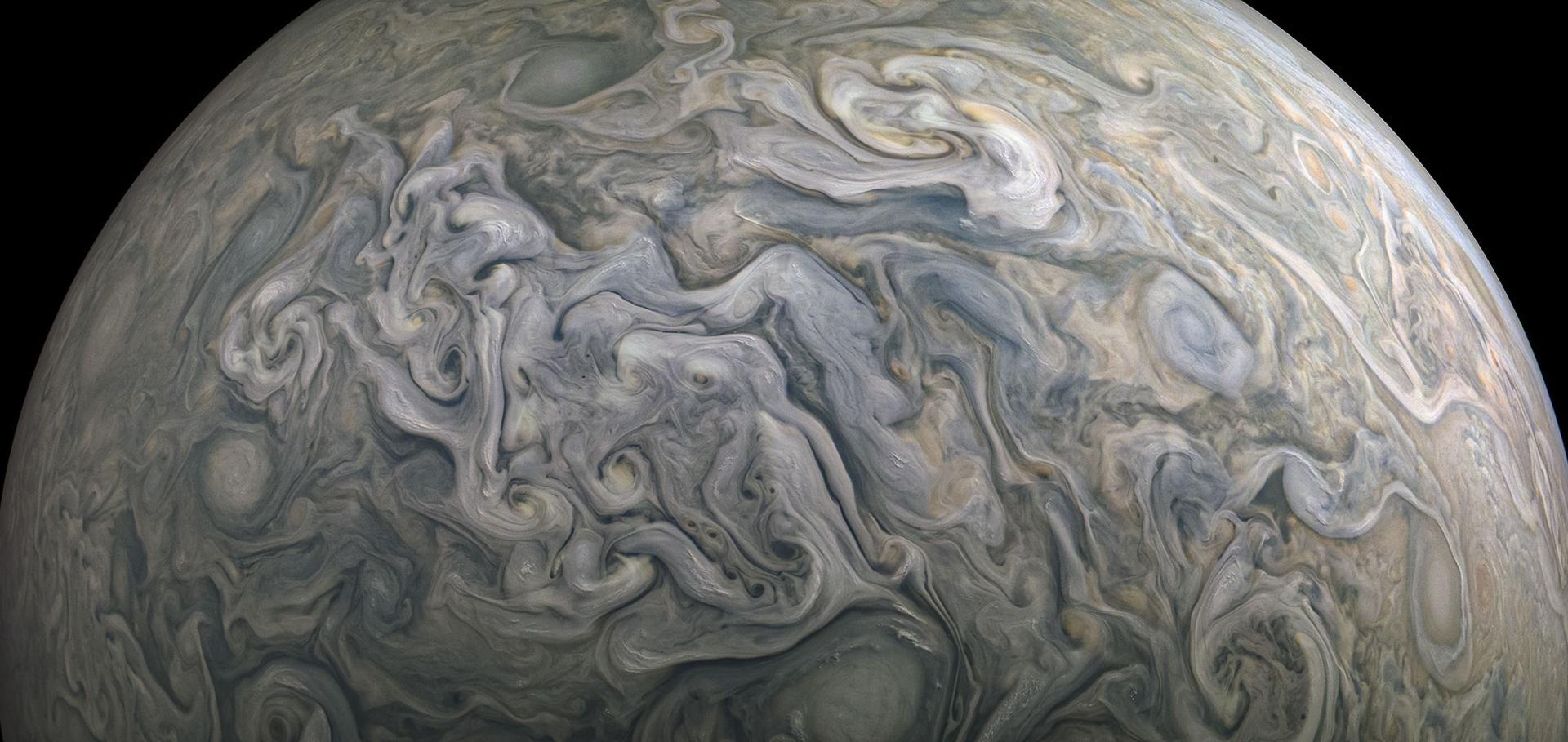
Juno Jupiter image

Prof. Patrick Irwin

Professor of Planetary Physics

Research theme

  • Exoplanets and planetary physics

Sub department

  • Atmospheric, Oceanic and Planetary Physics

Research groups

  • Exoplanet atmospheres
  • Planetary atmosphere observation analysis
  • Solar system
patrick.irwin@physics.ox.ac.uk
Telephone: 01865 (2)72083
Atmospheric Physics Clarendon Laboratory, room 306
Personal research page
NEMESIS
  • About
  • Publications

Radiative forcing of the stratosphere of Jupiter, Part I: Atmospheric cooling rates from Voyager to Cassini

Planetary and Space Science (2013)

Authors:

X Zhang, RL Shia, MA Allen, YL Yung, CA Nixon, RA West, PGJ Irwin, RV Yelle

Abstract:

We developed a line-by-line heating and cooling rate model for the stratosphere of Jupiter, based on two complete sets of global maps of temperature, CH and CH, retrieved from the Cassini and Voyager observations in the latitude and vertical plane, with a careful error analysis. The non-LTE effect is found unimportant on the thermal cooling rate below the 0.01 mbar pressure level. The most important coolants are molecular hydrogen between 10 and 100 mbar, and hydrocarbons, including ethane (CH), acetylene (CH) and methane (CH), in the region above. The two-dimensional cooling rate maps are influenced primarily by the temperature structure, and also by the meridional distributions of CH and CH. The temperature anomalies at the 1 mbar pressure level in the Cassini data and the strong CH latitudinal contrast in the Voyager epoch are the two most prominent features influencing the cooling rate patterns, with the effect from the 'quasi-quadrennial oscillation (QQO)' thermal structures at ~20 mbar. The globally averaged CH heating and cooling rates are not balanced, clearly in the lower stratosphere under 10 mbar, and possibly in the upper stratosphere above the 1 mbar pressure level. Possible heating sources from the gravity wave breaking and aerosols are discussed. The radiative relaxation timescale in the lower stratosphere implies that the temperature profile might not be purely radiatively controlled. © 2013 Elsevier Ltd.
More details from the publisher
More details

Upper limits for PH3 and H2S in Titan's atmosphere from Cassini CIRS

Icarus (2013)

Authors:

CA Nixon, NA Teanby, PGJ Irwin, SM Hörst
More details from the publisher

On the potential of the EChO mission to characterise gas giant atmospheres

(2012)

Authors:

Joanna K Barstow, Suzanne Aigrain, Patrick GJ Irwin, Neil Bowles, Leigh N Fletcher, Jae-Min Lee
More details from the publisher

Latitudinal variation of upper tropospheric NH3 on Saturn derived from Cassini/CIRS far-infrared measurements

Planetary and Space Science 73:1 (2012) 347-363

Authors:

J Hurley, LN Fletcher, PGJ Irwin, SB Calcutt, JA Sinclair, C Merlet

Abstract:

Ammonia (NH3) has been detected both on Saturn and Jupiter, and although its concentration and distribution has been well-studied on Jupiter, it has proven more difficult to do so on Saturn due to higher sensitivity requirements resulting from Saturn's lower atmospheric temperatures and the dominance of Saturn's phosphine which masks the ammonia signal. Using far-infrared measurements of Saturn taken by Cassini/CIRS between February 2005 and December 2010, the latitudinal variations of upper tropospheric ammonia on Saturn are studied. Sensitivity to NH3 in the far-infrared is explored to provide estimates of temperature, para-H2 and PH 3, from 2.5 cm-1 spectral resolution measurements alone, 0.5 cm-1 spectral-resolution measurements alone, and 0.5 cm -1 measurements degraded to 2.5 cm-1 spectral resolution. The estimates of NH3 from these three different datasets largely agree, although there are notable differences using the high emission angle 0.5 cm-1 data, which are asserted to result from a reduction in sensitivity at higher emission angles. For low emission angles, the 0.5 cm -1-retrieved values of NH3 can be used to reproduce the 2.5 cm-1 spectra with similar efficacy as those derived directly from the 2.5 cm-1 resolution data itself, and vice versa. Using low emission angle data, NH3 is observed to have broad peak abundances at ±25°latitude, attributed to result from condensation and/or photolytic processes. Lack of data coverage at equatorial latitudes precludes analysis of NH3 abundance at less than about 10°latitude. Noise levels are not sufficient to distinguish fine zonal features, although it seems that NH3 cannot trace the zonal belt/zone structure in the upper troposphere of Saturn. © 2012 Elsevier Ltd. All rights reserved.
More details from the publisher

Active upper-atmosphere chemistry and dynamics from polar circulation reversal on Titan.

Nature 491:7426 (2012) 732-735

Authors:

Nicholas A Teanby, Patrick GJ Irwin, Conor A Nixon, Remco de Kok, Sandrine Vinatier, Athena Coustenis, Elliot Sefton-Nash, Simon B Calcutt, F Michael Flasar

Abstract:

Saturn's moon Titan has a nitrogen atmosphere comparable to Earth's, with a surface pressure of 1.4 bar. Numerical models reproduce the tropospheric conditions very well but have trouble explaining the observed middle-atmosphere temperatures, composition and winds. The top of the middle-atmosphere circulation has been thought to lie at an altitude of 450 to 500 kilometres, where there is a layer of haze that appears to be separated from the main haze deck. This 'detached' haze was previously explained as being due to the co-location of peak haze production and the limit of dynamical transport by the circulation's upper branch. Here we report a build-up of trace gases over the south pole approximately two years after observing the 2009 post-equinox circulation reversal, from which we conclude that middle-atmosphere circulation must extend to an altitude of at least 600 kilometres. The primary drivers of this circulation are summer-hemisphere heating of haze by absorption of solar radiation and winter-hemisphere cooling due to infrared emission by haze and trace gases; our results therefore imply that these effects are important well into the thermosphere (altitudes higher than 500 kilometres). This requires both active upper-atmosphere chemistry, consistent with the detection of high-complexity molecules and ions at altitudes greater than 950 kilometres, and an alternative explanation for the detached haze, such as a transition in haze particle growth from monomers to fractal structures.
More details from the publisher
More details

Pagination

  • First page First
  • Previous page Prev
  • …
  • Page 59
  • Page 60
  • Page 61
  • Page 62
  • Current page 63
  • Page 64
  • Page 65
  • Page 66
  • Page 67
  • …
  • Next page Next
  • Last page Last

Footer Menu

  • Contact us
  • Giving to the Dept of Physics
  • Work with us
  • Media

User account menu

  • Log in

Follow us

FIND US

Clarendon Laboratory,

Parks Road,

Oxford,

OX1 3PU

CONTACT US

Tel: +44(0)1865272200

University of Oxfrod logo Department Of Physics text logo
IOP Juno Champion logo Athena Swan Silver Award logo

© University of Oxford - Department of Physics

Cookies | Privacy policy | Accessibility statement

Built by: Versantus

  • Home
  • Research
  • Study
  • Engage
  • Our people
  • News & Comment
  • Events
  • Our facilities & services
  • About us
  • Giving to Physics
  • Current students
  • Staff intranet