

Quantum oscillations in the zeroth Landau Level and the serpentine Landau fan
Abstract:
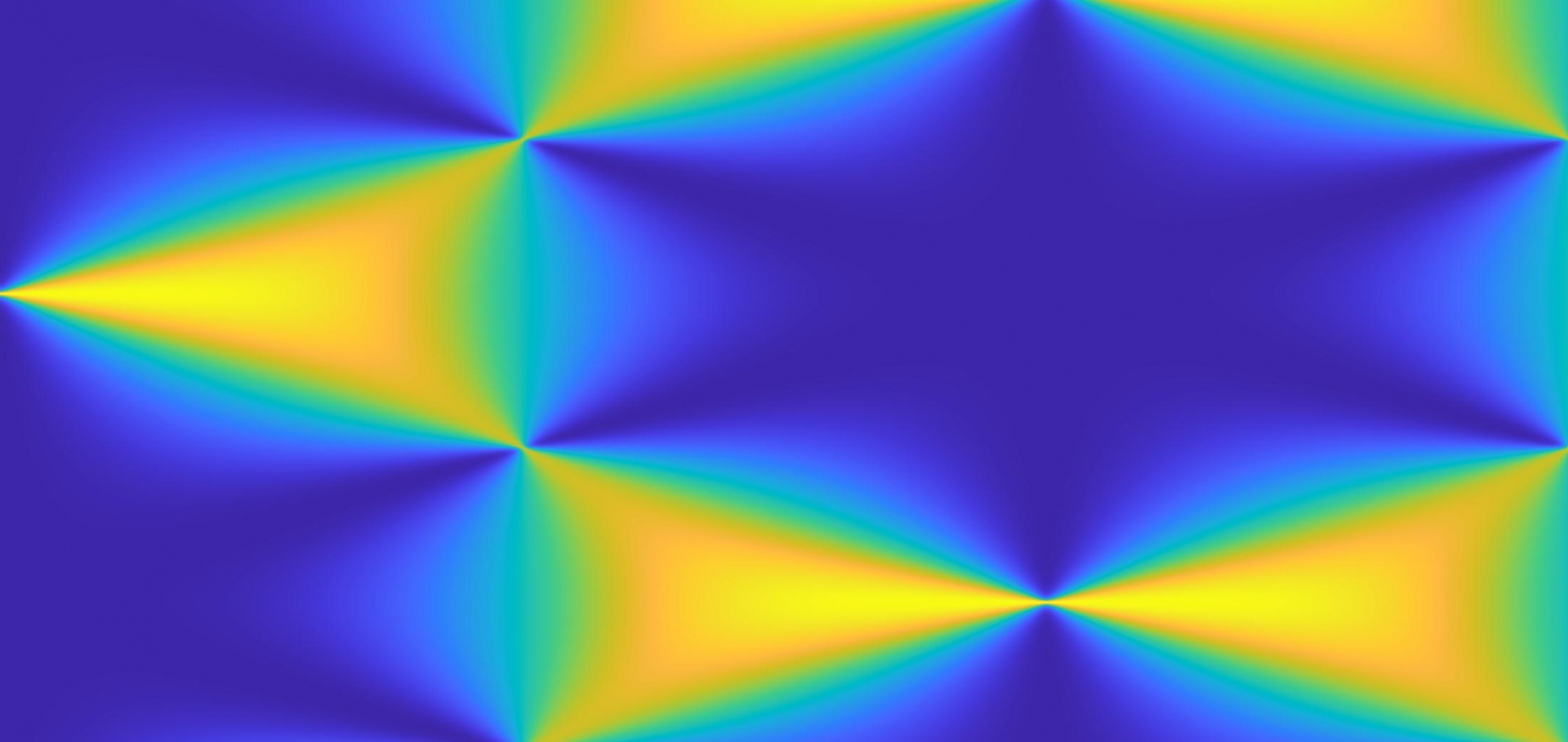
We identify an unusual mechanism for quantum oscillations in nodal semimetals, driven by a single pair of Landau levels periodically closing their gap at the Fermi energy as a magnetic field is varied. These `zero Landau level' quantum oscillations (ZQOs) appear in the nodal limit where the zero-field Fermi volume vanishes, and have distinctive periodicity and temperature dependence. We link the Landau spectrum of a two-dimensional (2D) nodal semimetal to the Rabi model, and show by exact solution that across the entire Landau fan, pairs of opposite-parity Landau levels are intertwined in a `serpentine' manner. We propose 2D surfaces of topological crystalline insulators as natural settings for ZQOs, and comment on implications for anomaly physics in 3D nodal semimetals.Quantum quenches in closed and open spin chains: a thesis in two parts
Abstract:
This thesis is concerned with three studies of far from equilibrium dynamics in quantum spin chains. In all cases the nonequilibrium dynamics is generated by a protocol called a ‘quantum quench’, describing the time evolution after a sudden change in system parameters. Part A is concerned with closed systems, meaning those isolated from their environment and begins with Chapter 1, which introduces the quench protocol and motivates the study of quantum quenches through examples of its experimental relevance before providing a short survey of known theoretical results that will enable the reader to interpret the quenches in later chapters. Chapter 2 then introduces a paradigmatic spin chain — the transverse field Ising model (TFIM) — and details its solution, along with providing a worked elementary quench example, which shows that a class of local observables relax to stationary values following the quench.
The first chapter based on original research, Chapter 3, builds on this framework by considering the axial next-nearest neighbour Ising (ANNNI) model, an extension of the transverse field Ising model with an additional next-nearest neighbour Ising interaction. Whilst the TFIM is exactly solvable, the ANNNI is a generic quantum system and its behaviour far from equilibrium must be determined approximately. Quench dynamics in this system were recently used to investigate if signatures of proximate quantum critical points can be observed at early and intermediate times. Chapter 3 constructs a simple time-dependent mean-field theory that allows one to obtain a quantitatively accurate description of these quenches at short times and provides a simple framework for understanding the reported numerical results. In the process, this theory highlights fundamental limitations on detecting quantum critical points through quench dynamics. Moreover, the origin of the peculiar oscillatory behaviour seen in various observables is explained as arising from the formation of a long-lived bound state.
Chapter 4 continues the investigation into oscillations found in Chapter 3 by studying quench dynamics in systems that support kinematically protected gapped excitations at zero temperature, a class of which the ANNNI is a member. An open question in this context is whether such oscillations will ultimately decay. I will argue that strong support for the decay hypothesis can be obtained by considering spin models that can be mapped to systems of weakly interacting fermions, which in turn are amenable to an analysis by standard methods based on the Bogoliubov–Born–Green–Kirkwood–Yvon (BBGKY) hierarchy. By performing such a systematic perturbative analysis in a representative model, Chapter 4 finds a time scale beyond which the oscillations start to decay. Finally, in Part B I turn my attention to open quantum systems. Chapter 5 will contain a summary of the established physics involved with these, and in particular will introduce the Lindblad formalism applicable when such systems satisfy a Markov assumption as well as a ‘superoperator’ formalism for recasting Lindblad equations as (non-Hermitian) Schroedinger equations. Chapter 6 then calculates the full quench dynamics for a system described by a certain Lindblad equation for an initial product state. The Lindbladian in question is solved using an algebraic feature called ‘operator-space fragmentation’ which leads to exponentially many invariant subspaces. On each subspace the Lindblad dynamics projects to a model of free (non-Hermitian) fermions, which enables the solution.